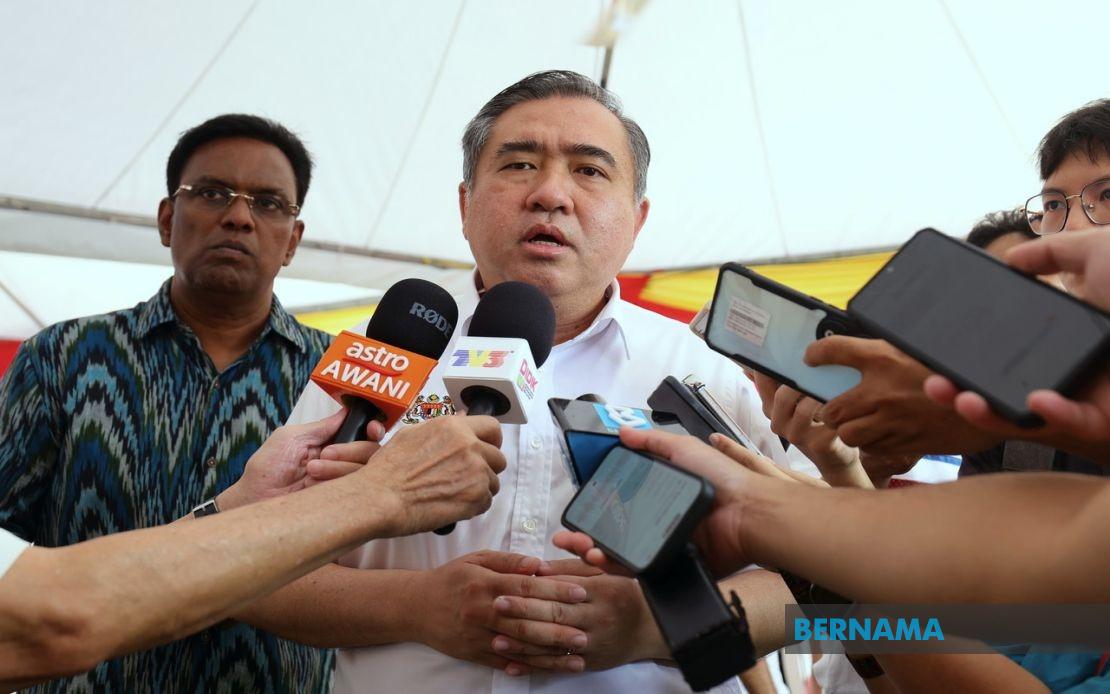
Transport Minister Anthony Loke has announced a RM100,000 commitment to upgrade community infrastructure and facilities in Kampung Bukit Temiang, Seremban, as part of the government's MADANI Adopted Village Programme. The initiative exemplifies the administration's broader strategy of establishing direct dialogue channels between federal ministries and grassroots communities to identify and address local priorities. The funding package reflects a collaborative approach, combining resources from two distinct sources: RM50,000 from the Railway Assets Corporation, a statutory body operating under the Transport Ministry, and an equivalent RM50,000 drawn from Loke's allocation as the Member of Parliament for Seremban.
The allocation mechanism demonstrates how federal development resources are being decentralised through existing governance structures. Rather than imposing predetermined projects from above, the funds will flow through the Federal Village Development and Security Committee, or JPKK, which will oversee phased implementation based on community consultation. This committee-based approach allows flexibility in project sequencing while ensuring accountability through established administrative channels. For rural communities in Negeri Sembilan and similar regions across Malaysia, such structures represent tangible entry points for securing development investments without navigating complex federal bureaucracies.
The proposed enhancement projects in Kampung Bukit Temiang reflect common rural development priorities. Infrastructure improvements centre on upgrading the community hall, addressing residential roof damage, and enhancing drainage systems—issues that directly affect daily living standards and public health. By prioritising these modest yet essential interventions, the programme acknowledges that village development need not require grandiose projects; rather, targeted investments in basic facilities often yield proportionally greater improvements in resident welfare. The identification of these needs followed direct engagement with villagers, suggesting that the MADANI initiative genuinely incorporates bottom-up feedback rather than relying solely on administrative assessments.
Loke emphasised that the programme's methodology emphasises listening before implementing, a departure from traditional top-down rural development models. This consultative foundation allows the JPKK to select appropriate delivery mechanisms, whether through the Railway Assets Corporation's direct intervention, community-organised gotong-royong activities, or engagement of local contractors. The flexibility to employ multiple implementation pathways recognises that rural communities possess latent capacity for self-directed improvements when provided with adequate resources and autonomy. For residents accustomed to passive reception of government schemes, this collaborative approach potentially reshapes expectations around development participation.
The MADANI Adopted Village Programme itself reflects a governmental reorientation toward systematic ministry-community engagement. By requiring individual ministries to identify and support specific villages, the initiative creates accountability mechanisms while dispersing development focus across numerous localities simultaneously. This decentralisation of adoption responsibilities prevents development resources from concentrating exclusively on politically prominent areas, theoretically ensuring broader geographical coverage. For constituencies like Seremban with mixed urban-rural demographics, such programmes allow parliamentary representatives to demonstrate tangible commitment to peripheral communities often overlooked during urban-centric policy cycles.
Beyond village-level infrastructure, Loke announced the expansion of the National MADANI Taxi Renewal Programme through an additional RM10 million allocation announced recently by Prime Minister Anwar Ibrahim. This supplementary funding, added to the RM10 million provided under Budget 2026, indicates official recognition that initial allocations fell short of anticipated uptake among taxi and hire-car operators. The enhanced budget signals determination to sustain momentum in a sector facing structural disruption from ride-hailing platforms and ageing vehicle fleets. For Malaysian commuters dependent on traditional taxi services, programme success directly affects service reliability and safety standards.
The taxi renewal initiative transcends simple vehicle replacement financing. Rather, it represents a comprehensive strategy addressing multiple operator constraints simultaneously. Participants access driver-friendly financing arrangements, income enhancement opportunities, social protection schemes, streamlined permit procedures, and modernisation incentives. This bundled approach acknowledges that fleet age represents only one factor constraining sector competitiveness; inadequate driver income, insufficient social safeguards, and bureaucratic friction cumulatively discourage participation. By consolidating support mechanisms, the government aims to address systemic vulnerabilities simultaneously rather than piecemeal.
Critically, the government's articulation of taxi and ride-hailing platforms as complementary rather than competitive represents a strategic reframing for a sector often characterised by adversarial tensions. Rather than perpetuating zero-sum rhetoric, this positioning encourages operational adaptation where traditional taxi services capitalise on regulatory advantages, customer preference for licensed operators, and local route knowledge, while accepting that platform-based hiring suits particular passenger segments and occasions. For Southeast Asian transport markets similarly navigating taxi-hailing platform coexistence, this philosophical shift may offer instructive precedent for managed sector transition rather than protectionist stasis or unregulated disruption.
Implementation success for the taxi programme depends significantly on coordination among the Transport Ministry, the Land Public Transport Agency, financial institutions, vehicle manufacturers, taxi associations, and platform operators. This multi-stakeholder architecture reflects recognition that no single entity commands sufficient leverage to fundamentally reshape sector conditions unilaterally. Banks determine financing accessibility and terms, manufacturers influence vehicle costs and availability, associations mobilise grassroots participation, and platforms shape competitive dynamics. For policy effectiveness, securing genuine cooperation rather than mere nominal compliance across these diverse interests remains paramount.
The integration of both the village infrastructure programme and the taxi renewal initiative within the broader MADANI framework suggests an administration attempting to calibrate development efforts across multiple population segments and economic sectors simultaneously. Village-level infrastructure improvements serve primarily rural and semi-rural constituencies, while taxi support targets urban transport workers and commuters. This dual-track approach, if executed consistently across multiple ministries and sectors, could theoretically address distributional concerns about development benefits concentrating among urban professional classes. However, sustained commitment and adequate resourcing across ministries remain essential for preventing selective implementation that privileges certain initiatives over others.
For Malaysian policymakers, development practitioners, and transport sector stakeholders, the Seremban announcements offer insight into administrative priorities and implementation methodologies during the current parliamentary term. The emphasis on community consultation before implementation, reliance on local delivery mechanisms, and multi-stakeholder coordination represent departures from earlier development models that sometimes prioritised rapid physical project completion over participatory processes. Whether these reorientations translate into superior development outcomes, enhanced community satisfaction, and sustained sector improvements will become apparent only through systematic monitoring of programme implementation and beneficiary feedback over subsequent months and years.

