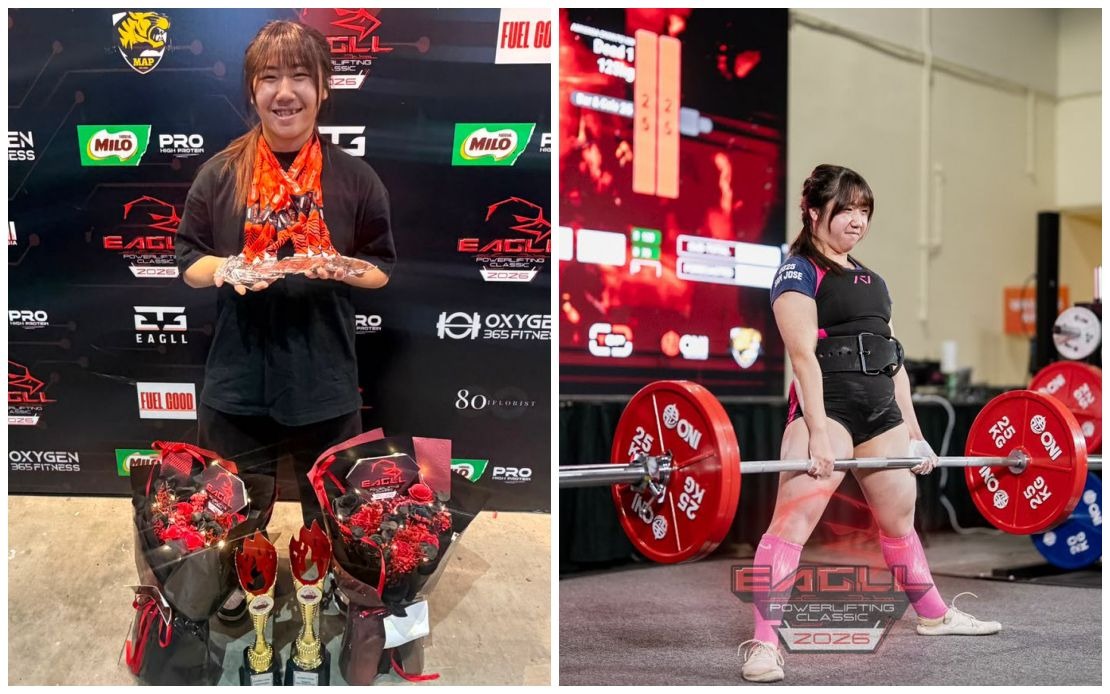
Malaysian powerlifting is experiencing a generational surge, exemplified by the remarkable achievements of 20-year-old Abrienda Chan, who has demolished five national records in the Under-57 kilogramme category at the recent Eagll Powerlifting Classic 2026 in Kuala Lumpur. Her performance signals the emergence of a talent capable of elevating the nation's standing in international powerlifting competition while simultaneously challenging conventional perceptions about physique requirements in a sport traditionally dominated by heavier athletes.
The Sarawakan competitor's domination at the EPC 2026 extended beyond the record-breaking threshold. She accumulated seven gold medals and one silver across competitions spanning both junior and open age divisions, demonstrating exceptional versatility and consistency across multiple strength disciplines. This dual-category participation underscores an ambitious training philosophy where Abrienda systematically exposes herself to elite-level competition while maintaining dominance within her designated age classification.
The specific records shattered reveal her comprehensive technical mastery across powerlifting's three fundamental movements. Her open squat record reached 128 kilograms, while her bench press achievements established standards for both junior and open classifications at 70 kilograms. Most significantly, her total records across both age categories were set at 343 kilograms, representing the cumulative expression of her strength across all lifts. These figures carry particular resonance when contextualised against her relatively slight 151-centimetre frame, underscoring the sophistication of modern strength training methodology that has rendered bodyweight categories increasingly decisive relative to absolute size.
Chan's strategic approach to competition management reveals maturity beyond her years. When addressing the competition, she consciously prioritised securing medals and overall titles over pursuing additional records during her final squat attempt, where technical difficulties undermined her junior squat record ambitions. Similarly, she adopted a conservative deadlift strategy to guarantee the gold medals and overall championships. This decision-making architecture demonstrates the distinction between raw ambition and calculated athleticism, suggesting coaching guidance of considerable quality.
Her background as a dominant force within the Under-52 kilogramme sub-junior division adds important texture to her current trajectory. That she continues holding all three individual lift records and the total record in her former category indicates she has achieved an unusual feat—climbing weight categories without relinquishing her former dominance. This ascension typically involves strength losses as athletes acclimate to marginally heavier body weight, yet Abrienda has transformed this transition into an opportunity to establish fresh national standards.
The runner-up finish in the open overall standings constituted perhaps the competition's most unexpected outcome, given her status as one of the youngest entrants across that division. Many competitors would regard such placement among open-category athletes as a career achievement; Abrienda received it as surprise acknowledgment of her extraordinary talent concentration. This perspective illuminates her self-awareness regarding competitive hierarchies and the progression pathway necessary to sustain international relevance.
Abrienda's credentials were previously authenticated through her 2024 Asian Classic Powerlifting Championships gold medal, establishing her as a continental-level threat. The EPC 2026 performance fundamentally strengthens her preparation framework for two championship events scheduled within 2027. She targets the World Classic & Equipped Bench Press Championships in Istanbul, Turkiye, alongside the World Classic Sub-Junior & Junior Powerlifting Championships in Haining, China, where she pursues top-three world positioning within the U57 junior classification. These dual-championship strategy indicates a sophisticated understanding of pathways to international recognition while remaining within her age-defined competitive window.
The support ecosystem surrounding Abrienda merits particular attention, given its implications for sustainable athlete development throughout Southeast Asia. Her acknowledgement of family encouragement, coaching direction, and institutional support from Turbo Fitness—including facility access and competition travel subsidisation—illustrates how non-governmental sports organisations facilitate elite development within Malaysia's competitive structure. This ecosystem remains comparatively underdeveloped relative to sports such as badminton or football, suggesting substantial potential for further investment.
Chan's trajectory occurs within Malaysia's broader powerlifting renaissance. The sport, traditionally marginalised within national athletic prioritisation frameworks dominated by Olympic sports and established commercial disciplines, has experienced meaningful visibility expansion. The emergence of young, accomplished female athletes like Abrienda reshapes demographic perceptions about powerlifting's accessibility and appeal, potentially opening recruitment pathways among female youth populations previously intimidated by the sport's perceived barriers to entry.
Her physical stature deserves particular consideration as a competitive advantage rather than limitation. Standing 151 centimetres, Abrienda operates within bodyweight categories designed to create weight-relative fairness, yet her exceptional strength-to-bodyweight ratio amplifies her dominance within classifications where similarly-sized competitors cannot match her technical execution or training sophistication. This dynamic illustrates how precision bodyweight management—reducing water retention, optimising muscle mass relative to non-functional body composition—has transformed smaller-framed athletes into genuine elite threats.
The psychological dimension of competing within open-category divisions while maintaining junior status carries profound implications for Abrienda's future development. Exposure to older, typically stronger competitors creates learning opportunities unavailable through same-age competition exclusively. She absorbs elite technical variants, adapts to diverse competitive approaches, and calibrates her own performance psychology against athletes with greater experience. This competitive environment accelerates maturation beyond chronological progression.
Moving toward the 2027 world championships, Abrienda enters a competitive phase where technical refinement and consistency supersede volume-based strength accumulation. The Istanbul and Haining championships will expose her to international field depths that, while achievable in pursuit of top-three placement, demand meticulous periodisation and injury prevention. Malaysian powerlifting observers should monitor whether she sustains current progression trajectories or encounters the plateaus that frequently challenge athletes transitioning toward world-competitive echelons.
The broader significance extends beyond individual achievement. Abrienda Chan represents an emerging class of Southeast Asian female athletes discovering that strength sports offer viable pathways to international excellence, sponsorship, and competitive longevity. Her success illuminates possibilities for Malaysian sport development, particularly regarding underutilised female talent populations and non-Olympic disciplines capable of producing world-competitive athletes without the resource investments demanded by traditional sports establishment priorities.

