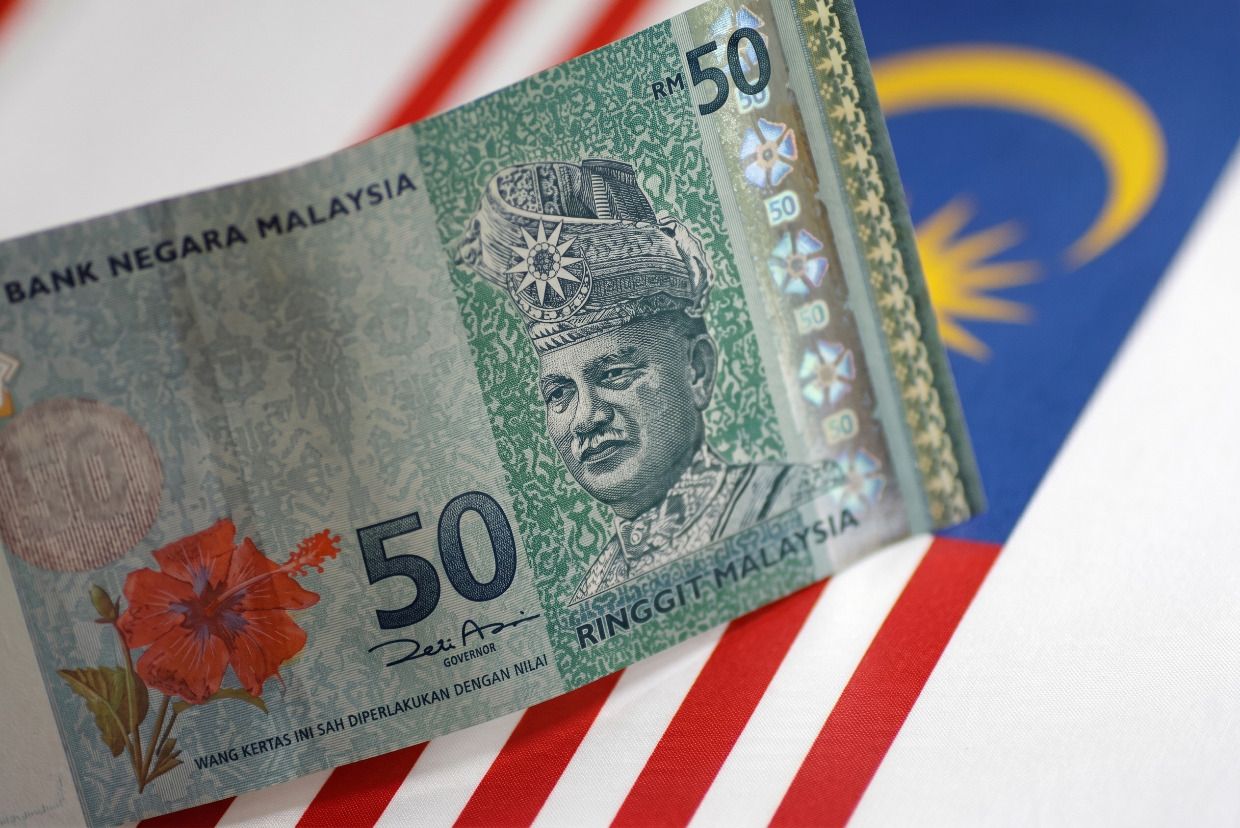
Malaysia's currency is positioned for a significant recovery after suffering its worst performance among Asian peers in June, buoyed by aggressive policy measures from Bank Negara Malaysia and a collection of favourable economic indicators that analysts believe will sustain upward momentum through the remainder of 2024.
Analysts at leading financial institutions have established divergent but broadly optimistic forecasts for ringgit appreciation. Royal Bank of Canada projects the currency could reach 3.95 per dollar by year-end, whilst Australia & New Zealand Banking Group offers a more bullish assessment, targeting 3.80—a level unseen since 2015. These projections represent substantial gains from the currency's closing position of 4.0722 per dollar on Friday, reflecting confidence in the policy trajectory initiated by the central bank.
The catalyst for this anticipated turnaround stems from Bank Negara Malaysia's pledge on June 24 to intensify efforts aimed at boosting foreign-exchange inflows into the domestic economy. The central bank has been actively encouraging companies to repatriate and convert their overseas earnings into ringgit, recognising that administrative levers can complement organic economic strengths in supporting currency performance. This approach mirrors successful interventions deployed in 2024, when similar repatriation initiatives helped the ringgit recover from its weakest level against the dollar in nearly three decades, ultimately positioning Malaysia as Asia's top currency performer that year.
The ringgit's recovery potential is underpinned by Malaysia's exceptional trade performance, which has accelerated dramatically in recent months. Export volumes surged 45 percent year-on-year in May alone, driven substantially by buoyant global demand for electrical and electronic products amid the artificial intelligence infrastructure boom. This export dynamism has translated into unprecedented trade surpluses—Malaysia recorded a monthly high of 40 billion ringgit, equivalent to approximately $9.8 billion, demonstrating the economy's capacity to generate sustained foreign-exchange earnings.
Beyond trade metrics, the inflow picture is reinforced by robust capital movements into ringgit-denominated debt instruments. Global investors deployed roughly $2.1 billion into Malaysian bonds through June 29, positioning the local debt market for its largest monthly inflow since May 2025. This influx of foreign capital reflects international recognition of Malaysia's solid macroeconomic fundamentals and attractive yield opportunities, creating a self-reinforcing dynamic where currency strength attracts additional portfolio investment.
RBC's macro strategist Abbas Keshvani emphasises the critical linkage between Malaysia's structural trade advantages and the effectiveness of BNM's conversion incentives. According to Keshvani, the ringgit should outperform regional counterparts precisely because Malaysia combines persistent trade surpluses with supportive policy architecture. The measures announced by the central bank function as the crucial transmission mechanism, converting the nation's underlying trade competitiveness into tangible currency appreciation rather than allowing earnings to accumulate as unmonetised foreign reserves abroad.
The artificial intelligence sector has emerged as a particularly significant driver of Malaysia's current economic momentum. The rapid deployment of data centre infrastructure globally has elevated demand for Malaysian electrical and electronic components, extending into semiconductors and related high-technology manufacturing. This structural shift has broadened the export base beyond traditional sectors, providing diversified sources of foreign-exchange generation that reduce vulnerability to cyclical downturns in any single industry.
From a policy perspective, the financial services sector has observed meaningful increases in foreign currency deposits held by Malaysian businesses during the March-May period. ANZ analyst Kausani Basak interprets these elevated deposits as evidence that companies possess substantial overseas earnings ready for conversion, pending confidence in the exchange-rate trajectory. BNM's intensified measures directly address this behaviour, signalling policy commitment to rewarding repatriation through stable or appreciating ringgit levels.
The resilience of foreign direct investment inflows adds another supportive layer to the currency outlook. Multinational corporations continue channelling investment into Malaysia's manufacturing and technology sectors, generating ongoing dollar inflows that supply additional foreign-exchange liquidity to the market. This combination of organic FDI streams and incentivised repatriation creates multiple entry points for dollar supplies, reducing the likelihood of sudden depreciation shocks.
However, the ringgit's recovery trajectory faces genuine countervailing pressures that warrant cautious assessment. The United States Federal Reserve has adopted an increasingly hawkish monetary posture, keeping interest rates elevated and potentially attracting dollar-seeking investors away from emerging-market currencies. A stronger dollar would mechanically constrain ringgit appreciation, potentially forcing analysts to revise their year-end forecasts downward if Fed policy persists in tightening mode.
Domestically, Malaysia confronts political uncertainty that could influence investor sentiment and capital flows. The approaching state elections present a crucial test of popular support for Prime Minister Anwar Ibrahim and his ruling coalition, with results carrying implications for the political stability narrative that international investors assess when allocating capital to Malaysian assets. Any unexpected electoral outcomes could trigger portfolio reallocation away from Malaysian bonds and equities, temporarily pressuring the currency despite favourable economic fundamentals.
Despite these crosscurrents, the preponderance of recent evidence suggests the ringgit has established momentum toward meaningful recovery. The combination of BNM's proactive policy stance, record export performance, AI-sector tailwinds, and substantial foreign investment inflows into local debt creates a compelling foundation for appreciation. The currency's outperformance among Asian peers since late June indicates that market participants have already begun positioning for the ringgit strength that analysts are formally projecting, suggesting that year-end forecasts of 3.80 to 3.95 per dollar may represent achievable targets rather than optimistic outliers.

