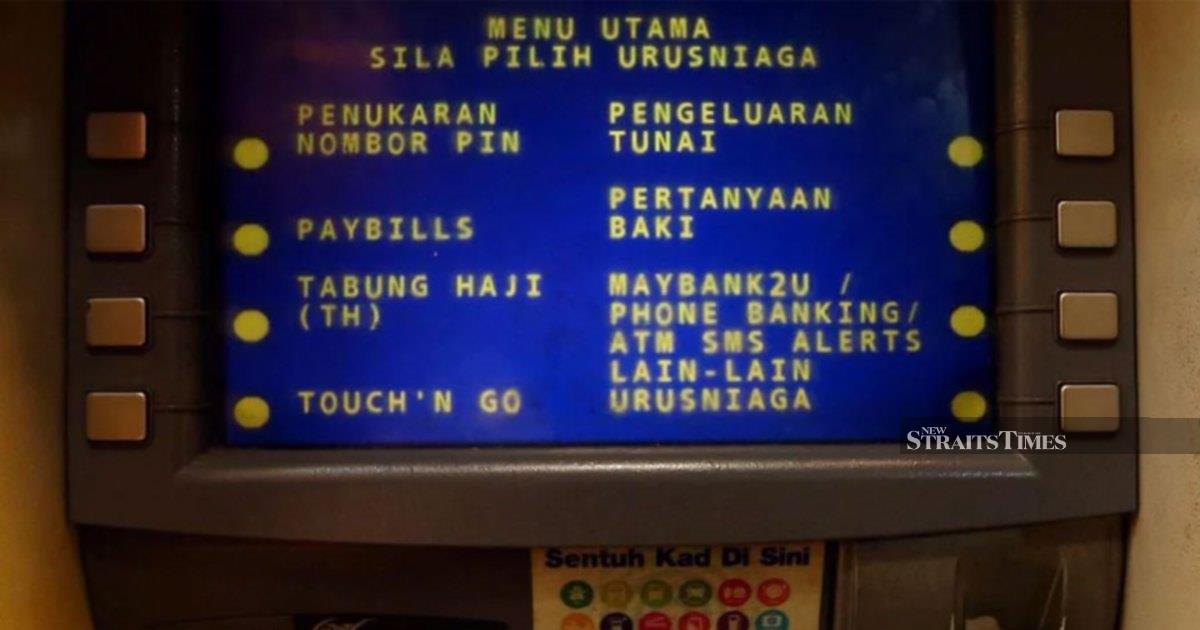
Customers who are charged the RM1 interbank withdrawal fee while using an automated teller machine owned by their own financial institution should lodge complaints with Bank Negara Malaysia, according to Communications Minister Datuk Fahmi Fadzil, who emphasised that such charges appear to contravene existing banking regulations.
The call represents a significant public notice regarding what the central bank views as improper levies on retail banking customers. Under current guidelines that Bank Negara has established, account holders should not face fees when conducting withdrawals at machines belonging to their own banking group, a principle that has long underpinned consumer protections in Malaysia's financial sector.
Fahmi's statement comes amid growing concerns about fee transparency and fairness in the banking industry. The RM1 charge mechanism was originally designed as an interbank transaction fee—imposed when a customer uses a competing bank's ATM network—but reports suggest some institutions have been misapplying this charge even when customers access their own bank's machines, effectively double-charging or misclassifying transactions.
The central bank's position reflects its broader consumer protection mandate and commitment to ensuring that banking practices align with published regulations and customer agreements. Bank Negara has periodically reviewed and refined ATM fee structures, recognising that such charges can meaningfully impact household finances, particularly for lower-income Malaysians who may rely heavily on cash-based transactions and frequent withdrawals.
Customers who encounter such charges are encouraged to gather documentation—transaction receipts, ATM location confirmation, and their banking records—before submitting formal complaints. Bank Negara operates a structured complaint resolution process designed to investigate alleged regulatory breaches and enforce corrective actions against non-compliant institutions. This mechanism has proven effective in previous consumer disputes, often resulting in fee reversals and institutional audits.
The issue reflects a wider tension in Malaysia's banking sector between fee-based revenue models and consumer expectations for fair pricing. While banks have legitimate operational costs associated with ATM networks—maintenance, security, network connectivity—many customers perceive fees as excessive or unjustified, particularly when applied inconsistently or contrary to stated policies.
For Malaysian consumers, this advisory underscores the importance of understanding their banking rights and actively monitoring account statements. Many people overlook small charges that accumulate over time, yet regular ATM users can lose significant sums to improper fees annually. The transparency issue becomes especially relevant given the proliferation of digital banking, where transaction alerts and statements are increasingly available in real time.
From a broader regulatory perspective, Fahmi's statement signals that Bank Negara and government agencies are prepared to intervene when institutional practices drift from compliance. This stance matters for market confidence and competitive integrity, as banks operating within strict fee guidelines should not face disadvantages against institutions that bend rules for short-term revenue gains.
The advisory also carries implications for banking competition across Southeast Asia. Neighbouring countries have implemented various ATM fee regimes, ranging from complete prohibition to regulated surcharges. Malaysia's approach—permitting interbank fees while restricting own-bank charges—represents a middle ground that attempts to preserve banking viability while protecting consumers from perceived predatory practices.
Customers experiencing unexplained ATM charges should contact their bank's customer service division first, requesting detailed transaction breakdowns and explanations for any fees applied. If the bank cannot justify charges or refuses to reverse them, formal Bank Negara complaints provide an independent arbiter with enforcement authority. Documentation is critical; vague complaints are harder to investigate than those supported by specific transaction dates, times, and ATM locations.
The broader lesson for Malaysian account holders is that banking fees warrant the same scrutiny as other household expenses. Reading terms and conditions, comparing fee schedules across institutions, and knowing one's rights significantly reduces exposure to improper charges. Fahmi's call to action essentially empowers consumers to become regulators themselves, using complaint mechanisms to enforce industry standards and hold institutions accountable.
This development also highlights the ongoing challenge banks face balancing revenue diversification with customer satisfaction and regulatory compliance. As margins compress amid competition and digital disruption, some institutions may attempt to squeeze additional income from fee-based services. However, regulatory vigilance—particularly when backed by active consumer reporting—constrains such behaviour and maintains market discipline.

