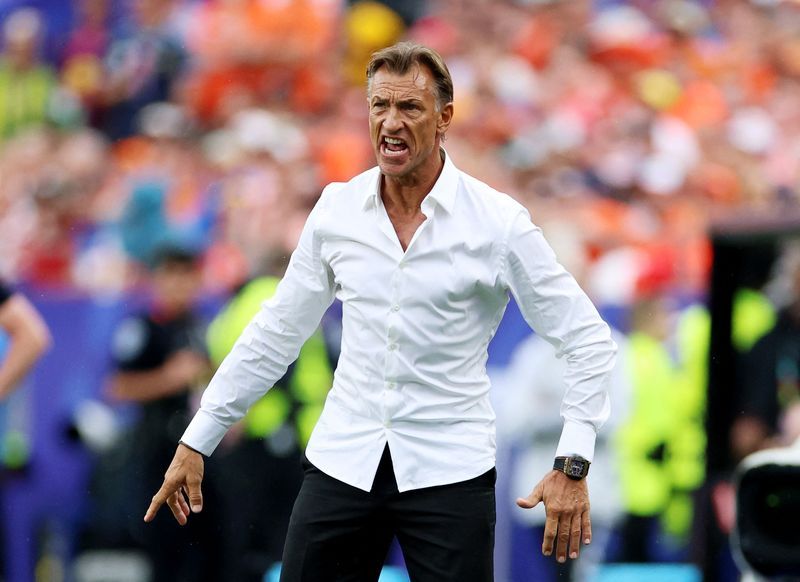
Herve Renard has concluded his short-lived tenure as Tunisia's national football coach, bringing an end to a World Cup campaign that descended into one of the tournament's most dramatic collapses. The 57-year-old French manager announced his departure through Instagram on Saturday, just days after Tunisia's final group-stage match confirmed their exit from the competition without registering a single victory across their three fixtures. In his announcement, Renard expressed gratitude to the Tunisian Football Federation for entrusting him with the responsibility of guiding the team through the expanded 48-team World Cup format, whilst characterizing the experience as an honour that would remain permanently embedded in his professional memory.
Tunisia's descent from tournament favourites to one of the World Cup's worst performers underscores the magnitude of the organisational crisis that engulfed the North African nation's football infrastructure. The team arrived in Qatar with considerable optimism following an unblemished qualifying campaign during which they had demonstrated remarkable defensive solidity by conceding zero goals across all their matches. This defensive resilience should have provided a foundation for a respectable tournament showing, yet the reality proved devastatingly different, raising fundamental questions about tactical coherence, team preparation, and whether domestic conditions had adequately prepared the squad for the intensity of global competition.
The decision to replace Sabri Lamouchi with Renard mid-tournament appeared to reflect panic rather than considered strategic thinking. Lamouchi himself fell victim to the catastrophic opening match, a humiliating 5-1 capitulation to Sweden that immediately exposed structural weaknesses within the team's defensive organisation. That result prompted the Tunisian Football Federation to seek an alternative approach, bringing in Renard in hopes that fresh tactical perspectives and his considerable international experience might stabilise the situation. However, the appointment of even an experienced operator could scarcely have remedied such fundamental problems within the compressed timeframe available between group matches.
Renard's brief spell brought no improvement to Tunisia's fortunes. His first match in charge saw the team suffer a devastating 4-0 defeat by Japan, a result that left the coach visibly distressed and expressing deep shame at the manner of the capitulation. The final group encounter against the Netherlands produced another defeat, this time by 3-1, ultimately sealing Tunisia's elimination and rendering further tactical adjustments irrelevant. The sequence of results—losses by 5-1, 4-0, and 3-1—created a statistical record that will likely haunt Tunisian football for years to come.
Tunisia's World Cup performance has entered the record books for precisely the wrong reasons. The team conceded an extraordinary 12 goals across their three group matches, establishing a new unwanted benchmark at the World Cup level. The previous record had been held by Costa Rica, who conceded 11 goals during the 2022 tournament in Qatar, highlighting the rarity of such comprehensive defensive failure at football's pinnacle competition. This statistical aberration suggests the meltdown was not merely a matter of close results or minor tactical oversights, but rather a fundamental structural breakdown that no single coaching change could resolve within such a limited timeframe.
The contrast between Tunisia's qualifying performance and their group-stage appearance invites deeper analysis into the nature of international football preparation and adaptation. Teams that successfully navigate World Cup qualification often struggle to replicate that form under the intensified pressure and elevated technical standards of the finals tournament itself. For Tunisia, however, the gap between their error-free qualifying campaign and their defensive shambles in Qatar appears particularly severe, suggesting either that their qualifying opponents provided insufficient preparation for the step up in quality, or that the squad lacked the psychological resilience required to absorb early setbacks and recalibrate effectively.
Renard's departure marks the conclusion of an experiment that was essentially doomed from its inception. Whilst the appointment of an experienced international coach with multiple World Cup campaigns in his portfolio might ordinarily suggest a potential pathway to recovery, the reality of international football permits no such resurrection during a tournament. Group-stage matches are unforgiving; there exist no wild-card opportunities to work through fundamental problems, no reserve competitions in which to rebuild confidence and tactical coherence. Renard's presence, then, became less a solution and more a figure associated with the chaos, leaving him with little choice but to exit and preserve whatever professional reputation remained.
The implications for Tunisian football extend beyond this single tournament cycle. The episode raises uncomfortable questions about selection processes, preparation methodologies, and the decision-making structures within the Tunisian Football Federation. A complete diagnostic review will be necessary to understand whether the qualifying campaign papered over deeper issues, whether tournament preparation was fundamentally inadequate, or whether factors such as squad morale and psychological resilience proved decisive. Rebuilding will require systemic change rather than merely appointing a fresh coaching figure.
For Southeast Asian football observers, Tunisia's collapse offers both cautionary lessons and perspective on the challenges facing smaller nations when competing against established football powers. Whilst Malaysia and other regional teams possess their own developmental challenges, the Tunisian experience demonstrates that even continental champions with qualifying excellence can prove vulnerable to comprehensive breakdown under tournament pressure. The region's programmes must emphasise not merely technical competency but psychological preparation and the ability to absorb adversity without collective disintegration—qualities that proved elusive for Tunisia in Qatar.

