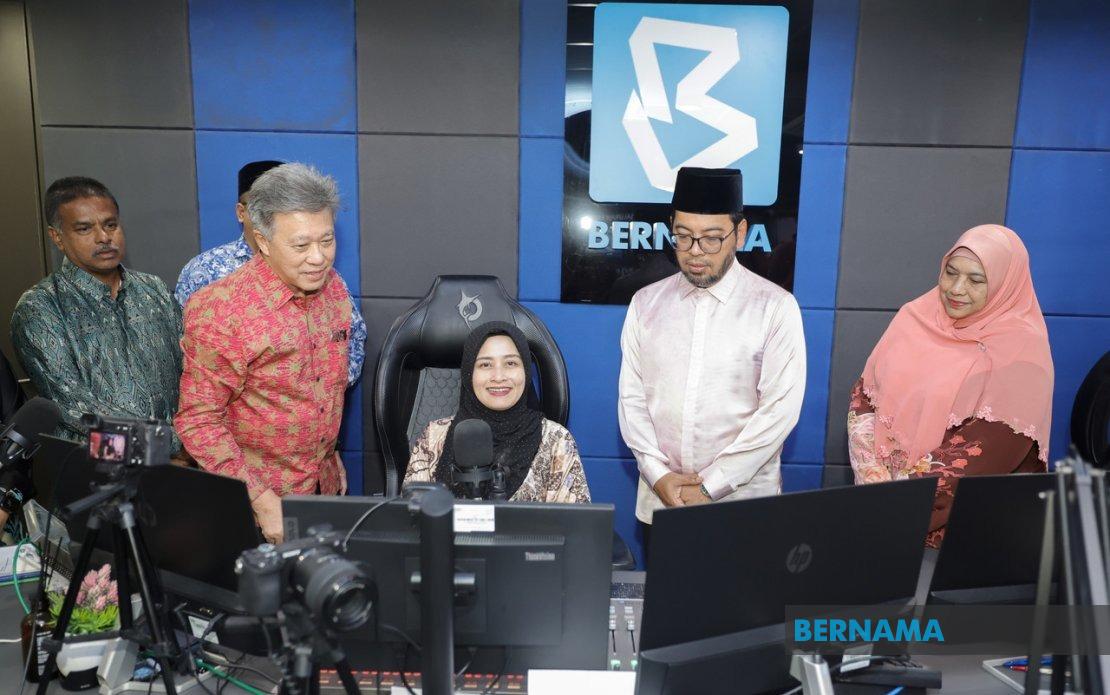
The Prime Minister's Department (Religious Affairs) is pursuing deeper collaboration with the Malaysian National News Agency (Bernama) as part of efforts to advance public understanding of government programmes centred on Muslim community development. During an official visit to Bernama's headquarters in Kuala Lumpur on July 30, Minister Dr Zulkifli Hasan underscored the critical role that media partnerships play in shaping public perception and supporting the government's broader vision for a more intellectually and socially advanced Muslim population.
Dr Zulkifli articulated the rationale behind the outreach, emphasising that the department operates an extensive portfolio of programmes, campaigns, and initiatives designed to foster a society characterised by dynamism, progressiveness, moderation, and genuine inclusivity. These efforts, he explained, are underpinned by a philosophy that celebrates diversity and encourages mutual respect across communities. However, translating such aspirations into widespread public acceptance and behavioural change represents a formidable challenge that requires sustained and coordinated communication. The minister identified Bernama as an instrumental platform capable of normalising values, practices, and cultural expressions that reinforce inter-communal harmony and respect.
The significance of this partnership extends beyond mere publicity or promotional activity. In the Malaysian context, where religious sensitivities intersect with governance, national cohesion, and economic development, the framing of government initiatives through established news channels carries considerable weight. Bernama, as the national news agency with deep institutional roots and broad distribution networks, occupies a unique position to legitimise and amplify messages about religious affairs and community development. By positioning Bernama as a strategic conduit, the department signals its commitment to transparent, mainstream communication rather than relying solely on departmental channels or social media, which may have limited reach among certain demographics.
During his tour of the agency's operations, Dr Zulkifli observed Bernama's modernisation trajectory first-hand, moving through its studios, digital media infrastructure, and editorial departments. The minister commended these transformation efforts, characterising them as a successful and well-executed operational overhaul. This positive assessment reflects broader recognition within government circles that traditional news agencies must evolve to remain relevant in an increasingly fragmented media landscape. For Bernama, such ministerial endorsement of its modernisation efforts provides external validation and potentially signals confidence in the agency's ability to execute complex communication campaigns effectively.
The delegation accompanying Dr Zulkifli included senior religious affairs officials, while Bernama's leadership reception was notably comprehensive. Datuk Seri Wong Chun Wai, the agency's chairman, alongside chief executive officer Datin Paduka Nur-ul Afida Kamaludin and editor-in-chief Arul Rajoo Durar Raj, among others, participated in the engagement. This high-level participation from both institutions underscores the formal importance attached to the partnership discussions, suggesting that such collaboration may translate into concrete initiatives beyond the immediate visit.
The initiative reflects a broader governmental pattern of leveraging established media institutions to shape narrative around sensitive policy domains. The Religious Affairs Ministry operates within a complex social and political environment where public trust, religious credibility, and national unity concerns converge. Programmes targeting Muslim intellectual and social advancement necessarily engage with theological concepts, Islamic jurisprudence interpretations, and community identity questions that require careful, authoritative communication. Bernama's status as a neutral, government-affiliated news agency positions it as a more credible messenger than party-political outlets, thereby enhancing the legitimacy of departmental messaging.
For Southeast Asian readers, this development carries implications extending beyond Malaysia's borders. The region's diverse Muslim-majority and Muslim-minority nations increasingly recognise the strategic importance of coordinating government messaging through mainstream media channels, particularly on matters of religious policy, education, and inter-faith relations. Malaysia's approach, formalising partnership arrangements between policy departments and national news agencies, offers a potential model for other governments seeking to communicate more effectively about faith-based initiatives.
Bernama's transformation agenda, which Dr Zulkifli highlighted, reflects industry-wide pressures affecting national news agencies across Asia. Traditional wire services and news aggregators face declining advertising revenue, shifting audience consumption patterns, and competition from digital-native news platforms. By deepening partnerships with government agencies seeking to communicate complex policy agendas, Bernama secures a stable constituency for its services while simultaneously enhancing its strategic importance within Malaysia's media ecosystem. Such arrangements, when transparent and editorially independent, can strengthen institutional journalism while serving legitimate governmental communication objectives.
The department's emphasis on cultivating a progressive, moderate, and inclusive mindset among Muslims addresses longstanding tensions within Malaysian religious discourse. By enlisting Bernama's support, the government aims to mainstream narratives that emphasise religious scholarship, intellectual rigour, and community cohesion rather than divisive sectarian or ideological positions. This communication strategy acknowledges that governmental authority alone proves insufficient to shift deeply entrenched cultural attitudes and religious interpretations. Instead, repeated exposure to state-endorsed narratives through respected media institutions can gradually reframe public understanding of what constitutes authentic religious practice and community identity.
The timing of this partnership announcement also reflects Malaysia's evolving political landscape. As governments navigate post-pandemic recovery, economic challenges, and social media-driven polarisation, the stabilisation of government communication through established institutional channels gains strategic value. Bernama, with its national reach and decades-long credibility, provides a counterweight to fragmented digital discourse dominated by unverified claims and conspiracy theories. For the Religious Affairs Ministry, this partnership represents a deliberate choice to invest in structured, institutional communication rather than abandoning traditional media channels.
Looking forward, the success of this partnership will depend on several factors. Bernama must maintain editorial independence while accommodating legitimate departmental communication needs, a balance that demands institutional discipline and clear editorial guidelines. The Religious Affairs Ministry must refrain from attempting to dictate coverage or suppress alternative viewpoints, respecting journalism's fundamental accountability to public interest rather than merely governmental interest. Additionally, the partnership should remain transparent, with audiences aware of departmental origins of particular news items or campaigns, thereby preserving trust in both institutions.
This strategic partnership announcement ultimately reflects a sophisticated understanding within Malaysian governance that public policy, particularly in sensitive domains like religious affairs, requires sustained, credible communication to succeed. Rather than bypassing traditional media entirely in favour of social media and direct government channels, the Religious Affairs Ministry recognises that established news institutions retain significant agenda-setting power and audience trust. By formalising partnership with Bernama, the government positions itself to shape broader public discourse about Muslim intellectual advancement and community development in ways that transcend departmental boundaries and reach Malaysian audiences through channels they habitually trust for news.

