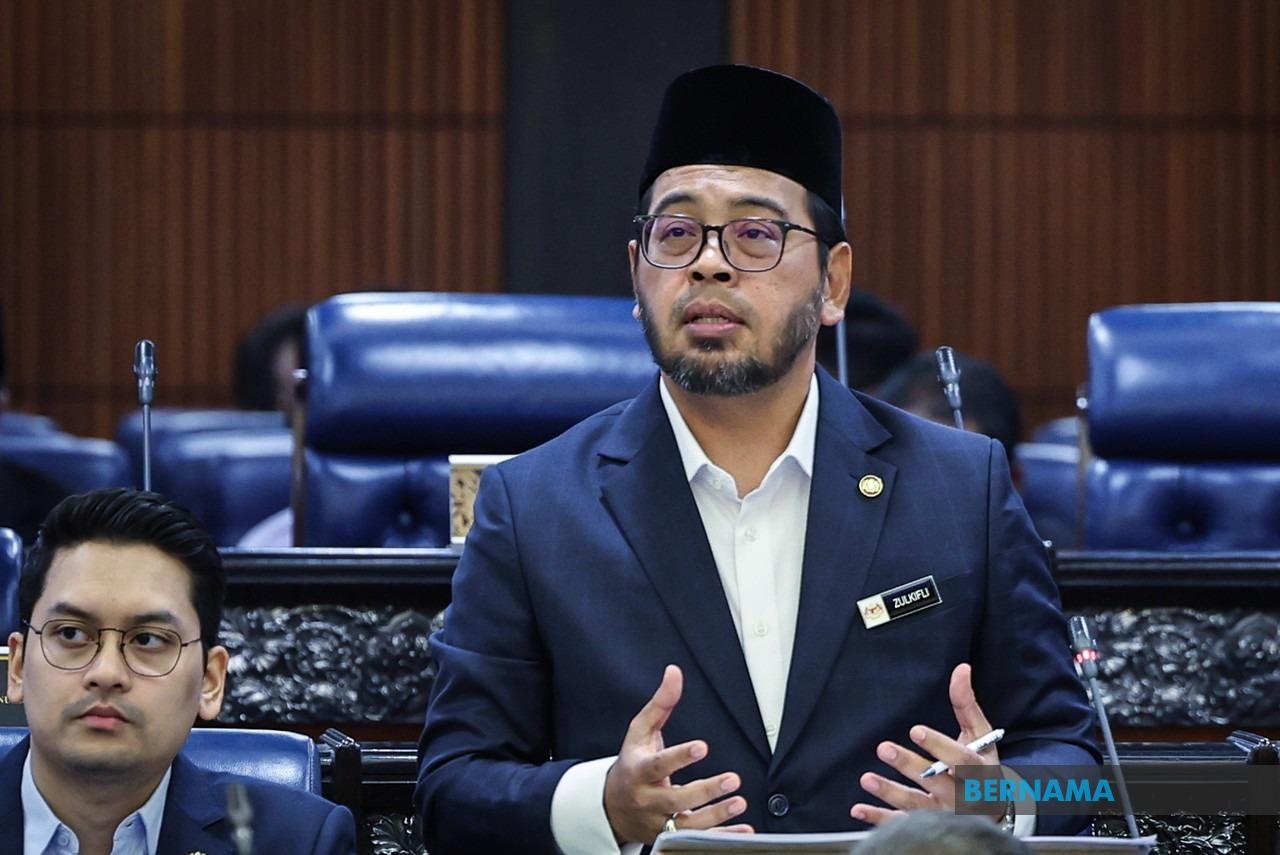
Dr Zulkifli Hasan, Minister in the Prime Minister's Department (Religious Affairs), has delivered a damning critique of Tabung Haji's financial management, drawing parallels to a struggling household to illustrate how the Islamic pilgrimage fund deceived the public about its true financial health. Speaking during parliamentary proceedings following a ministerial briefing on the Royal Commission of Inquiry (RCI) report into TH, he employed the analogy of a single mother named Mak Cik Senah to demonstrate the gap between the fund's reported performance and its actual condition. While such a household might appear prosperous on the surface through receiving money back in excess of contributions, Zulkifli stressed that fundamental legal principles govern when dividends can legitimately be distributed. Specifically, a fund's assets must exceed its liabilities and other obligations before any distributions to members are permissible under law.
The crux of TH's transgression, according to Zulkifli, involved systematic manipulation of financial records prior to 2018. Fund managers artificially elevated the paper value of assets to create an illusion of profitability, thereby justifying the declaration of substantial profit distributions to members. In essence, the fund was distributing what Zulkifli characterised as "invisible money"—a practice he compared to a Ponzi scheme or the notorious Skim Pak Man Telo, a fraudulent investment scheme that became synonymous with financial deception in Malaysia. Behind the veneer of strong financial performance, the fund's actual reserves were steadily eroding, yet distributions continued unabated. This sleight of hand allowed TH to maintain the appearance of success while simultaneously breaching the Tabung Haji Act, which explicitly prohibits profit distributions when assets do not exceed liabilities.
The RCI's investigation uncovered the specific mechanisms through which this deception occurred. One critical tool was the deployment of Realisable Asset Value (RAV) assessments conducted outside the scope of audited financial statements. By valuing assets through this parallel framework, TH inflated their stated worth relative to liabilities on official records. These asset revaluations, combined with adjustments to impairment policies that did not accord with Malaysian Financial Reporting Standards (MFRS), painted a fundamentally false picture of the fund's financial position. The strategy represented what Zulkifli termed "creative accounting"—a euphemistic description of deliberate financial manipulation designed to obscure insolvency.
The involvement of external auditors added a troubling dimension to the scandal. PricewaterhouseCoopers (PwC) confirmed in a 2018 report that the vast majority of TH's RM4.6 billion in valued assets had not undergone professional valuation. Only RM556 million—roughly 12 percent—had been formally assessed by qualified valuers, yet the fund proceeded to distribute dividends based on inflated figures. Zulkifli clarified that Ernst & Young, another major accounting firm, had not served as TH's auditor and therefore bore no responsibility for asset valuations; the firm was merely engaged to review pro forma statements that TH itself had prepared. This distinction matters significantly for understanding the scope of independent oversight that failed to prevent the misrepresentation. The deliberate selection of valuation methodologies that produced artificially elevated figures, combined with selective professional assessment of only a small fraction of total assets, reveals a calculated approach to obscuring TH's true financial condition from members and regulators alike.
The implications of this conduct extend far beyond accounting irregularities. Zulkifli stressed that continuing profit distributions while the gap between assets and liabilities widened represented a direct violation of the Tabung Haji Act and jeopardised the long-term financial sustainability of an institution entrusted with the savings of millions of Malaysian Muslims. The fund's deterioration reflected not inevitable economic headwinds but deliberate management misconduct that destroyed value and created liabilities for future generations. The decision to distribute dividends while technically insolvent constituted a systematic plundering of the institution's capital base, enabled by accounting practices that obscured the true pace of deterioration.
The financial consequences of this mismanagement ultimately fell upon the national treasury. The Malaysian government was compelled to inject more than RM10 billion into TH to prevent complete collapse and safeguard the deposits of millions of Malaysians who had contributed to the fund in good faith. This injection represented not merely a commercial bailout but a rescue of an institution with profound religious and cultural significance for the Muslim community. Zulkifli's invocation of alternative uses for these funds carries pointed implications: the RM10 billion could have financed the construction of dozens or hundreds of hospitals, schools, mosques, and other public infrastructure that communities throughout Malaysia require. Instead, these resources were consumed in remedying the consequences of financial misconduct.
The case of Tabung Haji exemplifies broader governance failures in institutional management. The fund's trajectory from a respected repository of Muslims' savings to a near-insolvent entity requiring massive government intervention reflects not a sudden catastrophe but accumulated decisions made within the institution's leadership and oversight structures. PwC's findings, the inadequate professional asset valuations, the creative accounting practices, and the continued dividend distributions all occurred within documented institutional processes. The fact that these actions proceeded despite audit requirements and regulatory frameworks suggests systemic deficiencies in checks and balances. Whether through board-level negligence, auditor independence compromises, or regulatory supervision gaps, the institutional architecture failed to arrest the fund's deterioration before crisis intervention became necessary.
Zulkifli's parliamentary intervention serves multiple purposes beyond mere criticism of past conduct. By drawing explicit parallels between TH's deceptions and household financial fraud, he makes governance failures comprehensible to ordinary citizens who entrust institutions with their savings. His comparison to the Skim Pak Man Telo—an investment scheme that destroyed the life savings of thousands and became emblematic of financial predation—underscores the severity of TH's conduct. For Malaysians who have contributed to TH as part of religious obligation or prudent savings practices, the revelation that their deposits were subsidising artificial dividend payments to earlier contributors represents a profound breach of trust. The analogy of Mak Cik Senah losing everything when the scheme collapses captures the real human stakes when financial institutions engage in deceptive practices.
Moving forward, the RCI findings necessitate structural reforms in how TH and similar institutions are governed and audited. The fact that only 12 percent of assets underwent professional valuation before the fund distributed dividends based on inflated figures suggests that asset verification requirements need strengthening. Questions also arise regarding auditor incentives and conflicts of interest when firms conduct reviews of internally-prepared statements rather than conducting independent valuations. Regulatory oversight mechanisms require examination to understand how a fund could simultaneously maintain compliance appearances while operating insolvent. The government's RM10 billion injection, while necessary to protect depositors, cannot represent the final response. Accountability mechanisms, preventive reforms, and enhanced transparency standards must accompany the financial rescue to restore institutional credibility.
For Malaysian policymakers and the broader public, Tabung Haji's crisis illustrates the human and fiscal costs of allowing institutional deception to fester unchecked. The fund's situation did not arise from external economic shocks that might have overwhelmed management despite prudent stewardship; instead, it resulted from deliberate accounting manipulations and dividend distributions that violated established legal frameworks. That such conduct proceeded to the point of requiring the largest institutional bailout in Malaysia's modern financial history reflects failures at multiple governance levels. Zulkifli's detailed exposition, with its accessible analogy and specific accounting details, serves both as public accountability for past conduct and as cautionary evidence that robust oversight, transparent accounting, and strict adherence to legal restrictions on dividend distributions remain essential safeguards for institutions holding the savings and trust of millions.

