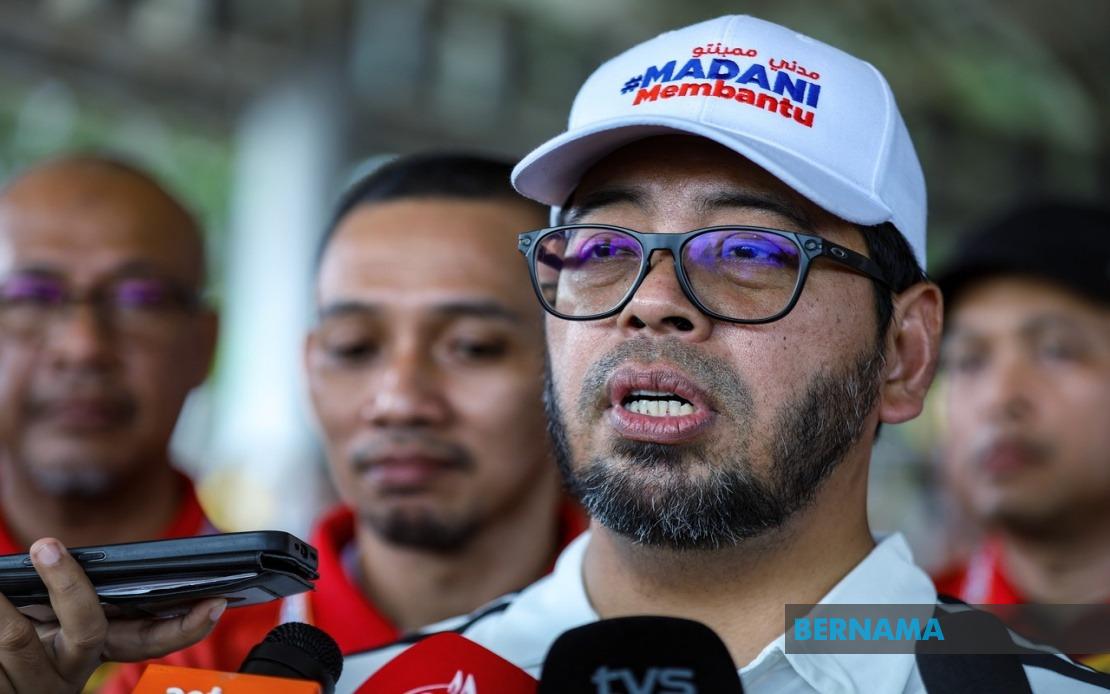
Senator Dr Zulkifli Hasan, heading the Minister's Department (Religious Affairs), has issued a call for Muslims to uphold proper conduct and moral standards within places of worship, particularly mosques and surau. Speaking at the closing ceremony of the Syariah Lawyers' Sports Programme (SUKPES) at Universiti Tun Hussein Onn Malaysia (UTHM) in Batu Pahat on August 16, the minister reinforced that mosques and surau occupy a special spiritual status that demands respect and vigilance in preserving their sanctity.
The remarks come against the backdrop of a troubling incident in Melaka involving a former mosque caretaker and a married woman who face accusations of attempting to engage in illicit sexual relations within a mosque mortuary. This case has raised concerns about the protection of sacred spaces and the maintenance of standards within religious institutions across the country. The incident prompted the minister to address not just the immediate incident but broader issues concerning behaviour and accountability within Muslim communities.
Zulkifli emphasised the theological dimension underlying his call for moral discipline, invoking the Islamic principle of divine omniscience and accountability. He stressed that all actions undertaken by individuals are witnessed by Allah and that no one can escape responsibility for their deeds. This theological framework, he suggested, should serve as a powerful motivation for Muslims to refrain from wrongdoing and to conduct themselves with integrity, particularly in environments designated for spiritual practice and community worship.
The minister's appeal extended beyond general exhortations, explicitly calling on all individuals to observe proper conduct, maintain high moral standards, and ensure compliance with applicable laws. This layered approach—combining religious motivation, ethical principles, and legal obligation—reflects an attempt to address the problem from multiple angles. The emphasis on legal compliance is particularly significant, as it signals that breaches of conduct in sacred spaces are not merely spiritual or moral failures but potentially criminal matters subject to prosecution.
Recognizing that education and preventive measures are essential components of any comprehensive response, the Religious Affairs Department has implemented ongoing programmes targeting Muslims across all age groups. These initiatives span from youth engagement to senior citizen programmes, all designed to reinforce understanding of Islamic law and the importance of virtuous character. The multi-generational approach acknowledges that moral formation and religious awareness require continuous investment and cannot rely on isolated interventions.
Beyond traditional channels such as sermons and community gatherings at mosques and surau, the department has embraced digital platforms and social media campaigns as tools for moral education. This modernised approach recognises that contemporary Malaysians engage with information and messaging through diverse media channels, and that religious and moral guidance must meet people where they are. These campaigns also place particular emphasis on strengthening family units, reflecting the understanding that robust family structures provide foundational support for individual moral development.
The incident in Melaka and the minister's subsequent response underscore broader tensions within Malaysian society regarding the maintenance of religious standards and the protection of sacred spaces. Mosques and surau serve not merely as places of worship but as anchors of community identity and spiritual life. When misconduct occurs within these spaces, it resonates beyond the individuals involved, potentially affecting public confidence in religious institutions and raising questions about oversight and accountability mechanisms.
From a governance perspective, the minister's emphasis on education and continuous outreach suggests that the Religious Affairs Department views moral lapses as symptomatic of insufficient awareness or guidance rather than purely as individual failures. This preventive and educational stance offers potential advantages, as it seeks to address root causes of misconduct through cultural and spiritual reinforcement. However, it must be complemented by robust investigative and disciplinary frameworks to ensure that serious breaches are appropriately sanctioned.
For Malaysian Muslims, the minister's message carries implications beyond the immediate context of mosque behaviour. It reinforces expectations regarding personal accountability, the centrality of Islamic principles to daily conduct, and the need to align personal actions with religious teachings. The invocation of divine witness and accountability serves to internalise moral standards, encouraging individuals to maintain ethical behaviour even in circumstances where external enforcement might be difficult or impossible.
The case in Melaka also highlights vulnerabilities within institutional structures. Mosques and surau, often staffed by dedicated but sometimes minimally supervised personnel, may lack adequate safeguarding protocols. The involvement of a caretaker suggests that even those tasked with maintaining and protecting these spaces may themselves violate the standards expected. This underscores the need for clear codes of conduct, training programmes, and accountability mechanisms applicable to mosque staff and volunteers.
For the broader Southeast Asian context, Malaysia's approach to addressing misconduct in religious spaces reflects challenges common across Muslim-majority and Muslim-minority societies. Balancing respect for religious autonomy and community self-governance with external oversight and legal accountability remains a delicate exercise. The minister's framing—combining spiritual appeal with legal and ethical obligations—represents one attempt to navigate these tensions.

