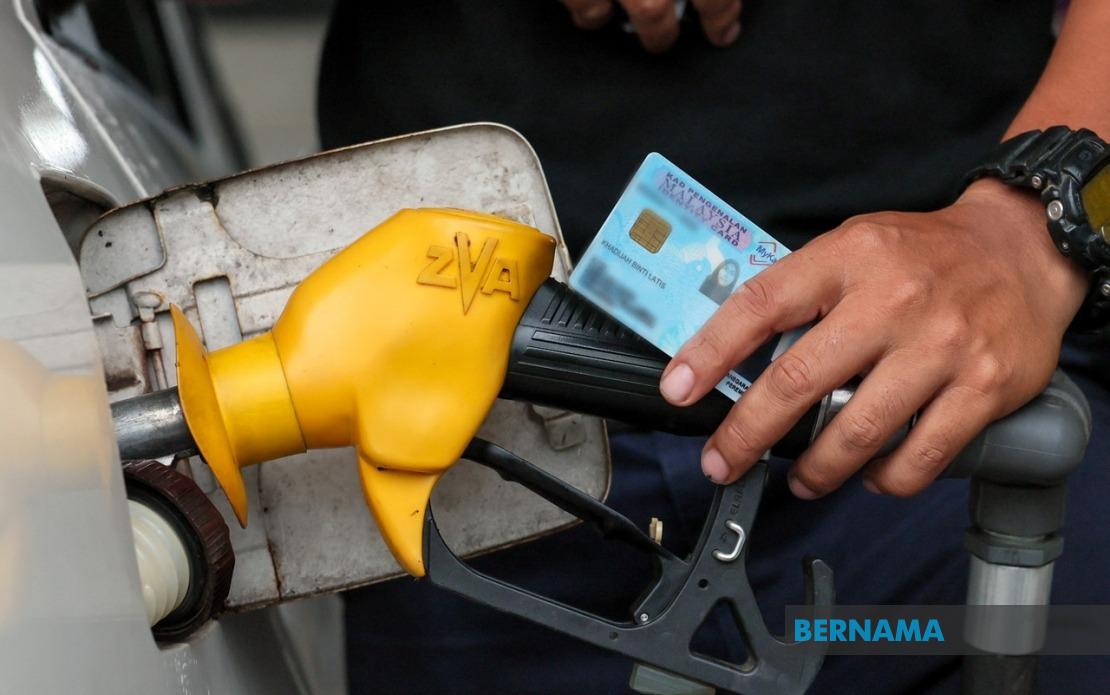
The Malaysian government's announcement to reinstate and expand fuel subsidies under the BUDI MADANI programme has drawn broad approval across both urban and rural communities, marking a significant relief measure amid persistent pressures on household and business budgets. Prime Minister Datuk Seri Anwar Ibrahim unveiled the expanded quotas during his 2026 National Day address at the Putrajaya International Convention Centre (PICC), effective immediately, signalling the administration's commitment to targeted assistance for lower and middle-income earners.
The fuel allocation adjustments represent a meaningful expansion of support: the RON95 petrol subsidy quota has been raised from 200 litres to 300 litres per month, while the diesel quota has been increased from 300 litres to 400 litres. These changes acknowledge the persistent strain that fuel costs place on commuters and small business operators across the country, who often operate with tight profit margins and limited capacity to absorb price fluctuations. The diesel enhancement particularly reflects the government's recognition of logistics costs in sectors ranging from agriculture to retail distribution.
Among daily wage earners, the quota restoration has generated tangible optimism about household financial management. Young professionals such as Furzani Ahmad, a 24-year-old private sector worker, have calculated that the increased allocation directly extends their monthly budgeting flexibility. With a daily commute of approximately 30 kilometres, Ahmad estimates that the 300-litre monthly quota provides sufficient coverage with occasional surplus, allowing him to redirect savings toward other household necessities such as groceries, utilities, and education expenses. This practical benefit resonates across the growing number of workers who face lengthy commutes from residential areas to employment hubs, particularly in metropolitan regions where urban sprawl has widened the distance between home and workplace.
The psychological dimension of quota restoration should not be underestimated in understanding public reception. Many Malaysians had experienced earlier reductions as cost-control measures, creating anxiety about fuel accessibility and affordability. The reinstatement signals that policymakers acknowledge these concerns and are taking action, even as they balance broader fiscal pressures. For workers like Darwisy Khairudin, whose 20- to 25-kilometre commute occasionally extends further due to work assignments, the restored quota eliminates the monthly calculus of whether subsidised fuel will stretch sufficiently, reducing administrative stress and allowing focus on job performance rather than logistical anxiety.
Small-scale traders dependent on motorised transport have experienced particularly acute benefit from these adjustments. Abdul Manan, a 63-year-old fruit stall operator who relies on diesel vehicles to transport produce from distant suppliers, describes the diesel quota increase as instrumental in stabilising his operational costs. The logistics burden in Malaysia's agricultural and retail sectors is substantial, with suppliers often located in rural or distant areas requiring significant fuel consumption to reach urban markets. The expanded diesel quota directly impacts his ability to maintain competitive pricing for consumers while preserving working capital needed for inventory replenishment and contingency reserves.
The BUDI MADANI programme itself represents a policy evolution from previous subsidy regimes. Rather than universal fuel price controls, which historically consumed substantial government resources and sometimes encouraged wasteful consumption, the targeted approach uses digital registration and monitoring to channel assistance toward eligible beneficiaries. This framework balances fiscal sustainability with social equity, attempting to ensure that subsidies reach those genuinely dependent on affordable fuel rather than high-income vehicle owners with multiple automobiles. The programme demonstrates Malaysia's effort to modernise social welfare delivery through technology-enabled means-testing.
From a macroeconomic perspective, fuel subsidy adjustments carry broader implications for inflation management and cost-of-living pressures. Transportation costs permeate throughout the economy, influencing prices for delivered goods, food products, and services. By moderating fuel expenses for lower-income groups, the government indirectly supports price stability for essential commodities, potentially tempering inflationary pressures that would otherwise force retailers to pass increased logistics costs directly to consumers. This cascading effect makes fuel subsidy policy a crucial lever for protecting vulnerable households from cumulative price increases.
The timing of the announcement during the National Day address carries symbolic weight as well. By framing fuel assistance within a broader 'Amanat Perdana' or prime ministerial message to the nation, the government positions economic relief as part of its foundational commitment to citizen welfare and national development. This messaging approach acknowledges that economic hardship remains a pressing concern for many Malaysians, and that policymakers recognise their responsibility to address these challenges alongside longer-term development initiatives.
Businesses dependent on freight and delivery operations similarly benefit from diesel quota expansion, though with different implications than private vehicle users. Small logistics operators, agricultural traders, and retail businesses that operate their own transport fleets can now allocate reduced fuel costs toward business expansion, wage improvements, or investment in vehicle maintenance—all factors that strengthen their operational viability and competitiveness. In a Southeast Asian context where informal and small-scale business sectors employ substantial portions of the workforce, such support mechanisms have multiplier effects throughout regional economies.
The decision also reflects internal government deliberation about balancing fiscal responsibility with social equity. Expanding fuel quotas increases subsidy expenditure, requiring either reallocation from other budget categories or acceptance of higher deficit financing. That the government proceeded with this announcement suggests confidence in fiscal space or a determination that prioritising household relief outweighs other budget considerations. Such decisions ultimately reflect policy philosophy: whether government sees its role primarily as infrastructure provider or as direct supporter of household consumption smoothing.
Moving forward, the sustainability of expanded fuel quotas depends on several factors: international crude oil prices, the government's fiscal position, and the behaviour of beneficiaries regarding fuel consumption patterns. If the quota expansion encourages wasteful consumption, it could prove fiscally unsustainable and require future retrenchment. Conversely, if beneficiaries use the moderate increases simply to improve their financial cushion without significant consumption changes, the programme can prove both socially effective and fiscally manageable. Monitoring and regular programme evaluation will be crucial to ensuring that assistance reaches intended beneficiaries efficiently.
For Malaysian readers and policymakers, this fuel quota restoration represents a practical acknowledgment that living costs remain a defining concern for millions of citizens navigating economic life. While subsidy mechanisms remain imperfect tools that can sometimes distort markets and encourage inefficiency, targeted fuel assistance appears to command broad political consensus as a necessary measure for protecting household and small business welfare. The announcement underscores that addressing cost-of-living challenges remains central to governance priorities, particularly as Malaysia navigates post-pandemic recovery and grapples with pressures common across Southeast Asia.

