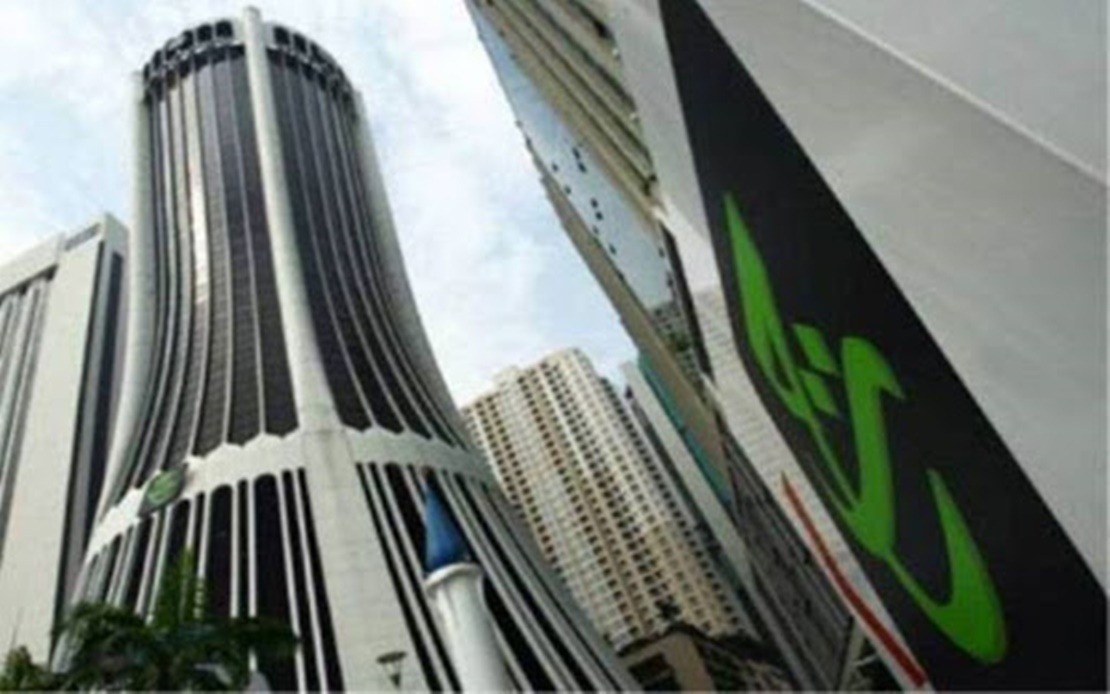
The Royal Commission of Inquiry's examination of Lembaga Tabung Haji (TH) operations has exposed a troubling practice that strikes at the heart of institutional financial governance: the use of internal management estimates to determine the value of assets worth billions of ringgit. According to the RCI findings covering 2014 to 2020, merely RM556 million out of RM4.6 billion in total property valuations received support from professional valuers, leaving RM4.044 billion dependent on estimates produced by management itself. This imbalance has prompted serious concern from economists about the institution's financial transparency and the reliability of figures used to determine distributions to depositors.
The fundamental problem with relying on internal estimates lies in the inherent conflict of interest facing management teams. When executives are tasked with valuing assets under their own stewardship, they face subtle but powerful incentives to present an optimistic picture of organisational health. Prof Emeritus Dr Barjoyai Bardai of Malaysia University of Science and Technology points out that while this practice does not necessarily indicate deliberate wrongdoing, it removes the independent verification that provides crucial assurance to stakeholders and regulators. The distinction matters enormously because depositors in Tabung Haji are not typical investors but pilgrims whose savings represent profound religious commitment, making transparency and prudence especially important.
One of the most significant consequences of inflated asset valuations relates to the institution's capacity to distribute hibah, or dividends, to members. When Realisable Asset Value (RAV) calculations rest on optimistic estimates rather than conservative, market-tested figures, the apparent capacity to distribute returns becomes artificially elevated. This creates a cascading problem where management may authorise dividend payments that exceed what conservative financial principles would permit. Prof Barjoyai emphasises that if assets are valued substantially above what could realistically be obtained in a sale, TH's stated financial position presents an illusion of strength that masks underlying vulnerability.
The RCI report reveals the specific mechanics of how this system operated. Rather than using asset and liability values reported in the institution's own financial statements, TH management deliberately calculated RAV using inflated property valuations and management estimates. This two-track valuation system is particularly problematic because TH management justified the practice by arguing that Section 22 of the Tabung Haji Act 1995 did not clearly define assets, thereby granting them discretion in determining valuation methods. This interpretation, whether intentional or not, allowed management to select methodologies that served their interests while claiming legal ambiguity as justification.
The inclusion of RM2.294 billion from TH Plantations Berhad in the RAV calculation exemplifies how the valuation methodology could distort the overall picture. By including substantial subsidiary valuations without adjustment for market realities—the report notes that no downward adjustments were made for investments whose market prices had fallen to very low levels—the overall asset base presented to regulators and depositors bore little resemblance to genuine economic value. This selective treatment of assets, upward for properties valued by management and unchanged for depreciated investments, demonstrates how valuation methodology choices accumulated to significantly overstate TH's financial position.
Prof Dr Ahmed Razman Abdul Latiff from Putra Business School identifies a governance failure that extended beyond valuation methodology to encompass the institution's entire oversight structure. The board of directors and audit committee bear responsibility for subjecting management assumptions to rigorous scrutiny before accepting them as the basis for material financial decisions. When estimates rather than verified data form the foundation for determining compliance with legislative requirements—in this case, Section 22 of the Tabung Haji Act 1995—the layers of review should intensify rather than diminish. Instead, the RCI findings suggest that oversight mechanisms functioned inadequately, raising questions about whether internal controls were genuinely independent or merely performed in form without substance.
The audit function itself emerges from the RCI report as a focal point for concern. The PricewaterhouseCoopers audit report cited by the inquiry documented that RAV calculations relied on management estimates rather than market prices for listed shares or independent professional valuations. Yet these concerns, apparently documented by auditors examining TH's financial position, did not generate sufficient scrutiny in earlier years. Prof Ahmed Razman questions why auditors did not amplify warnings about the methodology underlying hibah distributions, particularly given the direct impact on depositors' rights and the institution's compliance with statutory requirements. This gap between audit knowledge and regulatory action suggests systemic weaknesses in how concerns are escalated and acted upon.
The distinction between what management claimed in annual financial statements and what management actually used for dividend distribution purposes reveals a troubling bifurcation in how TH presented itself internally versus externally. This two-standard approach raises uncomfortable questions about whether management deliberately maintained separate valuation systems to obscure the true financial position or whether institutional processes had simply evolved in ways that lacked internal coherence. Either explanation points to governance failure, though the consequences differ substantially depending on whether the practice reflected conscious manipulation or accumulated procedural drift.
Moving forward, economists emphasise that TH requires fundamental reforms to its valuation governance. Prof Barjoyai recommends that high-value properties undergo independent professional valuation using consistent methodologies supported by market evidence. RAV calculations should be governed by explicit, transparent standards, independently audited and verified by specialist committees comprising investment experts and qualified accountants with no management conflicts. These recommendations reflect a return to basic financial governance principles: estimates should be conservative rather than optimistic, verifiable through external sources, and insulated from influence by parties with direct interest in the outcome.
The implications extend beyond TH itself to the broader financial services sector in Malaysia. The RCI findings demonstrate how ambiguity in legislative definitions of assets, combined with inadequate governance oversight, can enable significant divergence between stated and actual financial position. Regulators and boards across multiple institutions should examine whether similar dual-valuation systems exist elsewhere, particularly in entities managing collective savings. The depositors in Tabung Haji—often individuals with modest savings and deep religious commitment to pilgrimage—deserve institutional frameworks that prioritise transparency and conservatism over optimistic asset valuations that serve management convenience.
The path to rebuilding trust requires more than procedural tinkering. The RCI report, now in the public domain following its release on 29 July and debate at a special Dewan Rakyat sitting on 11 August, should catalyse meaningful structural change. TH management must operate under valuation methodologies that external stakeholders can verify, understand and challenge. The institution's board and audit committee must function as genuine guardians of depositor interests rather than endorsers of management preferences. Until valuation governance achieves that standard, the figures underlying hibah distributions will remain susceptible to the same doubts and concerns that the RCI investigation has now brought into sharp public focus.

