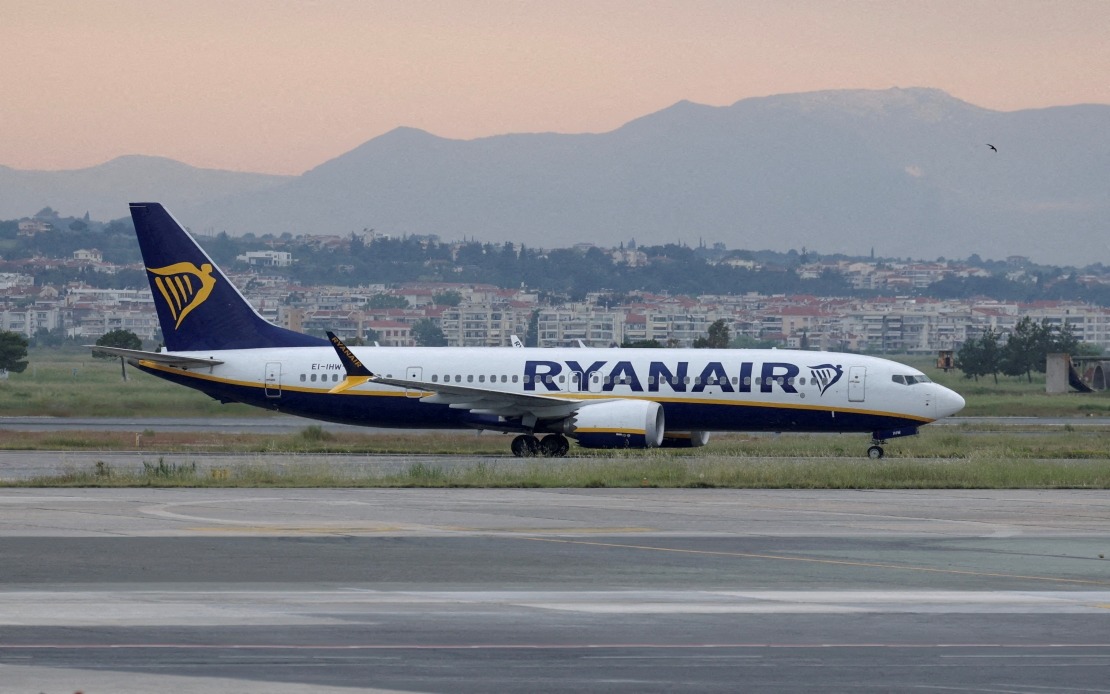
A routine commercial flight from Thessaloniki to Memmingen turned into a harrowing crisis on Friday when a window suddenly fractured mid-flight, sending panic through the cabin of a Ryanair aircraft and triggering an emergency return to its departure airport. The incident, which unfolded shortly after take-off, highlighted the unpredictable nature of in-flight emergencies and the rapid response capabilities required of flight crews operating across European airspace.
Accounts from passengers and eyewitnesses paint a dramatic scene of the moment the structural failure occurred. A loud explosive sound resonated through the cabin as the window pane disintegrated, an immediate indicator to those aboard that something catastrophic had taken place. The closest passenger to the breach suffered injuries in the incident, with one witness providing particularly alarming detail to Greek broadcaster ERT that the affected traveller's head and shoulders were visibly protruding beyond the aircraft's fuselage through the gaping aperture.
The rapid response of fellow passengers may well have prevented a tragedy of far greater proportions. Other travellers seated nearby managed to pull the injured man back into the cabin, an act of immediate intervention that undoubtedly saved his life. Had he remained partially ejected from the aircraft at altitude, the consequences would have been catastrophic. Simultaneously, standard safety protocols activated automatically, with oxygen masks descending throughout the cabin as the aircraft's pressurisation systems detected the breach. The combination of these events triggered widespread alarm among those on board, with multiple eyewitness accounts describing screaming and considerable distress throughout the passenger compartment.
Social media footage captured during the incident provided visual evidence of the panic unfolding inside the aircraft. Videos showed oxygen masks deployed in the cabin as passengers reacted to the emergency situation developing around them. These recordings, shared widely across digital platforms, offered a rare glimpse into the immediate aftermath of such an in-flight structural failure.
The flight crew's response was swift and decisive. The pilot, recognising the severity of the situation and unable to assess the full extent of structural damage to the aircraft, made the critical decision to abort the journey to Memmingen in southern Germany and return immediately to Thessaloniki Airport. The return flight from the aircraft's cruising altitude to the departure airport took approximately twenty minutes, during which passengers would have grappled with the knowledge that they were flying in a compromised aircraft with an open breach in the fuselage.
The injured passenger, identified as a national of Serbia, was transferred from the aircraft to emergency medical services upon landing and transported directly to a hospital in Thessaloniki for treatment of his injuries. The extent of his injuries and long-term prognosis remain unclear at this stage, though his survival and rescue by fellow passengers suggests the injuries, while serious, were not immediately life-threatening.
Both Ryanair and the competent aviation authorities have maintained a cautious stance regarding public disclosure of details. As of the time of reporting, neither the airline nor relevant regulatory bodies had issued official statements addressing the incident, its causes, or preliminary findings. This reticence is not uncommon in the immediate aftermath of aviation incidents, as thorough investigation takes precedence over rapid public commentary.
However, an investigation into the window failure has been formally initiated, according to reporting by Greek broadcaster ERT. Such investigations typically examine manufacturing defects, maintenance records, impact damage, and structural fatigue as potential contributing factors. In the European Union, aviation accident investigation falls under the authority of member states' accident investigation boards, and Greece's competent authority would lead the inquiry into this Ryanair incident.
The incident raises broader questions about aircraft window integrity and maintenance protocols across the low-cost carrier industry. Windows on commercial aircraft are subjected to rigorous engineering standards and regular inspection regimes, yet catastrophic failures, though rare, do occur. The sudden nature of this fracture suggests either an undetected pre-existing defect, an impact from external debris or bird strike at an undetectable moment, or possibly a manufacturing flaw that escaped quality control processes.
For Malaysian and Southeast Asian travellers, such incidents underscore the importance of understanding in-flight safety procedures and the resilience of modern aircraft design. While window failures are extraordinarily rare given the millions of flights conducted globally each year, the compartmentalised design of modern aircraft ensures that a single point failure—even one as dramatic as a window breach—does not compromise the aircraft's fundamental airworthiness or the safety of the majority of occupants.
The incident also demonstrates the effectiveness of international aviation safety standards and crew training protocols. The rapid response of both fellow passengers and flight crew prevented what could have escalated into a fatal emergency. Modern aircraft are engineered with multiple redundancies and safety systems designed precisely to handle such unexpected breaches, ensuring that passenger safety can be maintained even when individual components fail unexpectedly.

