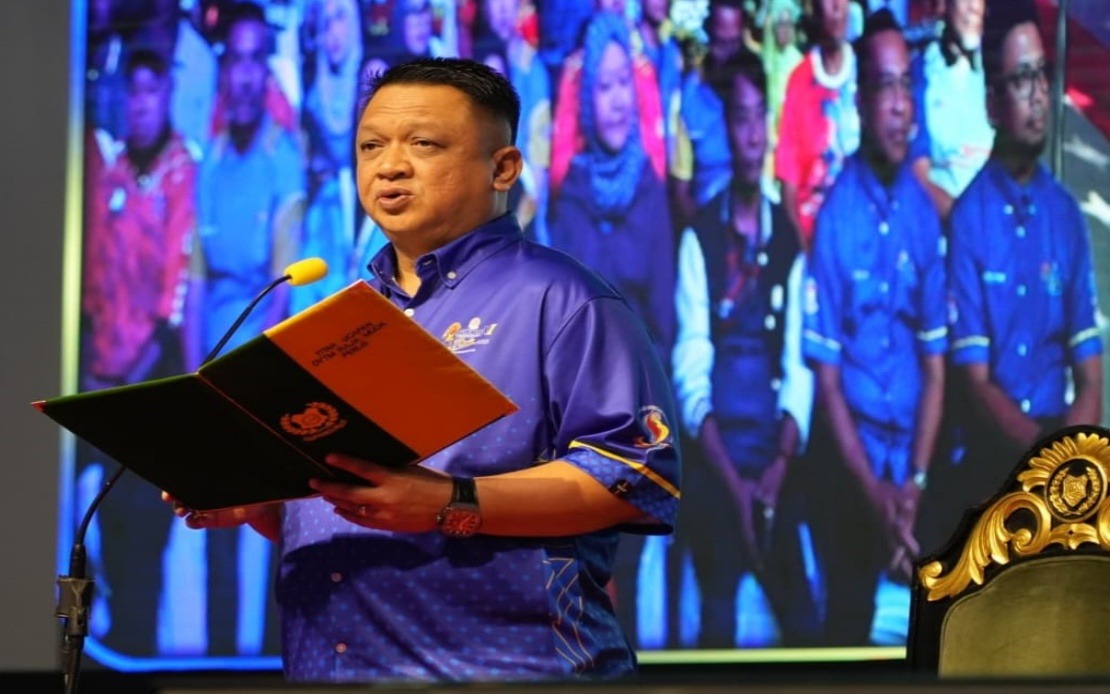
Malaysia's development agenda received fresh impetus when Raja Muda of Perlis Tuanku Syed Faizuddin Putra Jamalullail articulated a comprehensive strategic roadmap for Majlis Amanah Rakyat during the opening of the 11th Sukan MARA Se-Malaysia in Kangar. His Royal Highness presented three foundational thrusts designed to equip the agency's personnel with the capabilities and mindset necessary to navigate an increasingly complex and technology-driven future, signalling the state's commitment to positioning MARA as a forward-thinking institution rather than a conventional bureaucratic body.
The first strategic pillar emphasizes technological innovation as a non-negotiable imperative. Rather than positioning MARA as a passive observer of technological change, Tuanku Syed Faizuddin Putra urged the organization to champion artificial intelligence and emerging digital tools as instruments for amplifying institutional effectiveness. This directive carries particular significance for Malaysia, where digital transformation remains unevenly distributed across government agencies. By explicitly endorsing AI integration, the Raja Muda has signalled royal support for modernization efforts that might otherwise face institutional resistance, providing political cover for MARA leadership to pursue technological investments that enhance operational efficiency, streamline service delivery, and elevate the organization's capacity for sophisticated problem-solving and creative intervention in Malaysian entrepreneurship.
The entrepreneurial dimension represents the second crucial strategic axis. Tuanku Syed Faizuddin Putra emphasized that MARA must transcend its traditional role as a domestic support institution and become an incubator for globally competitive enterprises. This reframing acknowledges a persistent challenge within Malaysian development policy: while numerous agencies support small and medium enterprises domestically, few mechanisms effectively bridge the gap between local success and international market penetration. By charging MARA with producing resilient, innovative entrepreneurs capable of competing on global stages, His Royal Highness has essentially redirected the agency toward addressing Malaysia's competitiveness gap in international trade and investment. For regional readers, this approach mirrors broader Southeast Asian trends toward export-oriented entrepreneurship, where countries increasingly recognize that domestic market saturation necessitates external expansion.
Leadership transformation constitutes the third pillar, perhaps the most ambitious component of the strategic vision. The Raja Muda articulated a leadership paradigm fundamentally distinct from conventional public service practice. Rather than cultivating administrators who implement predetermined policies with fidelity, he called for decision-makers characterized by boldness, strategic acuity, and catalytic capacity. This represents a subtle but consequential philosophical shift within Malaysian institutional discourse. The emphasis on rapid decision-making and transformational thinking implicitly critiques bureaucratic caution and procedural rigidity, while simultaneously elevating the status of entrepreneurial thinking within government structures. For MARA personnel, this translates into permission—indeed, encouragement—to challenge conventional approaches and champion innovation rather than merely maintaining institutional status quo.
The occasion for articulating these directives, the 11th Sukan MARA Se-Malaysia, provided an appropriate platform for discussing institutional culture and cohesion. Sports tournaments function as vehicles for reinforcing organizational identity beyond formal hierarchies, creating informal networks that transcend departmental silos. Tuanku Syed Faizuddin Putra's characterization of SUKMAS as a unifying mechanism that transforms sport into a shared language resonates with contemporary organizational development theory emphasizing culture as fundamental to institutional effectiveness. By framing athletic competition as simultaneously recreational and strategic—strengthening bonds while reinforcing organizational values—His Royal Highness connected the sporting event to the broader institutional transformation agenda, suggesting that cultural cohesion represents a prerequisite for executing the three strategic thrusts.
The biennial tournament's scale underscores MARA's organizational reach and capacity. With 3,000 athletes and officials representing 14 teams nationwide competing across 15 sporting disciplines, SUKMAS demonstrates the agency's ability to mobilize personnel and resources across geographic boundaries. This mobilization capacity, typically reserved for operational deployments, assumes strategic importance within the transformation framework. Agencies capable of organizing complex, multi-stakeholder events possess organizational infrastructure potentially redirectable toward innovation and entrepreneurship initiatives. The tournament thus functions as both morale-building exercise and implicit demonstration of institutional capability.
Mara director-general Datuk Seri Zulfikri Osman's attendance and subsequent media remarks emphasized the community engagement dimension, noting the tournament's value for strengthening MARA-community relationships, particularly within Perlis. This articulation reveals consciousness that strategic institutional transformation requires not merely internal culture change but also external legitimacy and community buy-in. By positioning SUKMAS as community engagement mechanism, MARA leadership signals recognition that institutional transformation requires broader stakeholder alignment beyond personnel training and technological investment.
The timing of these strategic pronouncements carries contextual significance within Malaysia's broader policy environment. As the nation grapples with middle-income trap pressures and intensifying regional competition, agencies historically associated with affirmative action programs face mounting expectations to demonstrate contemporary relevance and developmental contribution. By explicitly embracing technology, international competitiveness, and transformational leadership, Tuanku Syed Faizuddin Putra has effectively repositioned MARA within contemporary development discourse, reframing the agency not as a legacy institution maintaining historical mandates but as a modernized entity capable of addressing twenty-first-century economic challenges.
For Malaysian observers and regional analysts, the Raja Muda's intervention illustrates how institutional modernization within developing democracies frequently requires royal or executive direction to overcome bureaucratic inertia. While MARA possessed the technical capacity for technological adoption and entrepreneurial reorientation, articulation of explicit strategic direction from high authority provides the political impetus and institutional legitimacy necessary for meaningful implementation. The three thrusts offer MARA personnel clear directives for organizational behavior modification, reducing ambiguity that might otherwise dilute reform initiatives.
Implementation challenges remain substantial, however. Technological adoption, particularly AI integration, requires significant capital investment, skills development, and organizational restructuring—demands that compete with existing resource allocations. Producing globally competitive entrepreneurs necessitates institutional capabilities spanning market intelligence, international business development, and risk management, competencies not traditionally concentrated within MARA's operational framework. Cultivating transformational leadership within hierarchical, rules-oriented bureaucracies consistently proves difficult, often requiring personnel changes alongside cultural interventions. The strategic vision articulated by Tuanku Syed Faizuddin Putra thus represents an aspirational framework requiring sustained commitment, adequate resourcing, and genuine willingness among institutional leadership to tolerate the disruption inevitably accompanying meaningful transformation.

