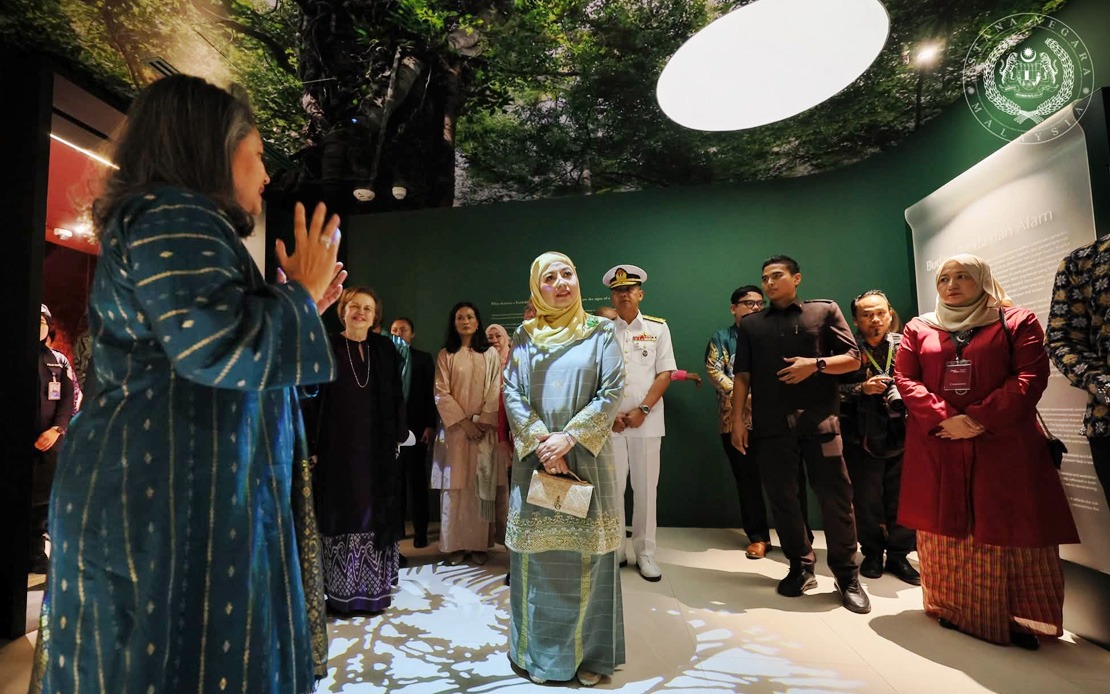
Queen Raja Zarith Sofiah has officially opened the Merdeka Textile Museum at the Menara Merdeka Maybank compound here, marking a significant milestone in the nation's efforts to preserve its cultural heritage. The inauguration ceremony highlighted Malaysia's commitment to celebrating textile traditions that define the Malay world and its diverse communities through immersive storytelling and interactive cultural programming.
The facility, established by PNB Merdeka Ventures Sdn Bhd—a subsidiary of the major state-linked investment fund Permodalan Nasional Berhad—represents a contemporary approach to heritage conservation. Rather than simply displaying artefacts behind glass cases, the museum aims to provide visitors with deeper engagement through educational experiences that reveal the cultural significance embedded within Malaysia's textile traditions. This curatorial philosophy recognises that clothing and accessories carry narratives about identity, social structures, and artistic achievement across generations.
In remarks conveyed through official channels, the Queen emphasised that every nation carries a cultural inheritance requiring active appreciation and stewardship. She articulated a widely shared concern among heritage advocates: that without deliberate preservation efforts and intergenerational knowledge transfer, distinctive cultural practices risk fading from public consciousness. The Queen's focus on inspiring young Malaysians underscores a fundamental challenge facing museum practitioners regionally—attracting younger audiences to traditional heritage in an age of rapid social change and competing entertainment options.
The museum's thematic emphasis extends beyond aesthetic appreciation to encompass the values and identity markers that cultural practices represent within Malaysian society. Traditional textiles, the Queen noted, function as repositories of cultural meaning, embodying the aesthetic principles, technical mastery, and social customs that communities have refined over centuries. By situating the museum as a centre for learning and knowledge exploration, the institution positions itself as more than a tourist attraction—it claims a role in shaping how Malaysians understand themselves and their place within broader Asian contexts.
The museum's foundational collection derives from the personal assemblage of the late Sharifah Azah Syed Mohammed Alsagoff, commonly known as Azah Aziz, whose family connections span prominent institutional circles. Her late husband, Prof Diraja Ungku Abdul Aziz Abdul Hamid, and their daughter, Tan Sri Dr Ungku Zeti Akhtar Aziz, the former governor of Bank Negara Malaysia, represent influential figures in Malaysia's intellectual and financial leadership. The decision to house Azah Aziz's collection within this new institution reflects both the family's commitment to public heritage and the museum's positioning as a repository for significant private collections that might otherwise remain inaccessible to the broader public.
The core holdings encompass 240 garments and 69 pieces of traditional jewellery, representing distinct categories of Malay textile craftsmanship. Songket sarongs, celebrated for their gold and silver thread work, exemplify the technical sophistication and labour intensity characteristic of premium textile production. Limar Baju Kurung pieces demonstrate regional variations in traditional dress construction, while Tekat Emas—embroidered textiles employing metallic thread—showcase another dimension of decorative artistry. Together, these items provide visitors with concrete examples of the diversity within Malay textile traditions and the specialised knowledge required for their creation.
The physical infrastructure supporting the collection reflects contemporary museum best practices adapted for textile conservation. Eight distinct galleries allow thematic organisation of materials, guiding visitors through different aspects of textile heritage. The integrated study centre addresses the scholarly and practical dimensions of textile work. A dedicated conservation laboratory ensures that delicate materials receive appropriate environmental control and careful restoration when necessary. The fabric library permits researchers and students to examine samples directly, fostering hands-on learning that complements exhibition experiences. The textile knowledge centre functions as a reference resource, housing documentation, research materials, and potentially digital archives that extend the museum's reach beyond physical visitors.
The museum's establishment occurs within a broader regional conversation about cultural preservation in Southeast Asia. Across the region, countries face similar pressures to maintain traditional knowledge systems while adapting to contemporary contexts. Malaysia's approach—leveraging state investment mechanisms and private collections while emphasising educational accessibility—reflects policy choices about how heritage serves national identity construction and social cohesion. The museum's focus on textiles particularly resonates across the region, where textile arts maintain deep cultural significance and continue to evolve as living practices rather than historical relics.
Attendance by senior government figures, including Minister Hannah Yeoh and Chief Secretary Tan Sri Shamsul Azri Abu Bakar, underscores official recognition of the institution's cultural and social significance. The presence of PNB group chairman Raja Tan Sri Arshad Raja Tun Uda reflects the financial commitment underlying the project. Such high-level participation signals government backing for heritage initiatives and positions the museum as an enterprise aligned with broader national development priorities. This institutional visibility may facilitate future funding, collaborative programming, and integration with educational curricula.
Looking forward, the Merdeka Textile Museum faces the ongoing challenge of translating curatorial ambitions into sustained public engagement. Success requires developing programming that appeals across demographic groups, building partnerships with educational institutions, and leveraging digital technologies to extend the museum's influence. The institution's emphasis on inspiration for Malaysian women and youth suggests particular audiences the curators intend to reach. Achieving this goal demands not merely preserving textiles but actively demonstrating their contemporary relevance—showing how heritage traditions inform current artistic practice, entrepreneurship, and cultural identity among younger generations navigating rapidly changing Malaysian society.

