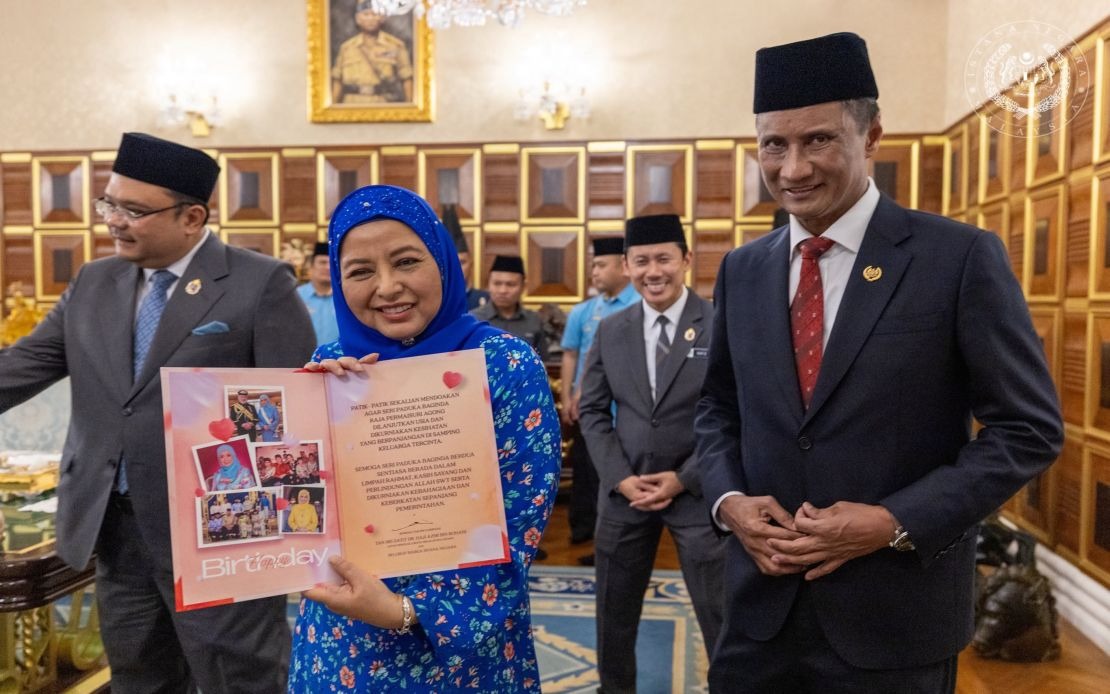
Her Majesty Raja Zarith Sofiah, Queen of Malaysia, marked another year on Wednesday with a formal courtesy visit from the kingdom's most senior palace officials. The occasion brought together the Comptroller of the Royal Household Tan Sri Dr Azmi Rohani and the Grand Chamberlain Datuk Azuan Effendy Zairakithnaini to Istana Bukit Serene in Johor, where they presented ceremonial greetings and tokens of appreciation organised by the entire palace household.
The birthday reception, confirmed through Sultan Ibrahim Sultan Iskandar's official social media channels, reflected the importance of such occasions in Malaysia's constitutional monarchy. These formal visits serve not merely as courtesy calls but as significant ceremonial moments that reinforce the bonds between the palace administration and the reigning Queen. The gathering underscored the structured protocols that govern interactions within the royal household, where even celebratory moments follow carefully established procedures and hierarchies.
Tan Sri Dr Azmi Rohani's role as Comptroller places him among the highest-ranking officials in the palace bureaucracy. His participation, alongside the presence of Datuk Azuan Effendy Zairakithnaini as Grand Chamberlain, demonstrated the formal recognition given to the Queen's birthday within institutional structures. These positions carry significant responsibility for managing daily palace operations, ceremonial functions, and the intricate logistics that support Malaysia's constitutional monarchy in modern times.
An accompanying guest at the Istana Bukit Serene gathering was Puan Sri Dr Noor Azizah Abdul Latif, spouse of the Comptroller. The inclusion of immediate family members in such official functions reflects broader patterns in Malaysian royal protocol, where spousal presence often adds another dimension of warmth and personal acknowledgment to what might otherwise remain purely institutional observances.
Central to the birthday celebrations was the presentation of traditional gifts carefully selected to mark the occasion. A specially prepared cake and a serving of yellow glutinous rice—items with cultural significance in Malaysian celebration traditions—were offered to Her Majesty. These gifts were not merely symbolic tokens but represented the collective goodwill of the entire Istana Negara management and staff, ranging from senior administrators to support personnel who keep the palace functioning daily.
The choice of yellow glutinous rice carries particular resonance within Malaysian and broader Southeast Asian contexts, where the colour holds auspicious significance in many traditional observances. By selecting items rooted in local culinary and cultural traditions rather than introducing foreign elements, the palace demonstrated its grounding in Malaysian heritage even within formal institutional contexts. This attention to cultural detail reveals how royal households maintain their connection to the communities they serve.
Tan Sri Dr Azmi, speaking on behalf of all palace personnel, articulated formal wishes encompassing not only health but also broader dimensions of wellbeing and happiness. Such pronouncements, while ceremonial in nature, carry weight within Malaysia's governance framework. The explicit mention of prayers for continued good health reflects deeper concerns about the physical vitality of those holding constitutional positions, an element of particular significance given the demanding nature of royal responsibilities.
The location of the gathering—Istana Bukit Serene in Johor—underscores that royal duties extend across Malaysia's geographical landscape. The Johor royal residence serves as an important secondary centre for official functions, reflecting the federal nature of Malaysia's constitutional arrangement where state-level royalty maintains significant visibility and presence alongside federal institutions. Such visits ensure that the Queen's role is acknowledged across different regions of the kingdom.
For Malaysian observers, these birthday ceremonies represent touchstones of institutional continuity and constitutional normalcy. In a region sometimes marked by political volatility, the smooth execution of traditional palace protocols offers reassurance about governmental stability. The participation of senior palace officials in ceremonial functions demonstrates the functioning of established hierarchies and the continued centrality of the monarchy within Malaysia's broader institutional framework.
These occasions also serve broader diplomatic and national purposes, affirming the symbolic unity that the monarchy provides across Malaysia's diverse population. Birthday celebrations for the Queen, conducted with appropriate ceremony and involving senior state personnel, reinforce messages about institutional respect and national cohesion. Such moments, while appearing routine, contribute to the social fabric that supports Malaysia's constitutional system.
The public announcement of the birthday courtesy call through official social media channels reflects modern communication practices now embedded within traditional royal protocols. By sharing details of such celebrations with the wider public, the palace ensures transparency and enables citizens to participate vicariously in acknowledging significant occasions within the royal household. This approach balances the privacy and formality that have historically characterised royal life with contemporary expectations for institutional openness.
Moving forward, such birthday observances will likely continue as established elements of Malaysia's constitutional calendar, marked by appropriate ceremony and involving the necessary participation of senior palace officials. These occasions provide opportunities for institutional reflection on continuity, duty, and the constitutional foundations that structure Malaysia's governance arrangements.

