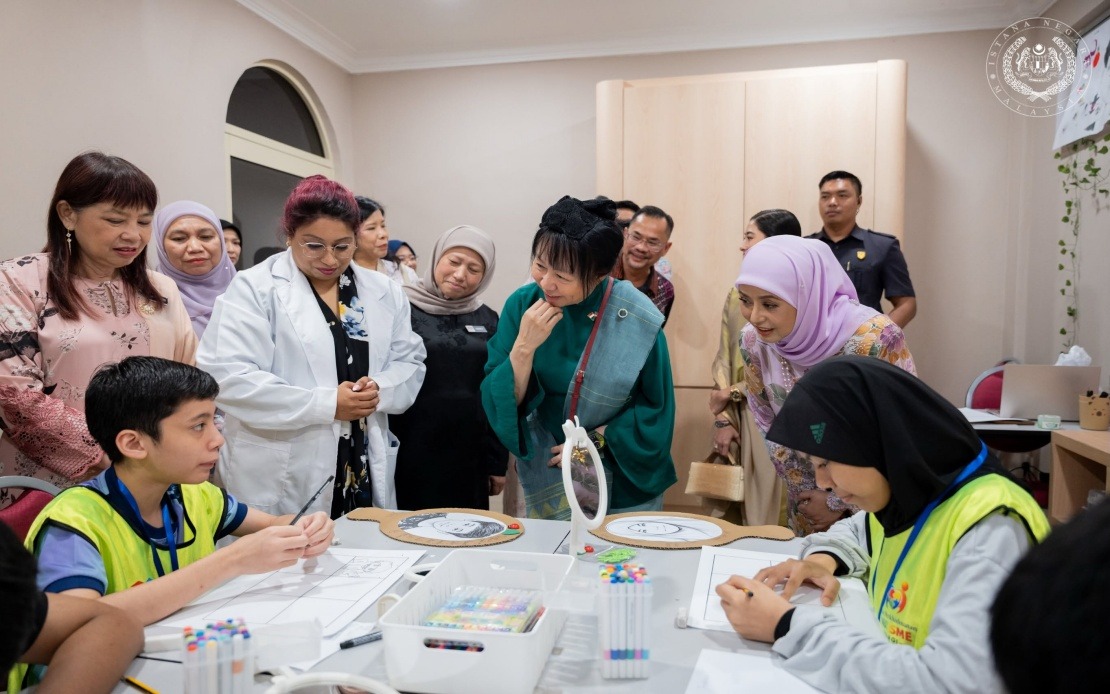
Her Majesty Raja Zarith Sofiah, Queen of Malaysia, welcomed Singapore First Lady Jane Ittogi Shanmugaratnam to the Bangi Autism Service Centre in a visit that underscored the strengthening diplomatic relationship between Kuala Lumpur and Singapore. The engagement, which took place on July 14, formed part of the broader state visit by Singapore President Tharman Shanmugaratnam, a high-level diplomatic occasion that commenced the previous day and included substantial bilateral programme activities.
The first lady's arrival was formally received by Her Majesty alongside Tunku Tun Aminah Sultan Ibrahim, with the gathering including several senior Malaysian government representatives. Prime Minister's wife Datuk Seri Dr Wan Azizah Wan Ismail attended alongside Women, Family and Community Development Minister Datuk Seri Nancy Shukri. The delegation further encompassed Deputy Minister Lim Hui Ying, ministry secretary-general Datuk Dr Maziah Che Yusoff, and Social Welfare Department director-general Datuk Che Murad Sayang Ramjan, reflecting the importance Malaysia placed on showcasing its social welfare infrastructure.
During the facility tour, Raja Zarith Sofiah and Jane Ittogi examined multiple therapeutic and training areas within the centre, including the Activities of Daily Living room, where individuals with autism receive comprehensive instruction in practical everyday tasks. The occupational therapy section and gymnasium facilities were also demonstrated, illustrating the integrated approach adopted by the institution to promote both therapeutic intervention and physical development for individuals on the autism spectrum.
The Bangi centre operates through a distinctive public-private partnership model that has become increasingly significant across Southeast Asia. The arrangement brings together government resources through the Social Welfare Department with expertise from the National Autism Society of Malaysia and the Damansara Damai Community-Based Rehabilitation Centre. This collaborative structure represents a potential template for regional neighbours considering how to expand autism services without overreliance on government funding alone, a consideration of particular relevance as autism diagnoses rise across the region.
Minister Nancy Shukri provided context on the evolving landscape of autism support in Malaysia, noting that 93,199 individuals with autism had been registered with the Social Welfare Department as of June of the previous year. She emphasised that this figure was not static but rather expected to climb substantially in the coming years, driven by growing community awareness and improved access to diagnostic screening services. The trajectory reflects a broader pattern visible throughout Southeast Asia where better public understanding and earlier identification have led to significantly higher registration numbers compared to previous decades.
The increase in registered cases carries dual implications. On one hand, it demonstrates progress in destigmatisation and accessibility of diagnostic pathways, enabling families to secure support services for affected relatives. Conversely, it places considerable pressure on social welfare infrastructure to meet expanding demand, a challenge faced by both Malaysia and its regional neighbours. Singapore's experience in managing autism services, evidenced by the First Lady's interest in the Bangi centre, positions the city-state as a potential source of best practices and lessons for the broader region.
The visit concluded by late morning and served to reinforce the broader diplomatic agenda between Kuala Lumpur and Singapore at a time when both nations are deepening cooperation across multiple sectors. Beyond ceremonial aspects, the facility tour provided an opportunity for Malaysian officials to demonstrate the country's commitment to inclusive social services and to exchange methodologies with Singapore officials who bring experience from managing similar programmes in a developed urban context.
Autism services across Southeast Asia remain unevenly distributed, with significant resource constraints limiting provision in rural areas. Malaysia's public-private partnership approach at Bangi represents an attempt to create sustainable models that might eventually expand beyond the Klang Valley. The involvement of non-governmental organisations such as NASOM has been crucial in advocacy and service delivery, though funding remains a persistent challenge across the region.
The state visit provides an occasion to reflect on how Malaysia and Singapore, despite geographical proximity and historical differences, increasingly find common cause in social development priorities. Both nations face demographic and health challenges that transcend borders, and collaborative exchanges around autism services, early intervention programmes, and community rehabilitation represent practical areas where bilateral cooperation delivers tangible benefits to citizens.
Looking forward, the international profile given to the Bangi centre through this high-level visit may generate increased awareness and potentially attract additional resources and philanthropic support. For Malaysian readers and policymakers, the event underscores the importance of continued investment in neurodevelopmental support services and the value of public-private partnerships in extending reach to affected communities. The diplomatic context also signals that social welfare, often overshadowed by economic and security considerations, occupies a meaningful place in Malaysia's bilateral engagement strategy.

