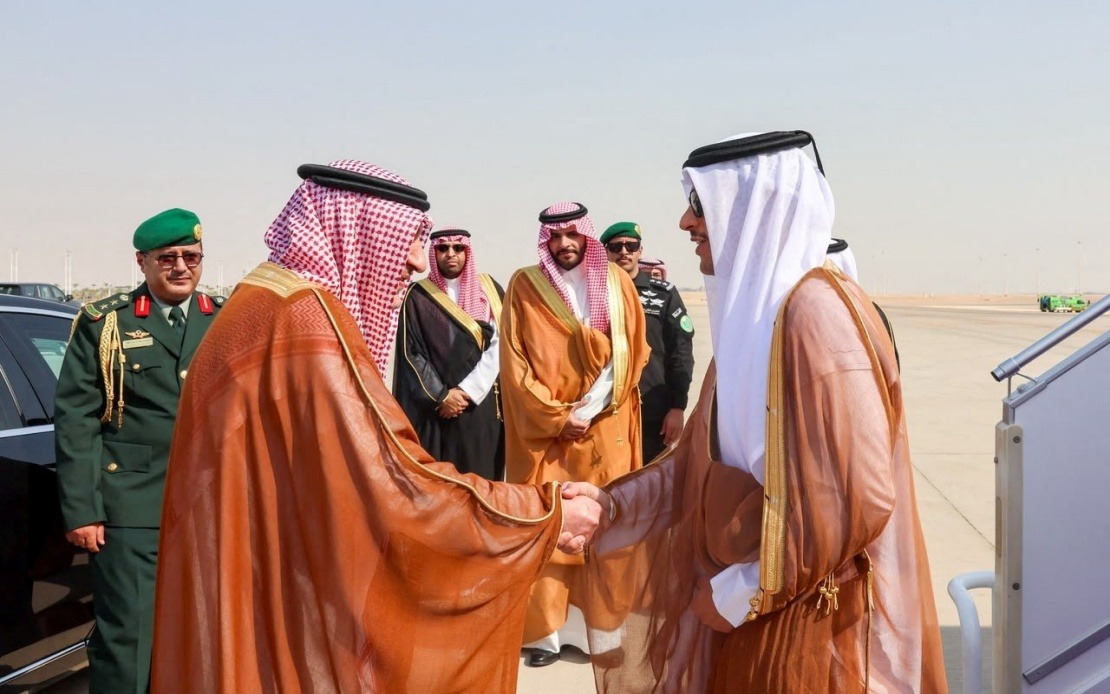
Qatar's Prime Minister Sheikh Mohammed bin Abdulrahman bin Jassim Al Thani touched down in the Saudi capital of Riyadh on Wednesday for a state visit that underscores the two Gulf neighbours' commitment to managing regional instability through dialogue and multilateral engagement. The high-level trip, which brought the Qatari leader to meet with Saudi Foreign Minister Faisal bin Farhan, reflects deepening cooperation between Doha and Riyadh at a moment when Middle Eastern tensions remain elevated across multiple fronts.
The formal discussions between Sheikh Mohammed, who doubles as Qatar's foreign minister, and his Saudi counterpart centred on strengthening bilateral relations while addressing the complex security landscape affecting the broader region. According to Qatar's Foreign Ministry, the two officials examined recent developments on the geopolitical stage and examined how both nations might contribute to "diplomatic efforts to de-escalate tensions and enhance security and stability." This language, carefully chosen in official statements, signals a shared understanding that military posturing has reached limits and that creative diplomacy must take precedence.
Both governments reiterated their fundamental belief that international disputes are best resolved through negotiation rather than confrontation. This commitment to peaceful resolution carries particular weight given the region's history of proxy conflicts and military interventions. The reaffirmation represents not merely diplomatic courtesy but a substantive position that carries consequences for how other regional actors might calibrate their own strategies and behaviour. When Saudi Arabia and Qatar align on this principle, smaller or less influential nations take note.
A key area of emphasis during the Riyadh meetings involved securing coordination across regional and international bodies to prioritise dialogue mechanisms. This reflects recognition that no single nation, however powerful, can unilaterally impose stability. The two countries discussed marshalling collective efforts that might bring together disparate actors whose interests sometimes conflict. For Malaysian and Southeast Asian observers, this emphasis on multilateral coordination offers a template relevant to managing tensions in other disputed areas, including the South China Sea, where dialogue frameworks have proven essential.
Maritime security emerged as a concrete concern requiring urgent attention. Both officials underscored the importance of protecting navigation routes in the Arabian Gulf and Red Sea, conduits through which enormous volumes of global commerce flow daily. Disruptions to these waterways create ripple effects across international supply chains, affecting economies as distant as Malaysia. The commitment to ensure unimpeded trade flows reflects anxieties about how regional conflicts might strangle global commerce and trigger economic consequences that extend far beyond the Middle East itself.
Sheikh Mohammed's arrival was marked by a formal reception from Saudi Deputy Foreign Minister Waleed bin Abdulkarim Al-Khereiji, a gesture indicating the importance Riyadh attaches to the visit. Such ceremonial elements, while sometimes overlooked by observers focused on substantive outcomes, carry symbolic weight in Gulf diplomacy and signal to other regional and international actors the calibre of engagement taking place. The carefully orchestrated welcome reflected bilateral respect and suggested that both capitals viewed this engagement as a flagship moment for their relationship.
The timing of this state visit occurs against a backdrop of heightened tensions stemming from the enduring rivalry between Iran and the United States, with Saudi Arabia firmly positioned within the American security architecture through longstanding defence partnerships and alignment on regional strategy. This context looms large over all discussions between the two Gulf states, as both must navigate their relationships with external powers while managing their own bilateral ties and broader Gulf Cooperation Council dynamics. The challenge for both Doha and Riyadh involves balancing these competing pressures without allowing external powers to dictate their own foreign policy priorities.
Qatar's diplomatic activism in recent years has positioned it as a more independent actor willing to maintain channels of communication with various regional players, including Iran, a stance that sometimes creates friction with Saudi Arabia but also endows Doha with unique convening power. The visit suggests a deliberate effort by both nations to bridge their perspectives and present a more unified Gulf front on regional challenges. This cooperation carries implications for how the Gulf region might respond collectively to emerging crises and how Arab states might leverage greater cohesion in negotiations with extra-regional powers.
For Southeast Asian nations like Malaysia, developments in Middle Eastern diplomacy deserve close attention given the region's role as a major energy supplier and the interconnected nature of global security. Instability in the Gulf reverberates through shipping lanes, energy markets, and international stability mechanisms that affect Asian economies. Malaysia's own experience navigating complex regional relationships while maintaining bridges to multiple powers offers insights relevant to how Gulf states might manage their diplomatic challenges without allowing conflicts to spiral beyond control.
The discussions between Sheikh Mohammed and Faisal bin Farhan represented one component of a broader regional effort to reduce tensions through sustained dialogue. While official statements provided limited detail about specific agreements or outcomes, the very occurrence of such high-level engagement signals that even during periods of significant tension, channels for communication remain open and both sides retain commitment to pursuing solutions through negotiation. This willingness to engage, particularly when relations have been strained, forms the foundation upon which future cooperative initiatives might be built.

