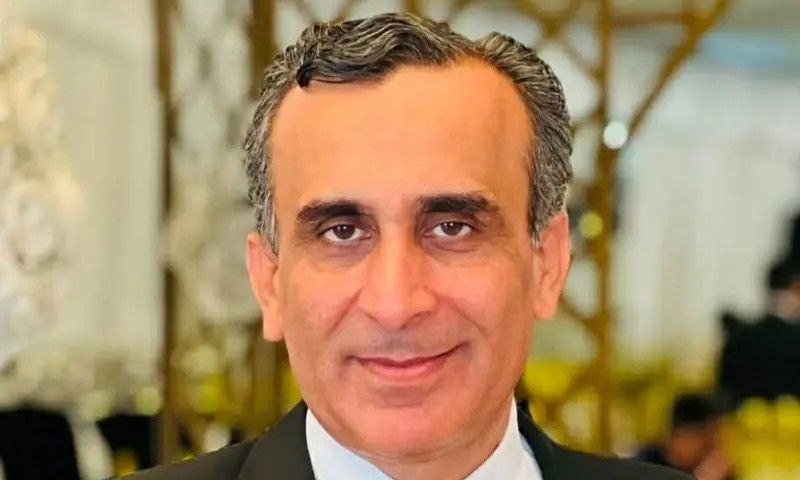
The provincial government of Punjab has formally appointed Irfan Sadiq Tarar to the position of Prosecutor General, filling a vacancy created by the judicial advancement of his predecessor. The announcement, made through official notification on Saturday, represents a significant personnel shift within the province's prosecution apparatus at a time when Pakistan's legal system continues to navigate multiple institutional reforms.
Tarar's appointment comes after Farhad Ali Shah vacated the Prosecutor General position following his nomination as an additional judge of the Lahore High Court, a trajectory that reflects the movement of senior legal professionals between prosecutorial and judicial branches. The elevation of Ali Shah underscores the interconnected nature of Pakistan's senior legal hierarchy, where accomplished prosecutors often transition into judicial roles, creating cascading changes throughout the system.
The Punjab government formalized the appointment under Section 6 of the Punjab Criminal Prosecution Service Act 2006, establishing Tarar's tenure for an initial three-year period. This legislative framework provides the constitutional and administrative foundation for prosecutorial appointments at the provincial level, ensuring that such decisions operate within established legal parameters rather than executive discretion alone. The three-year term structure allows for periodic reassessment of prosecutorial leadership while providing sufficient continuity for institutional operations.
Tarar brings considerable experience from his previous roles in provincial legal governance and bar leadership. His tenure as vice chairman of the Punjab Bar Council placed him at the intersection of legislative advocacy and professional regulation, positioning him to understand both the structural needs of the prosecution service and the broader concerns of the legal profession. Similarly, his service as vice president of the Lahore Bar Association, the largest and most influential bar association in Punjab, reflects his standing among practising lawyers and his engagement with grassroots legal community issues.
Affiliation with the Ahsan Bhoon-led Independent group represents Tarar's political positioning during his appointment. This alignment may indicate his perspective on legal independence and governance philosophy, though the prosecutorial role itself requires adherence to constitutional frameworks and professional standards regardless of political affiliation. The distinction between group membership and prosecutorial function remains important, as the Prosecutor General's office carries significant weight in the criminal justice system.
The timing of this appointment occurs within a broader context of institutional consolidation in Punjab following political shifts at the national level. The province's legal and prosecutorial institutions remain under significant scrutiny regarding their independence, impartiality, and capacity to handle high-profile cases. Tarar's appointment will inevitably be examined for its potential impact on prosecution priorities, case management, and the trajectory of ongoing investigations affecting various constituencies.
Senior prosecution positions in Pakistan carry particular importance given the visible role they play in high-profile corruption cases, terrorism trials, and other matters of national consequence. The Prosecutor General of Punjab functions not merely as an administrative officer but as a public-facing institutional representative whose decisions generate widespread political commentary and legal analysis. This visibility means that Tarar's leadership style, prosecutorial priorities, and approach to institutional management will merit close observation from civil society, the legal community, and political stakeholders.
The prosecution service itself faces mounting operational challenges, including case backlogs, resource constraints, and the need for modernized investigative frameworks. Tarar's experience in bar leadership suggests familiarity with infrastructure and coordination issues affecting the legal profession broadly. Whether his appointment signals a commitment to prosecutorial reform or represents a continuation of existing institutional trajectories remains to be clarified through his early policy statements and administrative decisions.
For Malaysian observers, Punjab's prosecutorial transition offers perspective on leadership transitions within South Asian legal systems, particularly regarding the relationship between prosecution and judicial branches. The three-year tenure structure and statutory appointment framework reflect institutional design patterns that differ from Malaysian models, where prosecutorial positions operate under distinct constitutional arrangements. Examining how Tarar navigates the complex institutional politics of Punjab's legal system will illuminate broader questions about prosecutorial independence and effectiveness across the region.
The appointment also reflects ongoing evolution within Pakistan's legal profession, where senior practitioners increasingly navigate between advocacy, judicial, and prosecutorial roles. This fluidity contrasts with more rigid career pathways in some Commonwealth jurisdictions and suggests different mechanisms for developing legal expertise at the highest institutional levels. Understanding these patterns contributes to comparative analysis of how legal systems train and advance their senior leaders.
Moving forward, Tarar will inherit a prosecution service managing thousands of cases across Punjab's diverse jurisdictions while operating within significant resource constraints. His background in bar association leadership provides some foundation for understanding professional expectations, though the administrative and strategic demands of the Prosecutor General position present distinct challenges. The coming months will reveal his approach to institutional priorities, his relationship with the provincial government, and his perspective on the relationship between prosecutorial independence and governmental oversight.
As Punjab's new Prosecutor General assumes office, stakeholders across the legal spectrum will monitor his tenure for signs regarding prosecutorial direction, case prioritization, and institutional positioning during a period of sustained political tension. His three-year appointment establishes a defined timeframe for assessing performance, making this transition period crucial for determining whether current institutional trajectories will shift or persist under new leadership.

