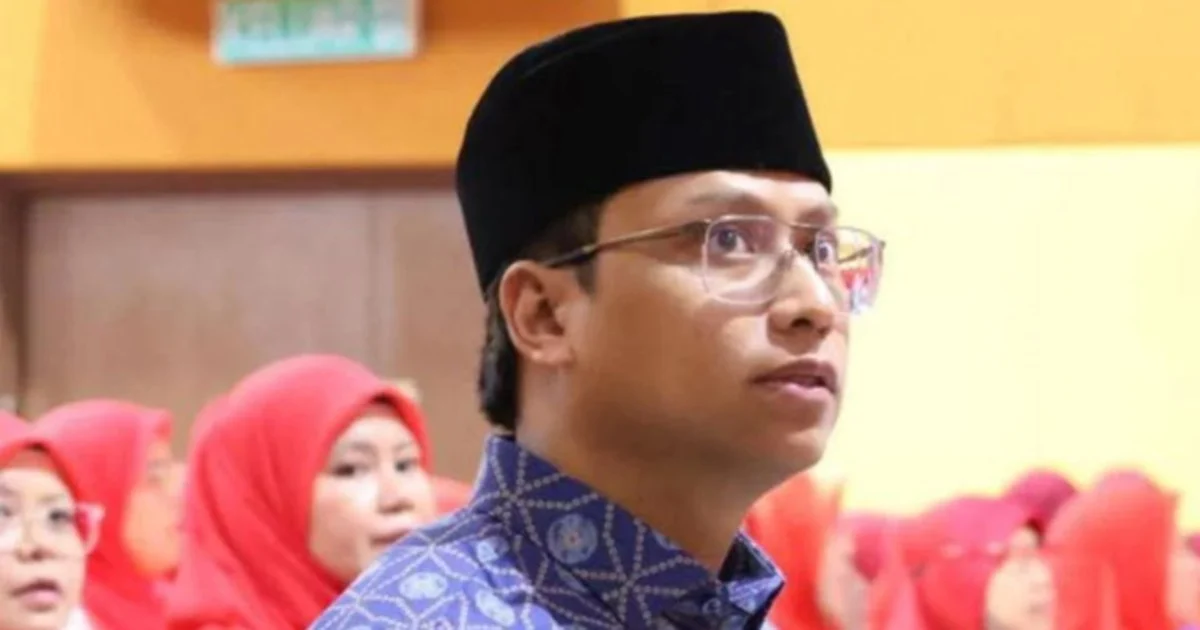
The son of Datuk Dr Mohd Puad Zarkashi has stepped forward to defend his father's recent pronouncements regarding Umno's political direction and strategic positioning, asserting that the former Supreme Council member's interventions reflect a deeper commitment to preserving the party's long-term viability rather than any personal agenda. Speaking in the aftermath of his father's public commentary, the younger Zarkashi emphasized that the remarks should be understood within the context of an elder statesman's concern for an organisation that has historically dominated Malaysian politics but faces mounting structural and reputational challenges.
Datuk Dr Mohd Puad Zarkashi, a longstanding figure within Umno's corridors of power, has in recent times articulated concerns about trajectories and decision-making within the party. His willingness to voice criticism publicly has generated considerable discussion within Umno circles and among observers of Malaysian political developments. The intervention by his son suggests that the family views these statements not as acts of disloyalty or opportunism, but rather as manifestations of institutional patrimonialism—an attempt to steer the movement toward decisions that might ensure its continued relevance and electoral competitiveness.
The defence mounted by Puad's son introduces a generational dimension to current Umno discourse. Younger members of influential families within the party machinery are increasingly visible in public commentary, sometimes articulating positions that diverge from official party messaging. This generational dynamic reflects broader tensions within Umno between those seeking continuity with historical power structures and those advocating more substantive internal reform. The willingness of the next generation to engage in public debate about party direction suggests that questions about Umno's future are not confined to backroom deliberations but increasingly feature in more open forums.
Historically, Umno has weathered numerous internal disputes and moments of organisational introspection. The party's survival through Malaysia's post-independence era, despite periodic scandals and leadership transitions, testifies to deep institutional roots and mechanisms of factional management. However, contemporary challenges operate at a different scale and velocity. Electoral performance has become more unpredictable, demographic shifts have altered the party's traditional support base, and competition from other Malay-Muslim political movements has intensified. Within this context, voices urging strategic reassessment carry particular weight.
The framing of the father's remarks as historically vindicated positions introduces an interesting temporal dimension to Malaysian political discourse. By invoking historical judgment as an arbiter, Puad's son appears to suggest that current controversies will eventually be recontextualised and understood differently by future observers. This rhetorical move is characteristic of insider critics within major political movements, who often position themselves as prescient voices whose wisdom will be recognised once immediate partisan heat dissipates. Whether such claims prove accurate depends largely on whether Umno's trajectory actually aligns with the direction his father advocated.
For Malaysian observers, the exchange highlights the continuing centrality of personality and family networks within Umno's power architecture. Despite modernisation efforts and formal democratisation procedures, informal relationships and dynastic influence remain significant factors in how the party negotiates internal disputes and shapes strategic choices. The public articulation of family support for controversial statements represents an exercise of social capital and network influence channelled through media discourse.
The implications extend beyond Umno's internal dynamics to broader questions about coalition management and interparty relationships. As Malaysia's ruling structure continues to evolve through various coalition arrangements, Umno's internal coherence becomes increasingly consequential. A party substantially weakened by unresolved internal tensions or sustained criticism from influential figures would encounter difficulty maintaining its leverage within any governing coalition. This explains why apparently internal party matters attract significant public attention from political commentators and observers of Malaysian governance.
The appeal to historical judgment also reflects a particular Malaysian political tradition wherein elder statesmen's pronouncements are treated with considerable deference. Datuk Dr Mohd Puad Zarkashi's long tenure within party structures grants him considerable authority to speak about Umno's institutional interests. His son's defence effectively extends this authority claim across a generational boundary, suggesting that multiple family members share conviction in the validity of the father's positions. This multiplied assertion of conviction may carry weight with certain constituencies within Umno who value institutional continuity and elder wisdom.
Looking forward, the question remains whether Puad's concerns gain traction within party decision-making structures or whether they remain marginalised as dissenting voices. The outcome will significantly influence Umno's trajectory over the coming years. If the party implements changes aligned with his suggestions and subsequently experiences political gains, his criticism will indeed be retrospectively validated. Conversely, if Umno continues current policies and maintains or improves its position, the criticism may be dismissed as misguided intervention from someone displaced from active leadership. This binary outcome structure, however, somewhat oversimplifies the complex dynamics through which parties actually change and adapt.
The family's public defence of Datuk Dr Mohd Puad Zarkashi's remarks ultimately represents an investment in particular visions of Umno's future. Whether those visions prove prescient or mistaken will depend on political developments beyond any individual's control. For now, the exchange has deepened public awareness of substantial internal disagreements within Malaysia's oldest and most institutionally entrenched political party.

