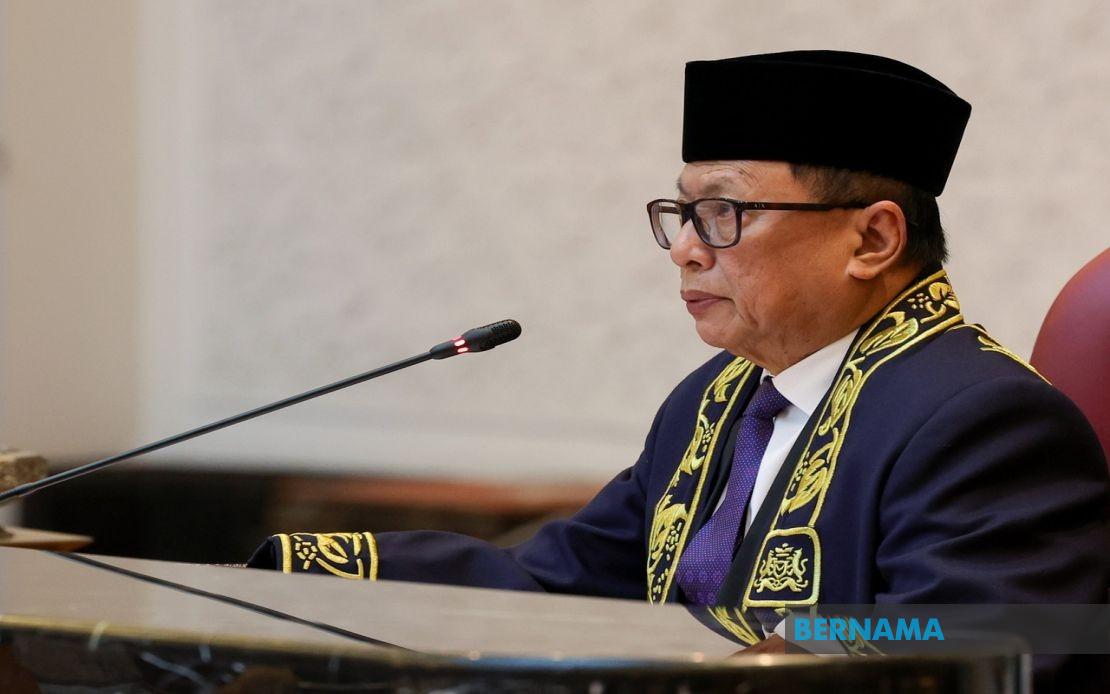
A prominent member of UMNO's Supreme Council has severed ties with the party, citing frustrations with the party's direction and leadership in Johor. Datuk Dr Mohd Puad Zarkashi, who represents the Rengit state assembly seat, announced his immediate departure on June 25 through a Facebook statement, attempting to sidestep potential disciplinary action by resigning before the party could move to expel him. The decision marks a significant break within the ruling coalition's ranks ahead of crucial state elections.
In his resignation statement, Puad Zarkashi stressed that his departure was entirely voluntary and made without any external pressure. By stepping away voluntarily rather than facing dismissal, he gains the latitude to publicly articulate criticisms of UMNO without facing accusations of disloyalty or party sabotage from within. This calculated approach suggests he intends to maintain a political voice in Johor whilst operating outside party constraints. He explicitly highlighted that his freedom to voice dissenting views represents a core motivation for his exit, allowing him to engage in substantive critiques of the party he once served whilst maintaining that he continues to respect UMNO's historical role as a platform for Malay and Malaysian interests.
The resignation crystallizes broader tensions within Johor's UMNO establishment, particularly regarding the leadership of Chief Minister Onn Hafiz Salleh. Puad Zarkashi employed pointed language in characterizing Onn Hafiz as a "pak turut," or yes-man, suggesting that the chief minister lacks independent judgment and instead functions as a subordinate to other power brokers. More strikingly, he portrayed Johor UMNO itself as a "tethered puppet," implying that decision-making authority rests elsewhere rather than with elected state leadership. These accusations hint at internecine struggles within Johor's political elite, where divergent factions may be competing for control over party machinery and candidate selection processes.
Puad Zarkashi framed his resignation as an act of political courage intended to expose what he views as serious wrongdoing before such problems metastasize further within party structures. The resonance of his language suggests he perceives systemic issues rather than isolated incidents, painting a picture of institutional malfunction at the state level. This framing positions him as a principled actor taking difficult action for the greater good, though it simultaneously raises questions about why such concerns were not addressed through internal party channels or whether such channels exist or function effectively. His willingness to go public reflects either profound disillusionment with existing remedial mechanisms or a strategic calculation that public pressure would prove more effective than internal advocacy.
The catalyst for Puad Zarkashi's departure appears linked to his allegations regarding irregularities in Barisan Nasional candidate selection for the upcoming Johor state election. He had hinted the previous day that he would make a significant announcement following his discovery of what he characterized as electoral selection problems. These irregularities remain insufficiently detailed in public statements, leaving observers to speculate whether his concerns involved procedural breaches, nepotism, factional favoritism, or other forms of misconduct within the candidate vetting process. For Malaysian political observers, such allegations carry particular weight given Malaysia's history of intra-coalition friction and the intense local dynamics that shape electoral politics in crucial state contests.
Context surrounding Puad Zarkashi's withdrawal from electoral contests adds another dimension to understanding his departure. Although he successfully won the Rengit state seat in the 2022 Johor state election, he had already indicated his intention not to defend it in the upcoming polls. He had publicly advocated for younger candidates to receive electoral opportunities, suggesting generational considerations influenced his thinking. This prior decision itself suggests underlying dissatisfaction with party direction or personal concerns about the political environment, making his subsequent resignation appear as a logical extension of previously signaled disengagement rather than an abrupt rupture.
Puad Zarkashi's political trajectory provides important context for evaluating his current stance. He previously served as Batu Pahat Member of Parliament, winning his seat in the 12th General Election with a decisive majority of 12,968 votes against PAS candidate Muhammad Abdullah. However, his parliamentary career experienced significant setback when he lost the seat in the 13th General Election to PKR candidate Datuk Mohd Idris Jusi by a narrow margin of 1,524 votes, suggesting erosion of his electoral appeal or shifting voter preferences in his constituency. Beyond electoral contests, he accumulated substantial experience in federal administration, serving as Deputy Education Minister from 2009 to 2013 and subsequently as Director-General of the Special Affairs Department (JASA) from March 2015 to April 2018. These positions would have provided him with insider knowledge of bureaucratic processes and administrative machinery, potentially informing his current assessments of institutional dysfunction.
The timing of Puad Zarkashi's resignation creates ripples within UMNO at a delicate juncture. State elections represent critical testing grounds for ruling coalition cohesion and electoral viability, and public departures by senior party figures during candidate selection phases risk signalling broader internal discord to voters. Malaysian political analysts typically interpret such high-profile exits as indicators of deeper factional struggles, with each camp potentially seeking to characterize the departing figure according to their preferred narrative. Onn Hafiz's camp may emphasize Puad Zarkashi's alleged personal grievances or sour grapes over non-selection, whilst Puad Zarkashi's supporters may highlight his principled stand against alleged impropriety.
For Johor UMNO, the resignation presents both immediate and longer-term challenges. Immediate concerns involve managing the narrative around candidate selection and heading off further departures that might suggest systemic problems. Longer-term implications involve rebuilding confidence among members that party processes function fairly and transparently. The accusation that Johor UMNO functions as a tethered puppet, if it gains traction among party grassroots, could undermine morale and recruitment efforts. Additionally, if Puad Zarkashi subsequently aligns with opposition forces or alternative political vehicles, his departure could inflict electoral damage in specific constituencies where his personal standing carries weight.
Puad Zarkashi's rejection of suggestions that personal interests motivated his decision attempted to preempt the predictable counter-narrative that departing politicians merely seek revenge against perceived slights. By publicly stating that his resignation resulted from principled conviction rather than wounded pride, he sought to establish the moral high ground in the inevitable political controversy surrounding his exit. Nevertheless, Malaysian political culture often interprets such resignations through a lens of faction building and personal advancement, with observers skeptical of purely principled explanations. Whether his departure ultimately strengthens or weakens his political standing depends substantially on whether additional evidence emerges supporting his allegations of irregularities and whether other figures subsequently validate his concerns by taking similar action.
The broader significance of this resignation extends beyond Johor's immediate political dynamics. As Southeast Asia observes Malaysia's evolving political landscape, incidents like Puad Zarkashi's departure highlight the tensions between institutional loyalty and individual conscience that characterize Malaysian party politics. His calculated approach to resigning before facing expulsion demonstrates sophisticated understanding of party mechanics and the strategic advantages of controlling one's own political narrative. Moreover, his willingness to break with a party he once served at senior levels suggests that factional tensions within ruling coalition parties have reached levels where senior figures perceive greater advantage in distancing themselves from institutional structures than in maintaining party membership. For Malaysian voters and regional observers, such developments signal that UMNO's internal dynamics remain contested and volatile despite the party's long-standing dominance of national politics.

