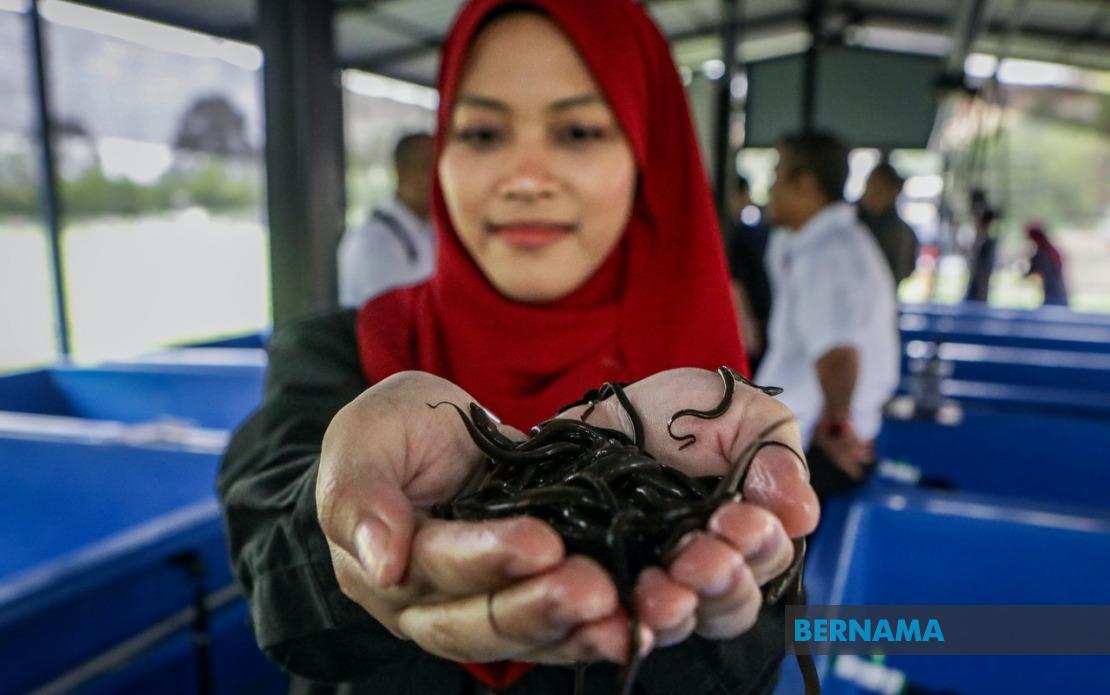
Vocational education institutions in Malaysia are increasingly stepping beyond classroom instruction to become catalysts for community economic transformation. Politeknik Tuanku Syed Sirajuddin (PTSS) in Perlis has demonstrated this expanded role through its management of Projek Penternakan Belut Komersial Geran Sejati MADANI, a initiative that positions technical training as a direct tool for rural enterprise development. The project's July launch in Arau marks a significant pivot in how Malaysia's TVET sector contributes to grassroots wealth creation.
The RM500,000 initiative represents a structured approach to knowledge transfer that extends far beyond traditional vocational training. Rather than simply producing graduates who enter the workforce, PTSS has embedded its expertise into community-led aquaculture ventures, creating a model where institutional capacity directly translates into local economic opportunity. This methodology reflects growing recognition that Malaysia's development challenges—particularly in less-urbanised areas—require educational institutions to actively participate in solving community problems through their core competencies.
Under PTSS's direction, the project will unfold across a carefully sequenced six-month implementation timeline. The institution has taken responsibility for all foundational work: establishing the physical infrastructure necessary for eel cultivation, procuring specialized equipment, acquiring initial seed stock, delivering comprehensive training, and establishing financial management systems. Only after these critical preparatory phases reach maturity will the enterprise transition to community ownership and independent operation. This phased approach acknowledges the reality that successful aquaculture ventures require more than enthusiasm—they demand technical preparation and institutional scaffolding.
Five distinct communities have been selected as beneficiaries under the Prime Minister's Department's Implementation Coordination Unit (ICU JPM), with each community receiving 15,000 eel seeds as their foundation stock. The decision to distribute the project across multiple communities rather than concentrating resources in a single location reflects deliberate strategy to create comparative learning opportunities and to build competitive dynamics that may enhance overall performance and innovation. The geographic distribution also ensures that knowledge pathways extend across Perlis's rural landscape rather than remaining concentrated in one locality.
The productivity expectations attached to the initiative are grounded in realistic aquaculture science. PTSS projects that each participating community should achieve approximately 5,000 kilograms of harvested eel production following a growth cycle of five to six months. These figures represent neither conservative underestimation nor speculative overambition, but rather industry-validated targets that establish clear benchmarks for success. Achieving these volumes would demonstrate that communities lacking prior aquaculture experience can rapidly reach commercially meaningful production scales when provided with proper technical foundation and institutional support.
Marketing and value realisation have been integrated into the project design through the adoption of contract farming methods. Rather than leaving communities to navigate volatile open markets independently, the project has pre-established structured sales relationships that provide price certainty and reliable off-take arrangements. This approach insulates participating farmers from market volatility while building the relationships and reputation necessary for longer-term commercial sustainability. Contract farming also offers valuable data collection opportunities that can inform future expansion of similar initiatives.
PTSS Director Khairul Anuar Ishak has articulated a vision of TVET institutions functioning as knowledge brokers and capacity builders for their surrounding communities. By positioning the eel farming project as an application of student learning in real-world contexts, he emphasizes that experiential education benefits both learners and broader economic development. Students gain authentic practice in applying theoretical knowledge while communities receive practical training from individuals deeply engaged in skill acquisition. This dual benefit structure creates efficiency by channelling educational resources toward productive community outcomes.
The project exemplifies how institutional expertise can be strategically deployed beyond graduates to address immediate community needs. PTSS brings not only technical knowledge of eel cultivation but also established relationships with aquaculture suppliers, market contacts, and financial management frameworks developed through years of vocational education delivery. These institutional assets, once mobilized toward community projects, become multipliers of development impact far exceeding what individual students alone might achieve.
The collaboration mechanism itself carries significance for Malaysia's broader development architecture. By anchoring the project within government-academic-community partnerships, PTSS has created a model that could be replicated across other Malaysian polytechnics and vocational institutions. The involvement of the Perlis Federal Development Office and the Prime Minister's Implementation Coordination Unit signals that this is not an isolated institutional initiative but rather a validated governance approach worthy of federal recognition and coordination.
For rural Perlis, the project potentially addresses a persistent challenge: creating employment and income-generation opportunities that retain populations and build local prosperity. The estimated income streams from 5,000 kilograms of marketable eel production per community could translate into meaningful household earnings when distributed across community members. This direct economic benefit, coupled with the knowledge and infrastructure remaining in community hands, creates foundations for enterprise sustainability beyond the initial six-month project period.
The PTSS initiative also demonstrates how Malaysia's TVET sector can position itself as essential infrastructure for the MADANI development framework's emphasis on shared prosperity and inclusive growth. Rather than viewing vocational education narrowly as workforce preparation, this approach recognizes that technical institutions hold distinctive capacity to directly advance rural development when their expertise is strategically mobilized toward community challenges. As Malaysia continues to navigate regional economic competition and domestic development disparities, this model of institution-led community empowerment offers a replicable pathway for converting educational assets into measurable improvements in rural livelihoods and economic resilience.

