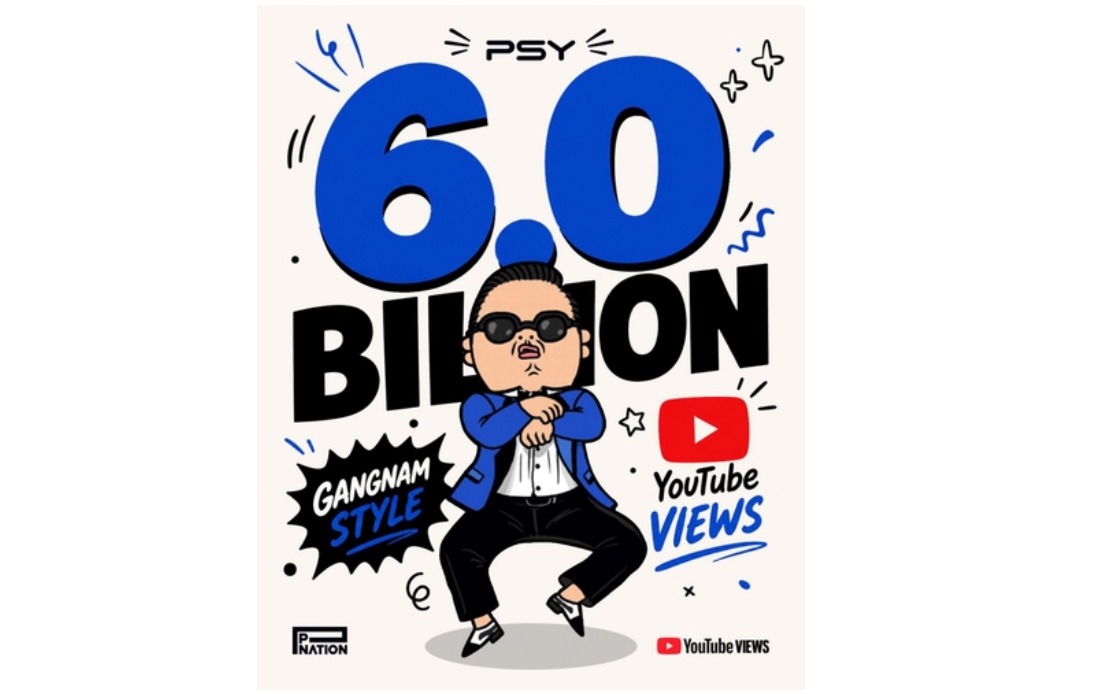
South Korean singer Psy's phenomenal "Gangnam Style" has crossed 6 billion views on YouTube, securing its position as the most-watched K-pop music video in the platform's history. The achievement, which came just eight months after the track surpassed the 5 billion mark in December 2023, underscores the remarkable longevity of content that initially emerged during the early days of social media virality. According to his agency P Nation, the milestone was reached last Friday, nearly a decade and a half following the song's debut in July 2012.
The significance of this accomplishment extends beyond mere statistics. P Nation emphasized that reaching 6 billion views represents a watershed moment not only for K-pop as a cultural phenomenon but also validates the staying power of creative work that successfully transcends geographical and generational boundaries. In an era where digital content faces relentless competition from countless new releases daily, the continued accumulation of views on "Gangnam Style" demonstrates an unusual capacity to engage viewers across vastly different demographics and cultural contexts.
Psy himself marked the occasion during a concert performance on Sunday, expressing gratitude to the global fanbase whose sustained engagement made the milestone possible. The artist took the opportunity to announce plans for uploading fresh content on YouTube, signalling his commitment to maintaining momentum and rewarding the loyalty shown by supporters who have contributed to these astronomical view counts. This gesture reflects a broader strategy among established K-pop figures to remain relevant through consistent engagement with audiences on digital platforms.
When "Gangnam Style" initially emerged onto the global stage in 2012, few could have predicted its trajectory toward becoming a defining phenomenon of the decade. The track's infectious melody, combined with clever wordplay and social commentary about Seoul's wealthy Gangnam district, created a formula that resonated universally. The accompanying music video, featuring Psy's distinctive horse-riding dance move, became instantly recognizable and endlessly replicable, fueling organic viral spread across social networks before algorithmic promotion even existed in its current form.
The song's commercial peak saw it reach number two on Billboard's prestigious Hot 100 chart, a remarkable achievement for a Korean-language track in the American market. More significantly, "Gangnam Style" holds the distinction of being the first K-pop music video ever to surpass 1 billion views on YouTube, effectively breaking down barriers and establishing precedent for subsequent Korean artists to achieve international success. This pioneering status cannot be overstated—it fundamentally shifted perceptions about K-pop's global commercial viability and opened doors for the wave of Korean entertainment exports that would follow.
For Malaysian and Southeast Asian audiences, the phenomenon of "Gangnam Style" holds particular resonance. The region's embrace of the track and its accompanying dance contributed significantly to its viral spread, with the choreography becoming ubiquitous at parties, weddings, and public events across the subregion. The song's celebration transcended language barriers entirely, as viewers needed no understanding of Korean to comprehend the satire or enjoy the musical composition. This universal appeal became a template for how K-pop would subsequently infiltrate Southeast Asian markets with unprecedented force.
The twelve-year journey from 5 billion to 6 billion views, accomplished in merely eight months, suggests accelerating interest rather than declining engagement. This acceleration contrasts with typical patterns observed in older viral content, which generally experiences diminishing returns as cultural relevance fades. The sustained momentum behind "Gangnam Style" indicates that nostalgia, combined with the song's inherent quality, continues driving new discoveries among younger viewers unfamiliar with the original viral wave. Each generation discovering the track anew contributes to its cumulative total.
From a K-pop industry perspective, "Gangnam Style" represents something of a unicorn—a phenomenon that achieved crossover success at a moment when Korean entertainment was still building its international infrastructure. Contemporary K-pop groups benefit from more sophisticated marketing strategies, dedicated fanbase management systems, and streaming platform algorithms optimized for music promotion. Yet despite these advantages, few recent releases have matched the organic, grassroots quality of "Gangnam Style's" viral explosion. The song achieved global dominance through pure cultural momentum rather than corporate machinery, a distinction that partly explains its longevity.
The achievement also carries implications for content creators and entertainment companies throughout Southeast Asia. The "Gangnam Style" case study demonstrates that locally-rooted content with authentic cultural specificity—in this case, commentary about a specific Seoul neighbourhood—can paradoxically achieve the broadest possible appeal when executed with creativity and charm. Rather than diluting cultural identity to appeal to international markets, Psy actually leveraged his cultural context as the foundation for global success, a lesson not lost on subsequent Korean entertainment exports or artists across the region seeking international recognition.
Looking forward, the 6 billion milestone invites reflection on what constitutes staying power in the digital age. While "Gangnam Style" benefits from having emerged at a particular technological moment when YouTube dominance coincided with pre-algorithm organic sharing, the track's continued accumulation of views suggests more than historical curiosity. New audiences continuously discover the song through platforms like TikTok, where its distinctive choreography remains endlessly remixable and shareable. The track's lifecycle continues, defying predictions of inevitable obsolescence.
Psy's celebration of this achievement and promise of new content signal his intent to remain active and relevant rather than rest on historical laurels. Many artists who achieve singular viral success struggle with the pressure of replication, but Psy has managed periodic returns to prominence while maintaining perspective about "Gangnam Style's" place in his broader artistic legacy. His willingness to appreciate past accomplishments while simultaneously looking toward future contributions models healthy longevity in entertainment industries where the pressure to constantly generate novelty often overwhelms thoughtful career development.

