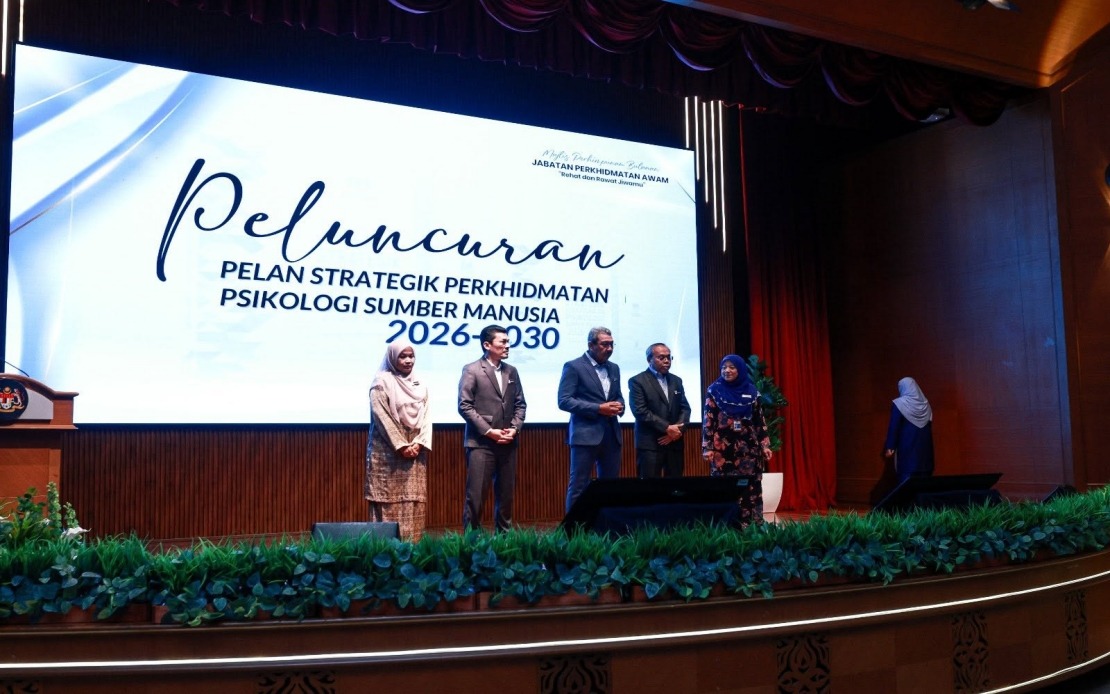
The Public Service Department has rolled out an ambitious framework aimed at reshaping how Malaysia's civil service approaches mental health and psychological wellness. Unveiled at the PSD's June 2026 monthly assembly in Putrajaya, the Human Resources Psychology Services Strategic Plan 2026-2030 represents a significant institutional commitment to addressing the emotional and psychological needs of the country's approximately 1.6 million public sector employees. The plan encompasses 12 distinct strategies, 22 operational programmes, and 48 key performance indicators designed to create measurable improvements in how the civil service supports its workforce's mental health.
The launch, officiated by Public Service Director-General Tan Sri Wan Ahmad Dahlan Abdul Aziz, carried the overarching theme of "R&R (Rest and Treat) Your Soul," signalling a cultural shift within government offices nationwide. This messaging reflects growing recognition among senior bureaucratic leadership that employee wellness directly correlates with organisational effectiveness and service delivery quality. The emphasis on personal rest and professional psychological care positions mental health support not as a peripheral benefit but as central to the functioning of an efficient public administration. For Malaysian readers, this signals that Putrajaya is beginning to acknowledge workplace stress and burnout as systemic issues requiring top-level intervention rather than individual coping mechanisms.
Central to the strategic plan is the concept of "Treat," which Tan Sri Wan Ahmad Dahlan articulated as requiring civil servants to abandon passive acceptance of psychological difficulties and instead take proactive measures. This framework explicitly encourages government workers to dismantle the cultural stigma surrounding mental health support, voice their concerns openly, and seek professional intervention when needed. In the Malaysian context, where cultural factors and workplace hierarchies have traditionally discouraged such candour, this represents a notable departure from conventional attitudes. The message fundamentally reframes psychological support-seeking from weakness to wisdom, positioning it as a responsible form of self-management rather than an admission of failure.
The philosophical underpinning of the initiative rests on a straightforward premise articulated by PSD leadership: organisational well-being cannot exist independently of individual well-being. This recognition addresses a gap in previous civil service reform efforts, which often focused on structural efficiency without adequately considering the human cost of demanding workloads, administrative pressures, and organisational change. By explicitly linking personal psychological welfare to institutional health, the strategic plan attempts to create a feedback loop where investment in mental health services generates better employee retention, reduced absenteeism, and improved job satisfaction across the entire public sector apparatus.
The integration of this new mental health strategy with existing reform initiatives demonstrates deliberate institutional architecture. The plan complements PSD's previously established H.E.M.A.T work culture programme, which emphasises governance excellence, public empathy, progressive mindset, innovation appreciation, and transparent administration. Rather than introducing mental health support as an isolated initiative, PSD is positioning it within a broader organisational transformation agenda. This holistic approach acknowledges that psychological wellness functions best within supportive institutional structures that genuinely value employee contributions and foster inclusive decision-making processes.
The specific concept of "Rawat," which PSD has championed, translates to proactive intervention and care in the psychological domain. This represents a paradigm shift from reactive crisis management toward preventative mental health approaches. Instead of waiting for civil servants to reach crisis point before intervening, the framework envisions regular wellness assessments, accessible counselling services, peer support networks, and manager training in psychological awareness. For a civil service that has historically operated with limited mental health infrastructure, this represents a substantial expansion of support systems across federal, state, and local government agencies.
The establishment of 48 key performance indicators suggests PSD intends to measure and monitor the plan's effectiveness rigorously. These metrics likely encompass participation rates in mental health programmes, employee satisfaction surveys, utilisation of counselling services, manager training completion, and qualitative assessments of workplace culture change. This metrics-driven approach ensures accountability and enables periodic review and adjustment of strategies based on empirical evidence. For Malaysian readers concerned about government programme effectiveness, the inclusion of measurable outcomes indicates serious institutional commitment rather than rhetorical commitment alone.
The 22 programmes outlined in the strategic plan presumably include diverse interventions ranging from individual counselling and group therapy to managerial training, wellness workshops, peer support circles, and crisis intervention protocols. This multifaceted approach recognises that different civil servants have different psychological needs and prefer different support modalities. Some may benefit from professional counselling, others from peer support arrangements, still others from wellness activities and stress-management training. By offering diverse pathways to support, the plan increases the likelihood that various personality types and circumstances will find appropriate assistance.
For Southeast Asian readers more broadly, Malaysia's strategic investment in civil service mental health places it ahead of many regional peers in formally institutionalising psychological support. While private sector initiatives in psychology have flourished across Southeast Asia, government recognition of public employee mental health remains relatively nascent. Malaysia's five-year commitment suggests a growing regional trend toward acknowledging that public sector productivity depends on workforce well-being, particularly as civil service responsibilities expand and workplace pressures intensify across the region.
The timing of this initiative aligns with global post-pandemic recognition of mental health's importance in organisational settings. COVID-19 accelerated mental health challenges among government workers managing crisis response while navigating personal health anxieties. By launching this plan in 2026, PSD capitalises on heightened awareness of psychological vulnerabilities and normalised discussions around mental wellness. The strategic plan essentially institutionalises lessons learned during crisis periods and embeds them into permanent operational frameworks.
Implementation challenges should not be underestimated, however. Stigma surrounding mental health remains culturally embedded in Malaysian society, and some civil servants may resist utilising psychological services despite official encouragement. Training managers to recognise psychological distress and respond supportively requires sustained investment in professional development. Furthermore, ensuring equitable access to services across Malaysia's geographically dispersed civil service—from urban federal agencies to remote state government offices—demands substantial resource allocation and creative service delivery models, potentially including digital platforms and telehealth options.
The strategic plan's success ultimately depends on genuine cultural transformation within the civil service regarding mental health attitudes and practices. PSD's leadership messaging provides essential top-down impetus, but sustained change requires integration into everyday managerial practices, resource allocation decisions, and peer interactions throughout government organisations. If successfully implemented, this initiative could fundamentally reshape how Malaysian public servants approach their own wellness and how managers support their teams' psychological well-being, creating ripple effects that extend beyond government to influence broader societal attitudes toward mental health.