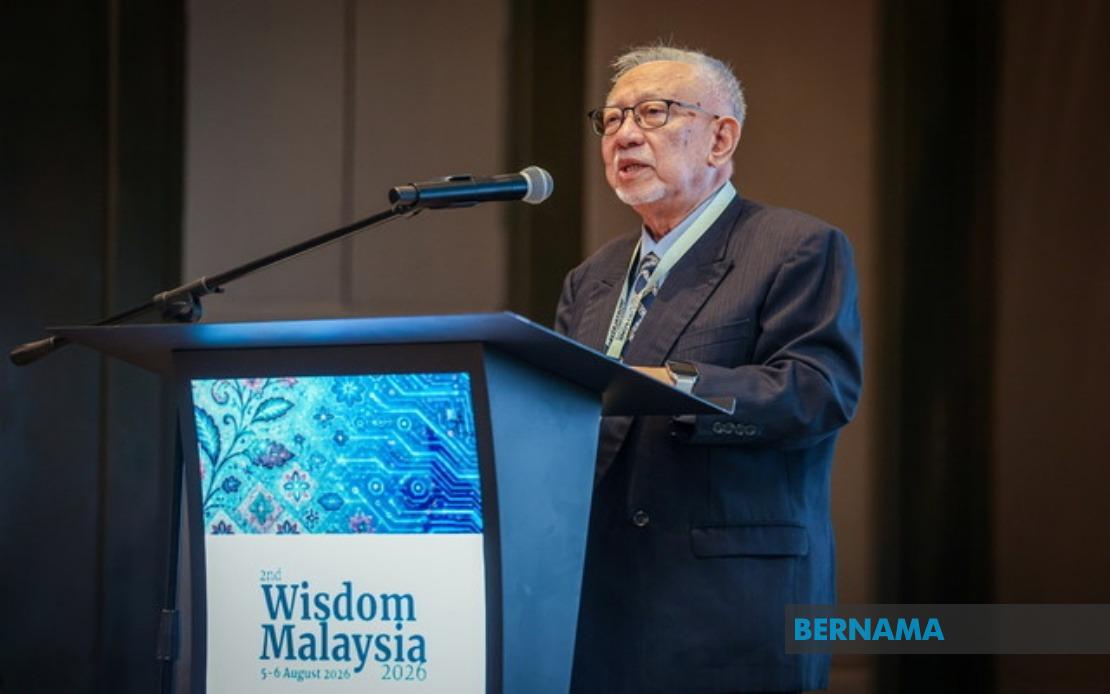
Creating a protective environment for those who expose wrongdoing is essential to defeating corruption, according to Datuk Syed Ahmad Idid Syed Abdullah, a former High Court Judge of Malaya and Borneo. Speaking during the 2nd Wisdom Malaysia Conference 2026 in Kuala Lumpur, he stressed that without proper safeguards for whistleblowers, the entire anti-corruption framework becomes vulnerable to collapse as honest public servants withdraw from reporting abuses they witness.
The veteran jurist articulated a stark reality facing Malaysia's governance structure: when organisations respond to corruption allegations by suppressing and intimidating those who come forward, rather than launching genuine investigations, the outcome is a systematic erosion of institutional integrity. The chilling effect extends beyond individual cases, as it sends a clear message throughout government and public agencies that speaking up carries unacceptable personal risks. This dynamic transforms corrupt practices from isolated incidents into systemic problems that metastasize unchecked.
Syed Ahmad Idid was particularly pointed in his distinction between whistleblowing and slander, noting that exposing corruption represents a legitimate act of justice rather than character assassination. This clarification holds significant importance in Malaysia's context, where defamation concerns have occasionally been invoked to silence legitimate whistleblowers. By reframing whistleblowing within the discourse of justice and institutional health, he provided a counter-narrative to suggestions that speaking out against abuse constitutes personal vendetta or malicious speech.
The progression of corruption when left unchecked presents a cascading threat to national development. Syed Ahmad Idid observed that suppressing internal accountability mechanisms does not merely preserve existing corrupt practices—it actively encourages their expansion. When no honest voice within an organisation dares challenge wrongdoing, those engaged in illicit activities face virtually no internal resistance. This absence of friction removes a critical constraint on both the scale and scope of financial crimes, explaining why societies that fail to protect whistleblowers often experience increasingly brazen corruption that eventually reaches catastrophic proportions.
Beyond the abstract principle of institutional integrity, Syed Ahmad Idid quantified the material consequences of allowing corruption to persist. He calculated that monies successfully recovered from corrupt transactions and government leakages could be redirected toward fundamental development priorities that directly improve citizens' lives. These recovered funds represent not merely accounting adjustments but genuine resources currently diverted from their intended public purposes.
His proposal for deploying recovered anti-corruption funds reveals the magnitude of resources at stake. Syed Ahmad Idid suggested that such amounts could support constructing at least two general hospitals in every Malaysian state—a figure that underscores both the scale of corruption-related losses and the tangible opportunity cost of inaction. The healthcare infrastructure gap in many states would narrow substantially if corruption-derived funds were recaptured and redirected, improving medical accessibility for millions of Malaysians, particularly in less-developed regions.
Education represents another critical sector where recovered funds could generate transformative impacts. Syed Ahmad Idid proposed that anti-corruption proceeds could finance twenty to fifty high-quality educational institutions throughout the nation, complete with superior facilities and comprehensive equipment. This investment framework extends beyond mere physical infrastructure to encompass enhanced teacher training and professional development—a holistic approach recognising that educational quality depends on both physical resources and human capital development.
The downstream effects of strengthening Malaysia's education system carry implications reaching far beyond classroom performance. Syed Ahmad Idid contended that world-class educational institutions would produce human capital capable of meeting the nation's security and sporting ambitions. This observation reflects an integrated understanding of national development, where corruption control directly enables investment in education, which subsequently generates the skilled personnel required across defence, law enforcement, and athletic competition sectors. The causal chain connecting anti-corruption efforts to enhanced national capabilities deserves greater emphasis in public policy discussions.
Syed Ahmad Idid also addressed the interpretive frameworks through which societies understand and tolerate corruption. He called for unambiguous application of anti-corruption standards rather than permitting lenient or distorted interpretations of corrupt conduct. This emphasis on consistent principle rather than flexible interpretation addresses a pervasive weakness in systems where sophistication in legal argumentation or political connection can shield wrongdoing from consequences. By insisting on transparent, stringent standards, he advocated for corruption to become genuinely untenable rather than merely undesirable.
His remarks occurred within the framework of the 2nd Wisdom Malaysia Conference 2026, organised by Kerjaya One PLT as a venue for experienced and emerging leaders to exchange perspectives on institutional and national governance. The conference's focus on principled leadership and integrity provided an appropriate platform for examining how individual moral choices either reinforce or undermine organisational cultures. Syed Ahmad Idid's interventions positioned whistleblower protection as inseparable from broader questions of institutional health and national future trajectory.
For Malaysian policymakers and civil society, the former judge's analysis offers several critical insights. First, that anti-corruption frameworks lacking whistleblower protections represent incomplete safeguards that predictably fail over time. Second, that corruption's aggregate fiscal impact—reflected in lost infrastructure investment, diminished educational quality, and constrained security capabilities—justifies substantial institutional reforms. Third, that public tolerance for corruption reflects not moral bankruptcy but frequently inadequate awareness of corruption's true cost. By quantifying and vividly illustrating how recovered funds could transform Malaysian healthcare and education, Syed Ahmad Idid provided concrete vocabulary for discussing what effective anti-corruption actually delivers to ordinary citizens.

