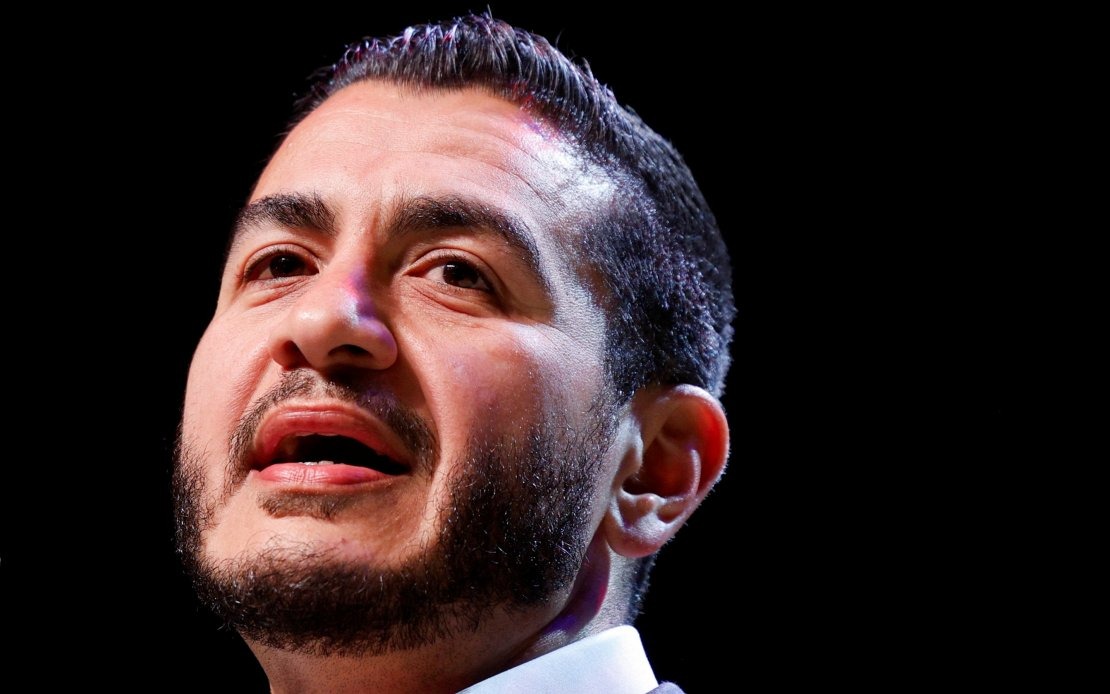
Abdul El-Sayed held a narrow advantage over U.S. Representative Haley Stevens in Michigan's closely contested Democratic Senate primary on Wednesday, with 91 percent of votes counted at the time of reporting. The outcome of the race remained officially uncalled by The Associated Press as ballots continued to be tallied across the state. The winner of this fiercely fought nomination contest will advance to face Republican Mike Rogers in November's general election, competing for the seat being vacated by retiring Democratic Senator Gary Peters. Rogers had secured his party's nomination without opposition, setting up what is expected to be one of the most competitive Senate races in the 2024 cycle.
The Michigan primary revealed a stark ideological divide within the Democratic Party. Stevens enjoyed the backing of the state's Democratic establishment, with retiring Senator Peters and other prominent party figures throwing their support behind her candidacy. In contrast, El-Sayed mobilised the party's progressive wing, garnering endorsements from Senator Bernie Sanders and Representatives Alexandria Ocasio-Cortez and Rashida Tlaib. This fault line reflected broader tensions within the Democratic coalition between moderate and left-leaning factions over the party's direction and priorities heading into the general election season.
The Middle East conflict loomed large as a decisive issue in the primary campaign. U.S. support for Israel and its military operations in Gaza featured prominently in campaign messaging, with the two candidates taking noticeably different stances on the matter. This issue has become increasingly significant in Democratic primary contests across the country, particularly energizing younger voters and Arab-American communities who have become more vocal in their political participation.
Beyond the Senate race, Michigan's congressional primaries revealed mixed results for incumbent Republicans. Jack Bergman secured his party's nomination in the 1st Congressional District with a commanding 74.3 percent of the vote, disposing of two primary challengers with relative ease based on 94 percent of ballots counted. Similarly, Bill Huizenga won renomination in the 4th District with an even larger margin, defeating Philip Tanis 85 percent to 15 percent. Huizenga will now face Democratic nominee Sean McCann, a state senator who comfortably won his party's nomination with 67.2 percent against Diop Harris II.
Kansas Republicans consolidated around their incumbents despite competitive fields. Senator Roger Marshall overwhelmed challenger Pond Naramore with nearly 80 percent of the vote, with 99 percent of precincts reporting. Marshall will face Democratic nominee Adam Hamilton, who emerged victorious from a crowded Democratic primary field. The gubernatorial race in Kansas presented a different dynamic, as Democrat Cindy Holscher defeated two rivals for her party's nomination, positioning herself to challenge Republican Ty Masterson in the general election. Masterson had won a contentious Republican primary with the explicit endorsement of President Donald Trump, and the general election contest will determine who succeeds the term-limited Democratic Governor Laura Kelly.
Missouri's primary elections marked the first congressional contests under a newly adopted state map that Republican lawmakers had redesigned with explicit backing from President Trump. The redistricting effort was widely understood to benefit Republican chances of maintaining control of the House. In the 1st Congressional District, Democratic Representative Wesley Bell successfully defeated four opponents in his primary challenge, including former Representative Cori Bush, securing his party's nomination. Bell will advance to face Republican Paul Berry III, who won the Republican primary against Andrew Jones.
Virginia's Senate primary saw Republican Bert Mizusawa emerge as his party's nominee to challenge the heavily favored Democratic Senator Mark Warner, who faced no opposition in his renomination. The competitive Republican primary nonetheless produced a challenger for the general election. In Virginia's 1st Congressional District, Democrat Shannon Taylor secured her party's nomination with 53.1 percent of the vote from 99 percent of precincts reporting. She will square off against Republican Representative Rob Wittman, a political veteran who ran unopposed and is pursuing his 10th full term in Congress.
Frustration with the current Republican representative in Virginia's 2nd District created an opening for a Democratic comeback bid. Former Representative Elaine Luria, who previously served in Congress, won her party's nomination with a robust 80.4 percent of the vote. She will face Republican Representative Jen Kiggans in November, marking a rematch of sorts between the two parties over this swing-leaning district. In the 7th District, Republican Doug Ollivant captured his party's nomination with 56.6 percent of the vote and will take on first-term Democratic Representative Eugene Vindman, a Trump appointee-turned-critic who retained his seat without primary opposition.
Washington State's unique all-party primary system, where all candidates compete on a single ballot regardless of party affiliation, produced predictable results reflecting the state's Democratic lean in most districts. Democratic Representative Suzan DelBene and Republican Mary Silva both advanced from the 1st Congressional District primary to November's general election. In another district, Democrat Marie Gluesenkamp Perez secured her spot in the general ballot and will face Republican John Braun, who had earned the backing of President Trump during the primary process. Emily Randall advanced from the 6th District Democratic primary and will confront Republican Teresa Fox in the November showdown.
The five-state primary elections provided an early snapshot of campaign dynamics that will shape the midterm landscape. Competitive Republican primaries in multiple states suggested that Trump's influence remained substantial within the party despite his current focus on his own presidential considerations. Meanwhile, Democratic primaries demonstrated ongoing internal debates over ideology, strategy, and foreign policy that continue to test party unity as November approaches. These contests also underscored the geographic diversity of American politics, with different regions showing distinct patterns of voter preference and organisational strength across both major parties.

