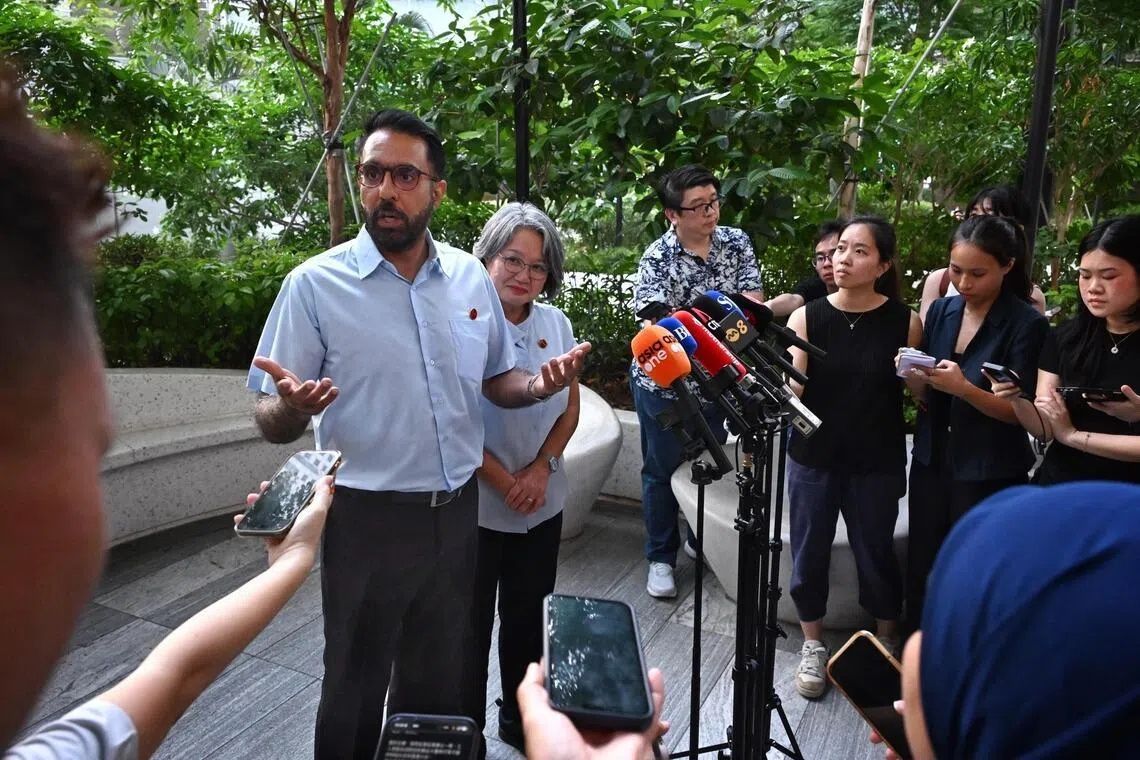
Singapore's Workers' Party has decisively backed Pritam Singh to remain as its chief, with the party's inner leadership rejecting an attempt by dissident members to force him out on June 28. Running unopposed in the election, Singh clinched re-election after cadres comprehensively rejected a separate motion calling for his resignation earlier that same day, with supporters reportedly accounting for approximately 80 percent of the vote in a secret ballot among the party's inner circle of slightly more than 100 members.
The outcome marks a turning point for Singh's tenure at the helm of Singapore's largest opposition party, which has navigated turbulent waters since 2021 when former Sengkang GRC MP Raeesah Khan made false statements to Parliament. Singh had faced scrutiny over his role in Khan's misconduct, ultimately leading to his own court conviction for misleading a parliamentary committee about his handling of the affair. The High Court upheld his conviction in December 2025, and he was subsequently deemed unsuitable to serve as Leader of the Opposition by Parliament in January 2026, a position he was removed from by Prime Minister Lawrence Wong.
Addressing supporters following his re-election, Singh emphasized the party's commitment to responsible governance and faithful representation of Singapore's electorate. He characterised the internal party process as a necessary moment for the organisation to reaffirm its values and direction. The secret ballot result, he noted, demonstrated party unity moving forward, though he declined to publicly disclose the precise voting figures. His measured approach to the challenge reflected a broader effort to move past months of internal strain and refocus the party on its political agenda.
Gerald Giam, the Aljunied GRC MP who presided over the crucial meeting, provided more details about the cadre conference, describing it as a civil and thorough discussion despite the high stakes involved. The gathering proceeded with a single round of voting and allowed party members to voice their concerns directly to Singh, who responded with a prepared statement and answered questions from the floor. Giam characterised the process as embodying proper accountability, suggesting that the party's internal mechanisms had functioned as intended to address the grievances raised by dissidents.
The challenge to Singh's leadership originated from a letter signed by 25 disgruntled cadres in December 2025, prompted partly by the legal difficulties Singh had encountered. The special cadres conference was structured around three main agenda items: requiring Singh to account for his actions leading to his court conviction, calling for his resignation outright, and establishing a procedure for a secret ballot on his leadership if he chose not to step down. The comprehensive defeat of the motion to remove him suggested that while concerns existed within the party, a substantial majority viewed Singh as still capable of leading the organisation through its current challenges.
One significant moment came when former Workers' Party chief Low Thia Khiang publicly reaffirmed his support for Singh on the morning of June 28, effectively ending speculation about whether the previous leader might withdraw backing from his successor. Low's endorsement carried symbolic weight, as he had steered the party to historic gains in recent elections before handing over leadership. His presence at the meetings and clear statement of continued confidence in Singh helped stabilise the situation as the day's proceedings unfolded, signalling that senior party figures remained united despite the internal discord.
Following the special cadre conference, the Workers' Party proceeded with its regular biennial internal elections at 3pm. Chair Sylvia Lim secured re-election to a position she has continuously held since 2003, reinforcing the party's commitment to leadership stability. The party also elected 12 members to its central executive committee, the body responsible for day-to-day party governance. Most of these positions went to returning members, though the committee included four individuals not currently serving as MPs: former chief Low, former Aljunied GRC MP Faisal Manap, long-serving member Tan Kong Soon, and newly elected senior counsel Harpreet Singh.
Harpreet Singh, who contested as part of the Workers' Party's team in Punggol GRC during the May 2025 general election, offered a public defence of the party's decision in a social media post following his own election to the central executive committee. He characterised the re-election of Pritam Singh as the result of careful deliberation rather than reflexive loyalty to an incumbent leader. Pointing to Singh's years of dedicated service, his composure under sustained political pressure, and his measured leadership that had guided the party to parliamentary milestones, Harpreet Singh argued that character assessment must encompass a person's full history rather than focusing narrowly on a single legal conviction.
The party had previously subjected Singh to internal discipline earlier in 2026, when the central executive committee issued him a formal letter of reprimand relating to his court conviction. This response came after a disciplinary panel comprising Sengkang GRC MPs Jamus Lim and He Ting Ru, together with former Hougang MP Png Eng Huat, determined that Singh had contravened two articles of the party's Constitution through his actions in relation to Raeesah Khan's parliamentary falsehoods. The panel's findings and the subsequent reprimand demonstrated that the party had subjected its leader to accountability measures while stopping short of removing him.
The circumstances surrounding Singh's legal troubles provide crucial context for understanding the significance of his re-election. In the original matter involving Khan, Singh guided her in maintaining false statements to Parliament for several months before the truth eventually emerged. While parliamentary inquiries and court proceedings established his culpability, Singh mounted a legal appeal against his conviction, which the High Court rejected in December 2025. Prime Minister Lawrence Wong subsequently invited the Workers' Party to nominate an alternative MP for the Leader of the Opposition post, but the party declined, arguing that this ceremonial role should by convention reside with the leader of the largest opposition party in Parliament.
The Workers' Party's internal elections process also retained flexibility for future adjustments to its leadership structure. The party has the authority to co-opt up to seven additional members to its central executive committee, a process that typically occurs approximately one month after the formal election concludes. This mechanism allows the party to respond to evolving circumstances and ensure its decision-making body reflects the party's needs and membership composition.
Analysts have noted that Singh's decisive victory at the polls effectively closes a difficult chapter for the Workers' Party, allowing it to consolidate its position as the dominant opposition force in Singapore's parliament. The June 28 outcome suggests that despite real internal disagreements over how Singh handled the Khan matter, a clear majority of party cadres believe he possesses the leadership qualities necessary to guide the party forward. His re-election, coming just months after his removal as Leader of the Opposition, indicates that internal party confidence in his abilities differs markedly from the parliamentary judgment against him, a distinction that may define Singapore's opposition politics in the coming years.

