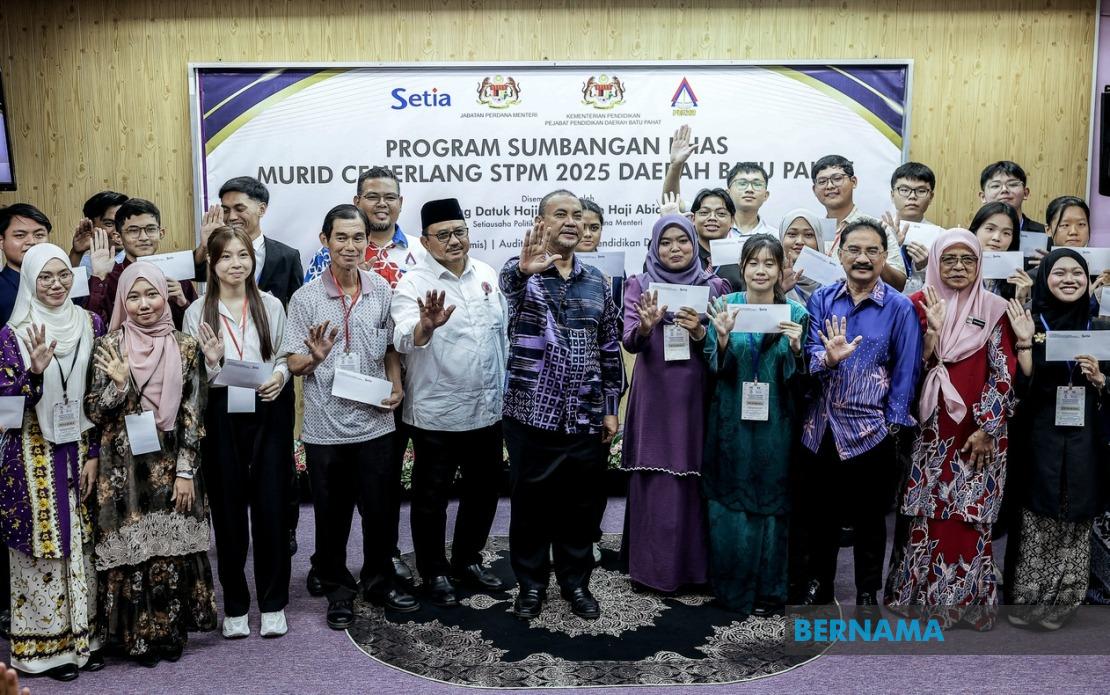
The Prime Minister's Office has recognized the exceptional academic achievements of 214 STPM students in Batu Pahat through a special contribution programme unveiled at a ceremony held at the district education office. The initiative, announced by Datuk Azman Abidin, Political Secretary to the Prime Minister, represents a concrete demonstration of government support for Malaysia's highest-achieving secondary students as they prepare for the next phase of their educational journey.
The recipients hail from 16 secondary schools across the Batu Pahat district, with Datuk Azman noting that the programme's overarching goal extends beyond immediate recognition. Rather, it seeks to inspire these young achievers to maintain their academic trajectory and continue striving for excellence in their tertiary studies, thereby establishing themselves as role models for their peers and younger cohorts still in secondary education.
During his remarks at the ceremony, Datuk Azman articulated the government's commitment to nurturing Malaysia's intellectual capital through tangible support mechanisms. The financial contribution serves a dual purpose: it acknowledges the dedication and perseverance these students have demonstrated in their STPM examinations, while simultaneously addressing the practical challenge of financing higher education, which remains a significant barrier for many Malaysian families regardless of their children's academic merit.
The government has signalled its intention to sustain this recognition programme in future years, contingent upon budgetary allocations. Moreover, officials have indicated plans to expand the initiative beyond Batu Pahat to other districts and regions nationwide, suggesting a broader policy commitment to incentivizing academic excellence at the pre-university level. Such expansion would represent a significant investment in human capital development across the country.
Among the recipients was Afida Auni Airulnizam, a 20-year-old alumna of Sekolah Menengah Kebangsaan Tun Sardon in Rengit, who spoke about the emotional and motivational impact of the recognition. She described the contribution as meaningful validation of her academic efforts, and indicated that the financial support would prove instrumental in enabling her to pursue her chosen field of study at the tertiary level. As the younger of two siblings, Afida has drawn inspiration from her older brother's university experience and aspires to follow a similar trajectory, with sports science identified as her preferred discipline should she gain admission to a relevant programme.
Another beneficiary, Muhd Ammar Firdaus Mohd Fadzil, aged 20 and a former student of SMK Tun Ismail, similarly lauded the programme's practical benefits. He emphasized that the financial contribution addresses real concerns among families preparing for the costs associated with tertiary education—an issue that resonates across Malaysian society where university fees, accommodation, and living expenses can accumulate significantly even for merit-based entry.
The timing of such initiatives carries particular significance within Malaysia's educational ecosystem. The transition from secondary to tertiary education represents a critical juncture where financial constraints, though often invisible, can derail otherwise promising academic careers. By targeting STPM students specifically—those who have already demonstrated competitive performance at advanced secondary level—the government strategically invests in individuals with proven capacity for academic success at university level.
The recognition of top STPM achievers also aligns with broader national priorities regarding skills development and knowledge economy advancement. STPM qualifications feed directly into local and international university systems, and supporting high performers at this stage potentially strengthens the pipeline of graduates entering professional fields critical to Malaysia's economic competitiveness and technological advancement.
Furthermore, the programme reflects an understanding that merit-based educational support can have multiplier effects within communities. Award recipients often become ambassadors for academic excellence within their schools and families, encouraging younger siblings and peers to invest effort in their studies with the knowledge that achievement attracts recognition and tangible rewards. This cultural shift toward valuing and publicly celebrating academic accomplishment carries long-term implications for how Malaysian society prioritizes education.
The expansion plans mentioned by Datuk Azman suggest the government recognizes disparities in educational support across different districts and socioeconomic backgrounds. By systematically extending this programme regionally, authorities can help level the playing field for high-achieving students in less urban areas who might otherwise face greater financial constraints in pursuing higher education despite their intellectual capabilities.
For Malaysian families and students monitoring education policy, this initiative signals that academic excellence at the STPM level—a qualification increasingly significant as universities worldwide recognize its standards—continues to attract government attention and support. The programme's evolution and scope will warrant close observation in coming years as an indicator of whether educational financing priorities shift toward proactive investment in high-performing cohorts.

