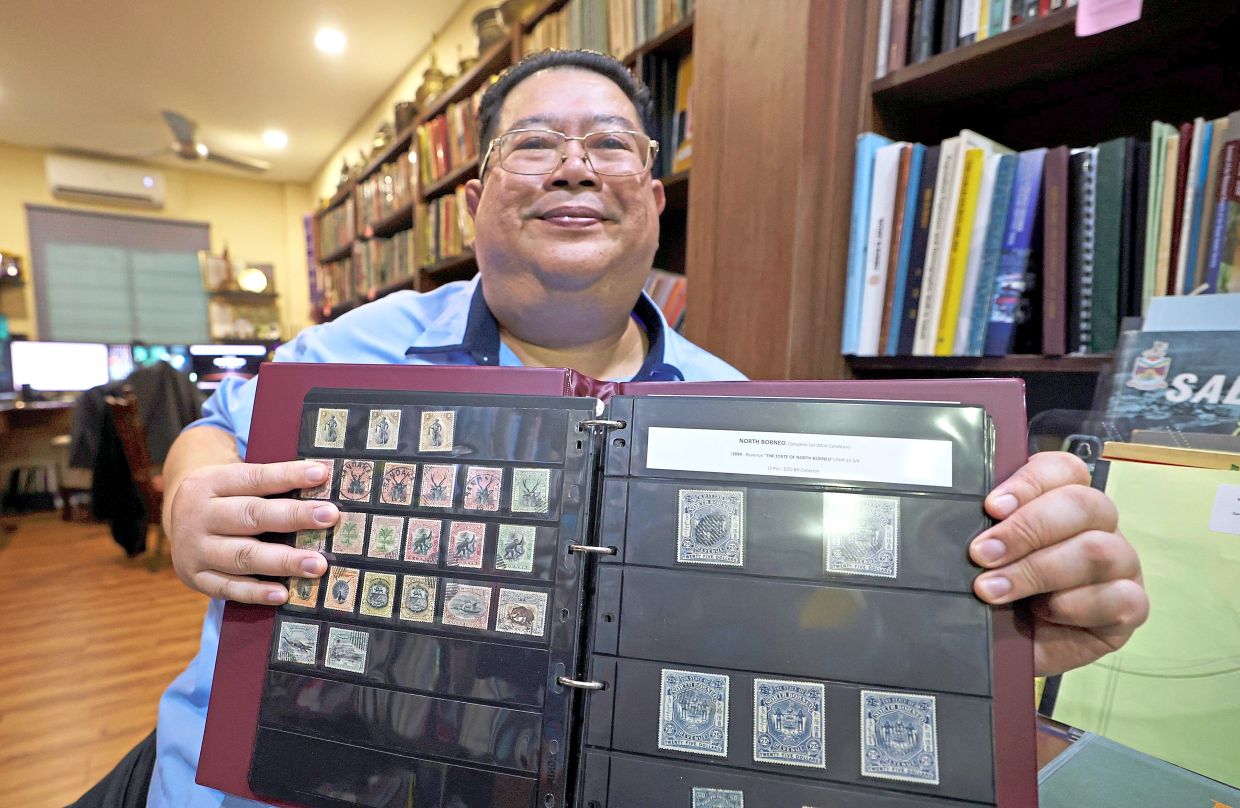
The disappearance of North Borneo's philatelic treasures poses a growing threat to Sabah's recorded heritage. Stamps issued over an eighty-year period between 1883 and 1963 are becoming increasingly difficult to locate, with collectors and historians warning that without active preservation efforts, an irreplaceable window into the region's past may be permanently lost to future generations.
Dr Shari Jeffri, the 56-year-old founder and president of the Borneo History Association, characterizes these postal artefacts as far more than simple tools of mail delivery. He views them as a "living archive" containing visual and postal records that illuminate how Sabah developed under colonial administration and during its transition to modern statehood. His perspective reflects a wider understanding within the scholarly community that stamps represent tangible historical documents, encoding information about governance structures, commercial activities, cultural identity, and international relationships during their era of issue.
Yet the hobby of stamp collecting, which once commanded widespread public enthusiasm, has experienced dramatic decline across generations. Shari notes with concern that contemporary younger Malaysians have minimal exposure to philately compared to their predecessors. The collector community continues to shrink, meaning that institutional knowledge about authenticating, preserving, and cataloguing these materials risks being lost alongside the physical stamps themselves. This generational disconnect threatens not merely the hobby but the historical scholarship it supports.
An investigation conducted by Bernama among antique dealers operating in Kota Kinabalu revealed the acute rarity now surrounding North Borneo stamps. Market prices fluctuate substantially based on multiple variables: the decade of issue, physical condition, design distinctiveness, and availability. One notable discovery included a collection album featuring a six-cent stamp from between 1954 and 1961 depicting Queen Elizabeth II alongside a Dusun woman, alongside a ten-cent denomination illustrating logging operations—designs that directly reflect Sabah's economic foundations and multicultural composition during that period.
Shari's personal connection to this field originated through an inheritance that linked him directly to colonial-era Kota Kinabalu. His grandfather, employed at the Recreation Club Jesselton during the 1920s, developed his stamp collecting passion by observing British officers engaging in the hobby. The grandfather's deliberate efforts to cultivate similar interests in younger family members ultimately shaped his grandson's life trajectory. Though introduced to stamp collecting at age seven, Shari did not pursue active collecting until secondary school, after which he undertook systematic preservation of his family's accumulated holdings and deepened his scholarly engagement with North Borneo philatelic history.
Among Shari's most treasured possessions stand two two-cent stamps from the inaugural 1883 issue, both bearing complete postmarks and featuring a distinctive brown sailing boat motif. These specimens hold profound significance within the collector's world; their presence marks the difference between an ordinary collection and one considered comprehensive. Each stamp transcends its utilitarian postal function to become material evidence of a specific historical moment, documenting not merely that correspondence was sent but revealing details about commercial routes, administrative structures, and cultural representation at the empire's periphery.
The British North Borneo Chartered Company initiated postal stamp production in 1883, maintaining this practice throughout approximately fifty-two years of territorial administration. The visual designs evolved considerably across this span, initially emphasizing symbols intended to project imperial power and territorial authority—lions, boats, and tigers—accompanied by the Latin motto Pergo et Perago ("I undertake and I achieve"). From 1894 onwards, designers shifted toward celebrating Borneo's distinctive ecological and cultural features, prioritizing indigenous flora, fauna, and wildlife representations. The 1935 series marked a particularly significant development, presenting designs that more authentically reflected Sabah's identity through diverse denominations spanning from two cents to one dollar.
The technical aspects of stamp preservation present considerable ongoing challenges. Shari emphasizes that maintaining these materials in acid-free albums proves essential for preventing image deterioration and color fading over decades. Equally important are stamps retaining complete postal cancellations—the ink impressions indicating date, post office, and delivery details. These cancellations transform individual stamps into historical documents, providing researchers with granular data about communication patterns, commercial networks, and administrative operations. Authentication demands careful examination of paper composition and adhesive properties, knowledge requiring specialized training that relatively few contemporary experts possess.
Shari's expertise developed through formal study with distinguished Singaporean philatelists Voon Kyam Foh and Tan Chun Lim, supplemented by consultation of authoritative reference works including the Commonwealth & British Empire Stamps catalogue. This transnational approach to learning reflects the interconnected nature of colonial postal history across Southeast Asia and the Commonwealth. His scholarly rigor demonstrates that serious philately functions as historical research rather than mere hobbyism, generating insights about administrative structures, economic development, and cultural identity that complement conventional archival sources.
The transition from written correspondence to digital communication has rendered postal stamps functionally obsolete within modern society. Yet this technological displacement does not diminish their historical value. Rather, North Borneo's antique stamps now function exclusively as historical artifacts, their significance deriving entirely from what they reveal about Sabah's past. The urgency of preservation intensifies precisely because each stamp that disappears into private collections beyond scholarly reach or deteriorates through neglect represents an irretrievable loss of historical evidence. For Malaysian researchers and regional historians, safeguarding these materials constitutes a crucial responsibility toward maintaining tangible connections with the territory's colonial legacy and early postcolonial period.

