President Prabowo Subianto's flagship free nutritious meals scheme encountered another significant setback this week when the head of the National Nutrition Agency, Nanik Sudaryati Deyang, abruptly stepped down from her position, marking the latest in a succession of administrative crises that have destabilised the ambitious social programme since its inception. Nanik's departure, announced via a Wednesday Facebook statement, comes barely eight weeks after her appointment to stabilise an agency already reeling from a corruption probe that saw her predecessor and two deputies arrested in early June. The decision underscores mounting strains within the bureaucracy tasked with managing one of Prabowo's most prominent election pledges, a programme that has struggled with operational mishaps and public confidence concerns throughout its rollout.
In her resignation announcement, Nanik attributed her departure to serious health complications, revealing that medical examinations had uncovered a significant arterial blockage requiring overseas treatment. Beyond the immediate medical concern, however, she provided candid insight into the psychological toll of her role, describing the responsibility of overseeing an enormous public budget as an "acute trauma" comparable to standing perpetually at the precipice of a cliff. Her comments in a preceding Facebook post illuminated the paralyzing pressure within the agency's leadership structure, where she acknowledged her reluctance to independently authorise expenditures and her compulsive rechecking of policies, behaviours she linked directly to the severity of her cardiac condition. This confession regarding the management environment within BGN raises troubling questions about institutional capacity and decision-making structures within a flagship government initiative.
The timing of Nanik's departure proved particularly delicate for the administration. She had been brought in specifically to restore institutional credibility following the corruption allegations that engulfed her predecessor, Dadan Hindayana, who was dismissed and subsequently arrested alongside two deputies on charges connected to the programme's procurement and financial administration. Having served as Dadan's deputy before her promotion, Nanik had been positioned as someone with institutional knowledge who could navigate the complex investigation whilst implementing corrective measures. Her swift exit, driven by personal health rather than performance critiques, suggests that the foundational governance challenges plaguing the agency remained unresolved despite management changes.
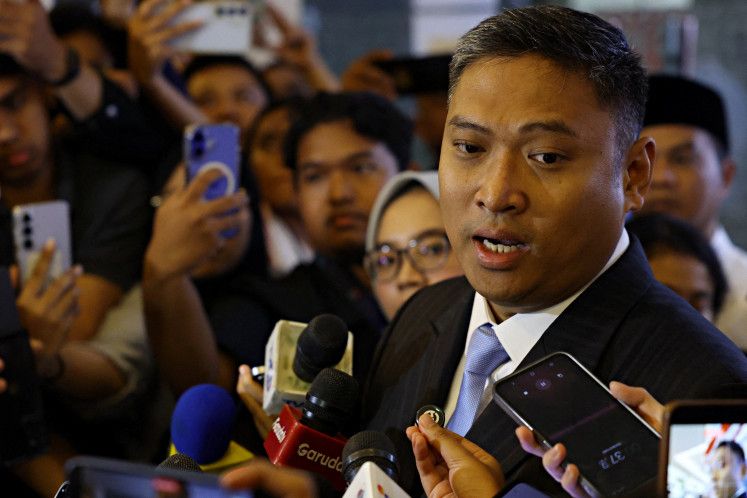
Without delay, Prabowo moved to appoint Deputy Agriculture Minister Sudaryono to the BGN helm, formalising the appointment through a State Palace ceremony in Jakarta mere hours after Nanik's resignation took effect. Sudaryono brings a notably political pedigree to the role: he is a member of Prabowo's Gerindra Party and previously served as an aide to the president during the 2010s, a background that contrasts sharply with the technocratic requirements typically demanded of such positions. State Secretary Prasetyo Hadi attempted to frame the selection as strategically sound, noting that Sudaryono had participated in conceptualising the programme during its developmental phases and therefore possessed relevant background knowledge. Nonetheless, the appointment of a party politician to lead a scandal-plagued agency raises concerns about whether managerial expertise or political loyalty has become the determining factor in stabilising the initiative.
During his inauguration remarks, Sudaryono acknowledged that governance deficiencies had compromised the agency's operations and pledged commitments to enhanced transparency and process modernisation. He specifically pledged to eliminate opaque administrative practices and transition manual procedures toward digital systems designed to create comprehensive records and accountability trails. His stated intention to end "closed-door" decision-making processes directly acknowledges the institutional opacity that had characterised BGN's operations and contributed to the corruption vulnerabilities that precipitated the earlier arrests. Whether such commitments can translate into substantive systemic reform remains uncertain, particularly given the compressed timeframe in which previous leadership struggled to establish institutional credibility.
The broader context of the programme's operational challenges extends well beyond recent leadership turbulence. Since its initial implementation in early 2025, the free meals initiative has encountered recurring difficulties spanning food safety, quality assurance, and consistent delivery mechanisms across the archipelago. Particularly damaging have been multiple mass food poisoning incidents reported at participating facilities nationwide, incidents that generated public alarm and prompted investigations into kitchen hygiene and meal preparation standards. In response to mounting criticism, Nanik had imposed a temporary freeze on approving new kitchen facilities whilst conducting comprehensive audits of the nearly 28,000 existing operations. This moratorium, intended as a corrective measure, instead provoked substantial protests from tens of thousands of prospective kitchen operators who had invested heavily in establishing their facilities in anticipation of programme participation, complicating the agency's public standing.
The budgetary dimensions of the programme reveal further evidence of recalibration and scaling back. The government announced on Tuesday that the provisional 2026 allocation had been reduced to Rp229 trillion (US$12.8 billion), a substantial decrease from the previously planned Rp268 trillion envelope. More significantly, the beneficiary coverage target for 2026 was lowered from an initially planned 82.9 million recipients to 62.7 million, representing a meaningful contraction in the programme's geographic and demographic reach. The initial 2026 budget had allocated Rp335 trillion to serve the expanded beneficiary base including schoolchildren, toddlers, and pregnant women, demonstrating that budget reductions have proceeded alongside beneficiary target reductions. BGN deputy chief Agustina Arumsari attempted to reframe the contraction as a strategic pivot, stating that quality improvement rather than numeric expansion had become the immediate priority, a formulation that effectively concedes that the original design parameters had proven unachievable.
Political analyst Wasisto Raharjo Jati provided external assessment suggesting that the programme's cascading difficulties reflect fundamental shortcomings in the planning architecture and implementation approach. Wasisto characterised the initiative as having been propelled primarily by political ambition rather than rigorous technocratic preparation, noting that despite its status as a flagship Prabowo commitment, the institutional execution had repeatedly failed to match the political investment and public expectations. This observation points toward a deeper structural tension: that the programme's prominence within Prabowo's political platform may have accelerated its launch beyond the preparatory capacity of existing state institutions to manage complex budgets, establish reliable supply chains, and maintain consistent quality controls across geographically dispersed implementation sites. The recurrence of crises suggests that scaling back both in budget and beneficiary reach may represent not merely tactical retreat but acknowledgment that the programme's original parameters exceeded institutional capacity.
The implications for Malaysian and broader Southeast Asian policy circles merit consideration. As other regional governments pursue similarly ambitious social programmes targeting nutrition and food security, Indonesia's experience illustrates the significant risks inherent in rapid large-scale implementation of complex distribution systems without adequate prior institutional development. The corruption investigation, leadership instability, food safety incidents, and subsequent budget retrenchment collectively demonstrate how flagship programmes can become liabilities for administrations if launched prematurely or without sufficient institutional groundwork. For Malaysia, which has maintained more established social safety net structures, Indonesia's travails offer cautionary lessons regarding the importance of pilot programmes, incremental scaling, and institutional capacity assessment prior to national rollout of major initiatives.
Looking forward, Sudaryono's tenure will likely be monitored closely both within Indonesia and internationally as a test of whether political appointments combined with stated transparency commitments can address the fundamental governance deficits that have characterised BGN's operation. The appointment of a politician rather than a career administrator, whilst controversial from a technocratic perspective, may reflect Prabowo's decision to prioritise political reliability over expertise—a choice that could either provide the decisive executive authority necessary to implement reforms or perpetuate the institutional dysfunction that characterised previous leadership. The success or failure of this latest iteration of BGN management will substantially influence not only the viability of the free meals programme itself but also broader public confidence in the administration's capacity to execute complex social programmes competently.

