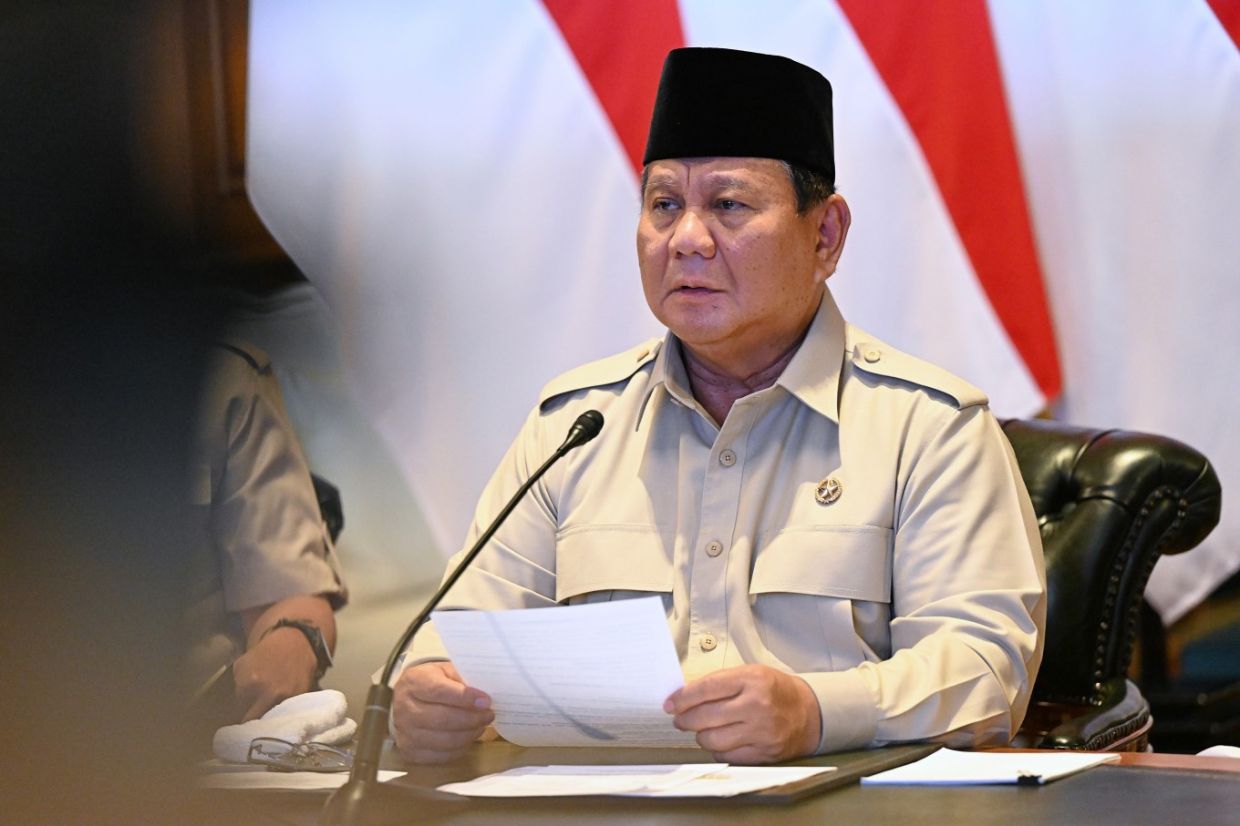
The exceptional political grace period that surrounded Indonesian President Prabowo Subianto through most of 2025 has definitively ended, with fresh survey data revealing a sharp 30-point drop in public approval over just nine months. The latest measurement from Saiful Mujani Research and Consulting (SMRC) recorded his satisfaction rating at 51.1 percent in July 2026, down sharply from the 81.2 percent he commanded as recently as November 2025. This represents a critical turning point in his presidency, as dissatisfaction simultaneously surged to 46.9 percent from roughly 16 percent during the same period. The shift marks a transition from the extraordinary political landscape that has characterised his tenure to something resembling the normal rhythms of democratic governance, where sustained public favour becomes increasingly difficult to maintain.
What made Prabowo's extended honeymoon so unusual was not merely his electoral victory in 2024, but the substance of goodwill generated through early policy implementation. The introduction of a free nutritious meal programme in January 2025 proved particularly effective in sustaining public backing during a period when most newly elected leaders see their ratings begin to decline. SMRC data show he maintained ratings in the 70 to 80 percent range throughout 2025, a plateau that far exceeded the trajectory of his immediate predecessor. Joko Widodo, despite his own popularity, did not reach his career-high approval of 81.7 percent until May 2023, well into his second term. By contrast, Prabowo achieved comparable numbers within his first year, suggesting that social spending initiatives combined with the residual enthusiasm from his election victory created an unusually durable foundation of support. The sustainability of that support, however, depended on the government's ability to deliver tangible improvements in citizens' lived experience.
The current approval decline must be understood within the context of broader global leadership trends. Prabowo's ratings, even in their diminished state at just above 51 percent, remain substantially higher than those typically seen among contemporary international leaders. Trump's second term began in January 2025 with a historically low approval of 47 percent, while both Obama and Biden experienced early and steep declines from their opening highs. The comparison underscores that while Prabowo's 30-point drop represents a significant contraction, it reflects a more gradual erosion compared to the sharp collapses experienced by some of his international counterparts. Nevertheless, the shift from 81 percent to 51 percent in nine months cannot be dismissed as merely routine democratic adjustment; the magnitude and speed of the decline warrant serious attention to its underlying causes.
When contextualised against the experience of Widodo's first term, the divergence becomes even more striking. Indikator polling data show that Widodo's inauguration approval of 62 percent collapsed to just 41 percent shortly after he implemented a costly fuel price increase early in his tenure. That early crisis forced Widodo to recalibrate his economic policies and rebuild his political capital. Prabowo has not experienced anything approaching such a precipitous early crash, suggesting he has avoided the kind of single, dramatically unpopular policy decision that can irreversibly damage a new administration's political standing. Instead, his decline appears to reflect a more diffuse erosion of confidence, rooted in the accumulating gap between campaign promises and administrative reality, rather than a discrete shock that might theoretically be reversed through policy reversal.
The three areas in which public perception has deteriorated most significantly provide crucial insight into the dynamics of Prabowo's political challenge. Economic sentiment has collapsed from what observers described as encouraging during late 2025 to merely 15.7 percent positive perception in July 2026. Public perceptions of the political environment have fallen even more dramatically, from 35.8 percent positive in November 2025 to just 13.5 percent in July 2026, suggesting deepening scepticism about the direction of governance. Positive perceptions of law enforcement, meanwhile, stand at 26.4 percent, indicating persistent public concern about institutional integrity. These figures suggest that Prabowo's core campaign pledges—reducing corruption and accelerating economic growth from 5 percent to 8 percent annually—are being measured against a substantially different reality. The weakening rupiah, sluggish equities markets, and broader anxieties about fiscal sustainability have created an environment in which campaign rhetoric alone cannot maintain public confidence.
Prabowo's response to his eroding approval has relied heavily on visibility and direct communication, an approach that proved effective when underlying economic conditions remained relatively benign. The President has maintained a prominent media presence through frequent televised speeches and a well-resourced communications operation designed to keep him before the public eye. He has not hesitated to respond directly to critics and journalists, maintaining an active engagement with public discourse that reflects his political instincts. This strategy generated sufficient noise to sustain approval even as economic indicators softened during early 2026. However, the July figures suggest that this communication-intensive approach has reached its limits. The Indonesian public, like publics elsewhere, ultimately evaluates presidential performance through the lens of daily lived experience—the price of food at the market, exchange rate stability, employment prospects, and the reliable delivery of promised programmes—rather than through the frequency or forcefulness of presidential media appearances or the vigour with which the President confronts his critics.
Some supporters of Prabowo's Gerindra Party have raised legitimate methodological questions about Saiful Mujani's role as both pollster and occasional government critic, suggesting that ideological predisposition might have influenced the survey findings. This concern warrants acknowledgment in any serious discussion of these figures. However, the standard for evaluating polling credibility cannot be the personal politics of individual researchers; SMRC has a well-established track record spanning years of conducting surveys, including periods when its findings were entirely favourable to the Jokowi administration, demonstrating institutional consistency across different political contexts. More compelling still is the corroboration from an independent polling source: Indikator Politik Indonesia's survey of 4,250 respondents conducted between July 14 and 24, which was circulated through national media channels, recorded satisfaction at 49.5 percent, down from 68 percent in April 2026 and 81 percent in December 2025. When two separately managed polling organisations converge on similar findings, the suggestion that measurement bias rather than genuine opinion shift explains the data becomes untenable.
Historical precedent offers some reassurance that Prabowo's current position, while challenging, is neither unprecedented nor necessarily permanent. Indonesian and international political history contains numerous examples of presidents who have recovered from steeper declines in public approval. The mere fact of declining ratings does not signal inevitable political doom or the inevitable failure of a presidential agenda. What matters most is whether the underlying conditions generating the decline can be addressed through substantive policy adjustments and improved implementation. Prabowo's strategic challenge differs fundamentally from that faced by Widodo after the early fuel price shock; it is not a matter of reversing a single unpopular decision, but rather of closing the gap between campaign promises and administered reality across multiple domains simultaneously.
Government officials indicate that the Presidential Palace has intensified engagement with the National Economic Council (DEN) to develop more effective economic policy responses. According to sources familiar with these deliberations, social assistance programmes are targeted for expansion, reflecting an assessment that the existing framework has been insufficient to address public concerns about household purchasing power and livelihood security. The government is simultaneously preparing for anticipated economic turbulence arising from forecasted El Niño weather patterns, which are expected to disrupt agricultural production, elevate food prices, and further strain household finances already pressured by currency weakness. This defensive posture—maintaining unchanged fuel prices despite budgetary pressures in anticipation of broader economic shocks—reflects official recognition that additional price increases could trigger a political crisis similar to that which confronted Widodo. The government appears to be selecting its battles carefully, preserving political capital for more favourable circumstances.
Prabowo's inner circle has undertaken additional consultations with pollsters who orchestrated his successful 2024 presidential campaign, seeking both diagnostic insight into the causes of his approval decline and prescriptive guidance for recovery. The feedback from these pollsters reportedly emphasises two dimensions of response: improved public communication strategies and comprehensive programme review. Particularly significant is the assessment that implementation failures in signature initiatives—including the free nutritious meal programme and the Red and White Cooperatives scheme—have contributed substantially to public disenchantment. The pollsters have reportedly counselled that recovery of public approval depends less on amplified messaging or expanded presidential visibility than on demonstrable improvements in programme delivery and government operational effectiveness. This assessment suggests that Prabowo's political future depends less on his communication prowess, considerable though it is, and more fundamentally on whether his administration can translate policy intentions into consistent, tangible benefits that ordinary Indonesians encounter in their daily lives.

