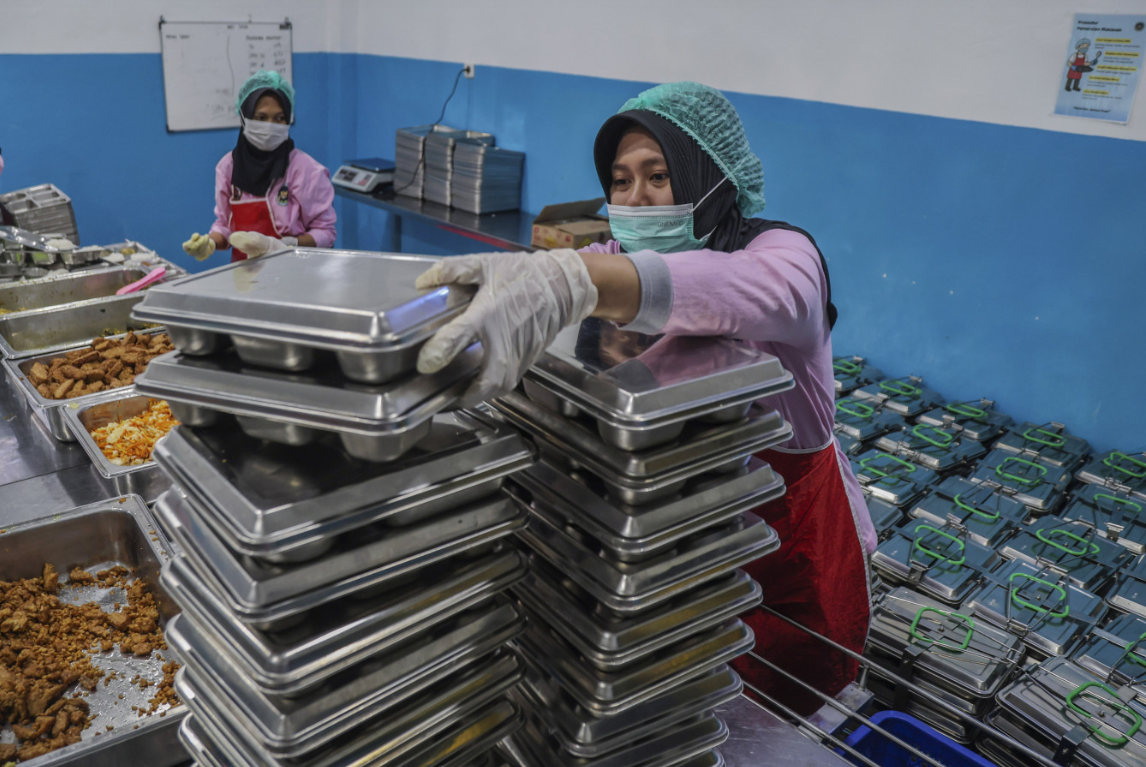
President Prabowo Subianto is forcing a strategic rethink of two centrepiece social programmes that have become sources of growing controversy within weeks of their rollout. The reassessment, announced following a lengthy meeting at the Presidential Palace on Wednesday with relevant cabinet officials, suggests Jakarta is preparing to substantially recalibrate how it delivers these costly welfare initiatives, which have attracted both street protests and serious operational challenges that threaten the administration's credibility.
The directive represents a notable retreat from the President's original vision for universal coverage, pivoting instead toward more nuanced, means-tested delivery mechanisms. During the closed-door session with officials from the National Nutrition Agency and related ministries, Prabowo instructed the BGN to undertake a rigorous one-month assessment of the free meals programme's implementation in schools, focusing particularly on how beneficiary eligibility should be determined. This narrower scope marks a departure from the sweeping approach that characterised the programme's inception, where the government sought to feed approximately 83 million people including schoolchildren and pregnant women across the archipelago.
According to BGN deputy chief Agustina Arumsari, the President has explicitly demanded that proposed improvements be carefully studied rather than hastily implemented. The review will examine whether higher-income household children should be excluded from the meals scheme, a sensitive recalibration that touches on both fiscal sustainability and social equity. However, officials remain cautious about bifurcating the student population within classrooms, recognising the psychological implications of some pupils receiving government meals while their peers do not. This tension between budgetary prudence and social cohesion reflects the practical complexities involved in recasting a programme initially conceived as universal.
The government is simultaneously exploring alternative distribution models that could reduce reliance on dedicated free meal kitchens. School canteens are being examined as potential delivery channels, a shift that might streamline logistics whilst transferring some administrative burden to educational institutions. Such operational redesign suggests the administration recognises structural inefficiencies in the current setup, possibly including cost overruns and coordination challenges that have contributed to recent food poisoning incidents that sparked public fury.
The financial scale of the undertaking underscores why revisions cannot wait indefinitely. Budgeted at approximately Rp 268 trillion, equivalent to roughly US$19.5 billion for 2026 alone, the free meals initiative ranks among the government's most expensive social interventions. At this expenditure level, even modest improvements in targeting or efficiency could yield significant fiscal savings, particularly as Jakarta manages broader macroeconomic pressures and infrastructure needs. The sheer cost has naturally drawn scrutiny from taxpayers, policy analysts, and opposition figures questioning whether universal provision represents optimal resource allocation for a nation where poverty remains concentrated in specific regions and demographics.
Public dissatisfaction has transcended academic economic debate. Last month's street demonstrations demanding the scheme's suspension reflected genuine grassroots concerns about food safety, with documented poisoning cases raising fundamental questions about quality control and implementation capacity. More damaging still has been a corruption investigation into senior officials from the National Police and Indonesian Military, which has exposed the programme to allegations of mismanagement and personal enrichment at the public's expense. These revelations have transformed the meals initiative from a straightforward policy into a test of whether the Prabowo administration can deliver effectively on its social promises whilst maintaining institutional integrity.
The review of the Red and White cooperative programme signals similarly significant recalibration. Coordinating Food Minister Zulhas Hasan announced plans to expand these rural organisations beyond their original scope, positioning them as the primary government channel for distributing various assistance programmes and subsidised goods. The cooperatives would additionally intervene in agricultural markets, purchasing rice, corn, and other commodities when prices fall below government-determined thresholds, thereby offering income protection to smallholder farmers vulnerable to price volatility.
Yet this expansion occurs against a backdrop of serious operational failures that have damaged public confidence. Military-style mandatory training for cooperative managers resulted in at least four deaths, a tragedy that sparked criticism from human rights advocates and exposed the programme to accusations of recklessness. The incident suggested fundamental misalignment between the military-influenced organisational model and civilian safety standards, raising concerns about whether the cooperatives possess adequate institutional maturity for significantly expanded responsibilities. Overseeing social assistance distribution and managing agricultural buffer stocks requires sophisticated logistics and financial systems, capabilities that mandatory military training does not obviously cultivate.
For Malaysian observers, Indonesia's struggle with these programmes offers instructive parallels and contrasts. Both countries grapple with malnutrition in vulnerable populations, particularly among children in less-developed regions, and both have sought comprehensive policy responses. However, Indonesia's approach under Prabowo has been characterised by rapid, universalised rollout with ambitious financial commitments, whereas Malaysian initiatives tend toward more gradual expansion with relatively tighter means-testing. The Indonesian experience suggests that grand programmatic ambitions, whilst politically attractive and potentially transformative in scope, require robust implementation capacity that hastily assembled bureaucracies may struggle to deliver.
The broader regional significance lies in demonstrating how social spending, however well-intentioned, risks undermining public legitimacy when execution falters. Other Southeast Asian governments pursuing similar large-scale welfare expansion might draw lessons from Indonesia's experience regarding the critical importance of phased implementation, rigorous quality assurance, and institutional safeguards against corruption. The credibility cost of promised benefits failing to materialise or proving unsafe exceeds the budgetary savings achieved through corner-cutting.
Moving forward, President Prabowo faces the challenge of recalibrating these programmes in ways that preserve their core poverty-reduction objectives whilst addressing legitimate operational and fiscal concerns. The one-month review timeline for the meals scheme is ambitious, suggesting the administration recognises the political urgency of demonstrating course correction. Success will depend on whether the forthcoming proposals genuinely improve targeting and quality, or merely represent cosmetic adjustments intended to defuse immediate criticism. For a government committed to significant social transformation, the next iteration of these flagship initiatives will substantially determine whether the Prabowo administration can translate ambitious rhetoric into sustainable, credible governance.

