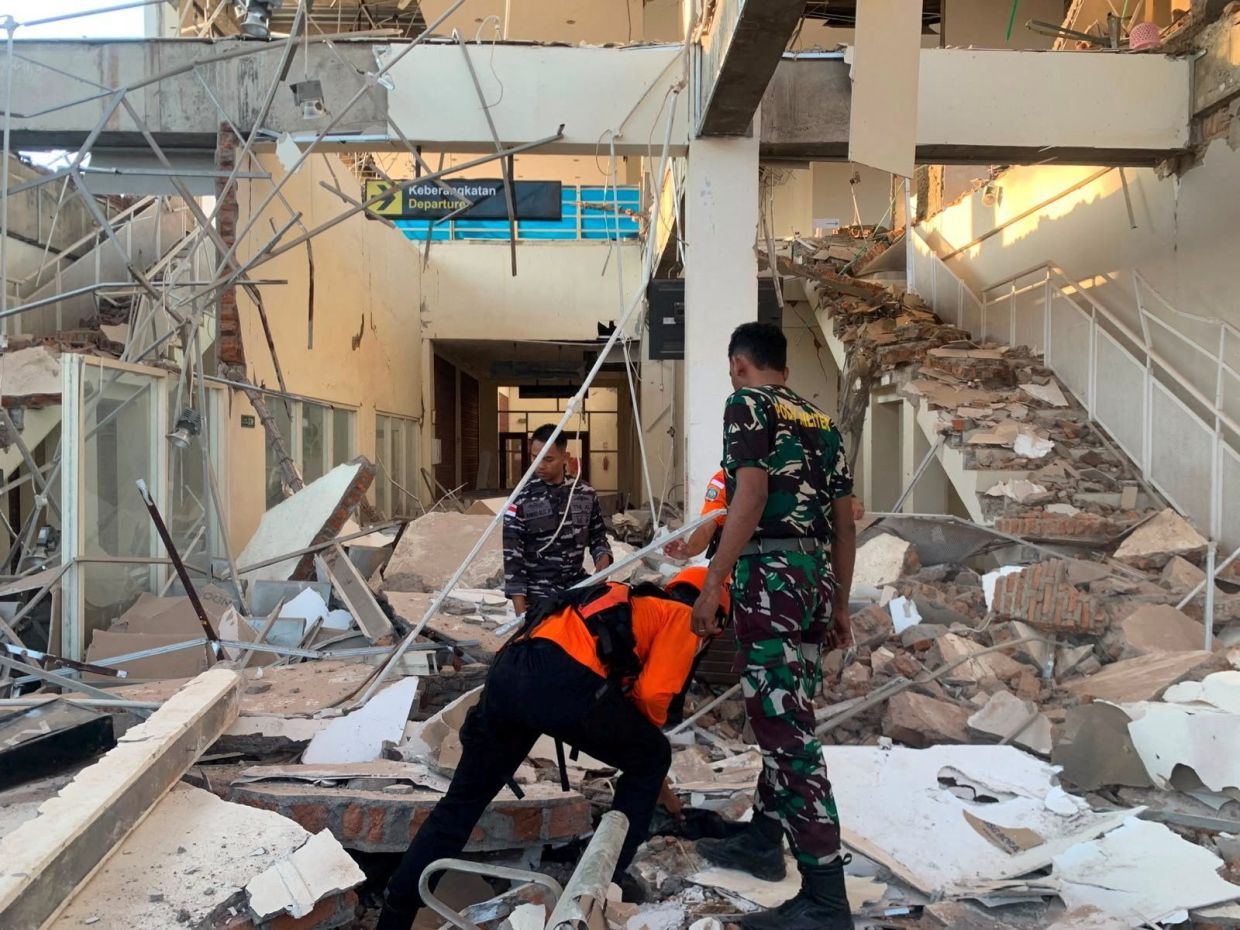
A powerful magnitude 7.7 earthquake rocked Indonesia's Flores region in the early hours of Saturday, causing widespread structural damage and claiming at least two lives in a region with a long history of seismic catastrophes. The tremor struck at 5:58 a.m. local time with its epicenter located 68 kilometres north-northwest of the city of Ende in East Nusa Tenggara province, according to the U.S. Geological Survey, which measured the quake's depth at 10 kilometres. The initial shock was followed by multiple aftershocks that kept residents on edge throughout the morning.
Indonesian authorities moved swiftly to respond to the emergency, with the Maumere Search and Rescue Agency reporting that at least two residents were killed and another two injured in the immediate aftermath. The earthquake's destructive force was evident in the collapsed buildings and homes scattered across the affected areas, prompting disaster management officials to mobilize emergency response teams across multiple provinces. The scale of structural damage became clearer as preliminary assessments came in from communities across Flores island, where many buildings had been severely compromised by the violent shaking.
Witnesses described scenes of panic and chaos as the powerful tremor struck without warning. Yohanna Embu, a resident of Sikka regency in East Nusa Tenggara, recounted how residents rushed to higher ground as buildings crumbled around them. She specifically noted that the waiting room at Maumere's port terminal had collapsed completely, highlighting the indiscriminate nature of the damage. The intensity of the earthquake was such that it generated fear among residents already acutely aware of their region's vulnerability to major seismic events.
The impact extended to religious and educational institutions across the region. At St. Peter Major Seminary in Sikka, known locally as Ritapiret Seminary, students and nuns attending morning Mass fled in terror as the roof of an assembly hall gave way above their heads. The rector, Rev. Guidelbertus Tanga, reported that the chaos of the evacuation resulted in injuries, with at least one priest sustaining a broken leg after jumping from a second-floor window to escape the collapsing structure. The incident underscored how even well-constructed institutional buildings offered little protection against such a powerful natural force.
Fears of an impending tsunami prompted Indonesian authorities to issue broad warning directives across multiple provinces shortly after the earthquake struck. The Meteorology, Climatology and Geophysics Agency ordered residents in East Nusa Tenggara, West Nusa Tenggara, South Sulawesi and Southeast Sulawesi provinces to evacuate coastal areas immediately and move to higher ground. Instructions were issued urging people to stay away from beaches and riverbanks, triggering large-scale movements of populations away from vulnerable shorelines. The precautionary measure reflected lessons learned from Indonesia's devastating earthquake and tsunami history.
Hospitals throughout the affected region activated emergency protocols as the potential for tsunami damage loomed. Television footage captured the frantic evacuation of patients from multiple medical facilities, with staff moving beds, intravenous stands, oxygen cylinders and other essential equipment outdoors to establish makeshift treatment centres. This rapid adaptation to emergency conditions demonstrated the preparedness protocols that have been developed following previous disasters, though the scale of potential casualties remained uncertain in the immediate aftermath of the quake.
The tsunami warning was eventually lifted after monitoring by Indonesia's Meteorology, Climatology and Geophysics Agency indicated that sea-level changes remained within normal parameters and posed no significant threat to coastal communities. This determination came as a relief to authorities and residents alike, allowing people to return to their homes and allowing medical facilities to restore normal operations. However, the lifting of the tsunami alert did not diminish the scale of the humanitarian crisis created by the earthquake's direct structural damage.
Indonesia's geographical position makes it one of the world's most earthquake-prone nations. The country sits atop the Pacific Ring of Fire, an extensive arc of volcanoes and seismic fault lines that encircles the Pacific Basin. This geological reality means that the archipelago of more than 17,000 islands experiences frequent seismic activity, ranging from minor tremors to devastating major earthquakes. The Ring of Fire is responsible for approximately 90 per cent of the world's earthquakes and 75 per cent of its active volcanoes, making Indonesia's location particularly hazardous.
The Flores region specifically carries a traumatic historical memory that adds weight to Saturday's earthquake. In December 1992, a magnitude 7.8 earthquake triggered a catastrophic tsunami that swept across the island, killing approximately 2,500 people and leaving thousands more injured or displaced. That disaster fundamentally shaped how residents and authorities in the region view seismic threats, creating a culture of heightened awareness and rapid response protocols. The 1992 tragedy serves as a sobering reminder of what can happen when major earthquakes strike near or beneath the ocean's surface in densely populated areas.
For Malaysia and other Southeast Asian nations, Saturday's earthquake underscores the shared seismic risks that characterize the wider region. While Malaysia itself experiences fewer major earthquakes than Indonesia, the disaster highlights the importance of international cooperation on disaster preparedness, early warning systems, and emergency response coordination. The effectiveness of Indonesia's tsunami warning system—despite the ultimate false alarm—demonstrates how regional investment in monitoring infrastructure can save lives by providing crucial minutes or hours for evacuation.
The recovery effort in Flores will likely focus first on assessing the full extent of damage and locating any additional casualties, followed by emergency shelter provision and medical treatment for the injured. Indonesian authorities will need to conduct structural safety inspections on buildings throughout the affected region before allowing residents to return. The earthquake also raises questions about building code enforcement in areas prone to seismic activity, a challenge that extends beyond Indonesia to many developing nations in the Pacific Ring of Fire where population growth often outpaces infrastructure safety upgrades.

