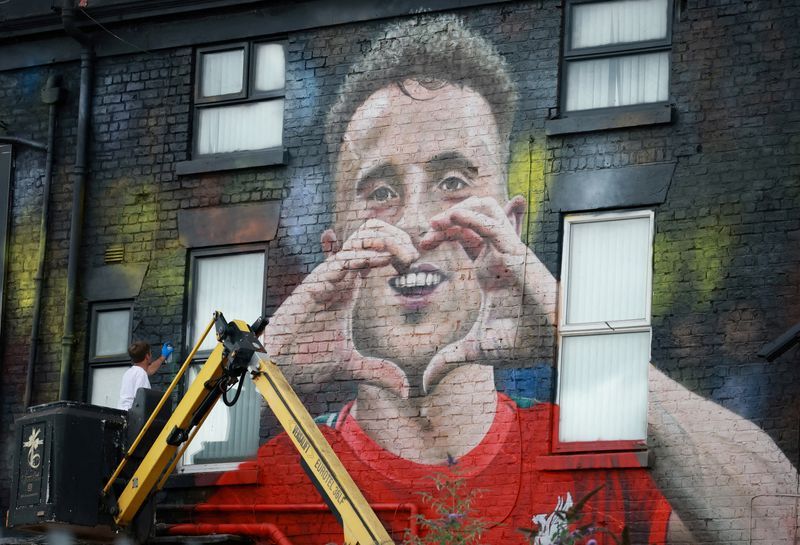
Portugal's World Cup journey has taken on a deeper resonance than typical tournament football, as the squad prepares to face Croatia in the round of 32 on Thursday with the knowledge that the date aligns with one of Portuguese football's most devastating losses. While the match will be played in Toronto, the calendar back in Portugal will have already turned to July 3—exactly one year since Diogo Jota, the Liverpool forward and beloved national team player, perished in a car crash in northwestern Spain alongside his brother Andre Silva. The tragedy occurred when their Lamborghini veered off the road and caught fire, claiming two lives that sent shockwaves through Portuguese sport and the global football community.
The convergence of this sporting fixture with such a significant anniversary has transformed what might otherwise be routine tournament competition into an emotionally charged occasion laden with collective memory and tribute. Manager Roberto Martinez has ensured that Jota's presence remains woven through Portugal's campaign by naming him an honorary member of the World Cup squad, a gesture that extends beyond symbolic remembrance into the practical framework of the tournament itself. The emotional weight of this decision reflects how thoroughly Jota had embedded himself into the identity of the Portuguese national team, where his technical excellence and commitment to the collective cause made him irreplaceable both on the pitch and in the dressing room culture.
Tangible expressions of remembrance have permeated the tournament experience for the Portuguese delegation. Ruben Neves, Jota's close friend and a midfield stalwart for the national team, has worn his late teammate's number 21 throughout the competition, a poignant daily acknowledgment of absence. Prime Minister Luís Montenegro extended official recognition of the personal grief afflicting the squad by presenting wristbands bearing Jota's name to the players, institutionalising remembrance at the highest levels of Portuguese governance. During the opening match against DR Congo in Houston, Jota's parents Isabel and Joaquim Silva watched from the stands as an emotional tribute unfolded, their visible emotion testament to the enduring nature of such loss even as time accrues.
The human dimensions of grief have intersected with professional football ambitions in ways that extend beyond the Portuguese squad itself. Andy Robertson, the Scotland captain and Jota's Liverpool teammate and genuine friend, experienced an immediate rush of emotion when Scotland secured World Cup qualification in November, his thoughts instinctively turning to his departed friend. The connection transcended club football and national team rivalry, revealing the genuine bonds that form between players who share dressing room spaces and competitive intensity. Jota's widow Rute Cardoso recognised this fellowship by writing directly to Robertson when the tournament commenced, articulating a sentiment that transformed grief into collective strength: she thanked him for carrying Jota's memory into the competition, for converting the pain of loss into motivation and something transcendent.
Jota's statistical contribution to Portuguese football underscores what the national team lost in practical terms. The 28-year-old forward accumulated 14 goals across 49 appearances for his country, a productive return that reflected his technical ability to convert opportunities at international level. Had he survived, Jota would almost certainly have represented Portugal in North America, having previously missed the 2018 World Cup due to injury. His absence from this tournament therefore compounds the sense of what-might-have-been, layering sporting regret atop personal tragedy in ways that resonate particularly acutely during major competitions.
Within the squad's dressing room culture, Jota represented more than a skilled performer capable of delivering crucial goals. He embodied the generation that had helped maintain Portugal's standing among football's established powers, a trusted presence whose judgment and leadership extended beyond his individual contribution to the team's collective psychology. Defender Vitinha articulated the multifaceted motivations driving the squad heading into Thursday's match, identifying how personal grief, national pride, family loyalty, and sporting ambition converge into singular purpose. The match has become invested with significance beyond conventional tournament mathematics, transformed into something approaching ceremonial importance.
The geographical and temporal peculiarity of the fixture creates additional layers of symbolic weight. As the match unfolds in Toronto and carries into the early hours of Canadian time, the clock in Portugal will simultaneously pass midnight, marking the precise anniversary moment when July 3 arrives. This synchronisation of sporting and commemorative time ensures that the squad will experience the date change in real time, with all its attendant emotional implications occurring within the intensity of active competition. Rather than mere historical recollection, the players will inhabit the anniversary itself, their emotional and physical exertion coinciding with the moment of remembrance.
Portuguese communities abroad have recognised the tournament's personal significance. Miguel De Silva, the Portuguese-Canadian owner of Amigos da Dundas Sports Bar in Toronto's Little Portugal neighbourhood, observed that Jota's memory provides an additional motivational layer beyond typical tournament competition. The sentiment reflects how Portuguese diaspora communities maintain connection to homeland tragedies and sporting narratives simultaneously, investing themselves in outcomes that carry both national and personal resonance. For supporters in Canada and globally, the match represents an opportunity to participate in collective remembrance whilst witnessing athletic excellence, transforming stadium attendance and viewing into an act of homage.
While time has progressed and the football calendar has cycled through numerous fixtures and seasons since Jota's death, the commemorative attention organised throughout Portugal's tournament campaign demonstrates that grief and sporting competition need not occupy separate compartments. Instead, the squad has integrated personal tragedy into their professional mission, allowing memory to inform rather than derail performance. The anniversary match against Croatia becomes a vehicle through which emotion, collective identity, and competitive purpose align, offering supporters and teammates alike an occasion to honour the lost player whilst engaging with the sport to which he devoted his shortened life.

