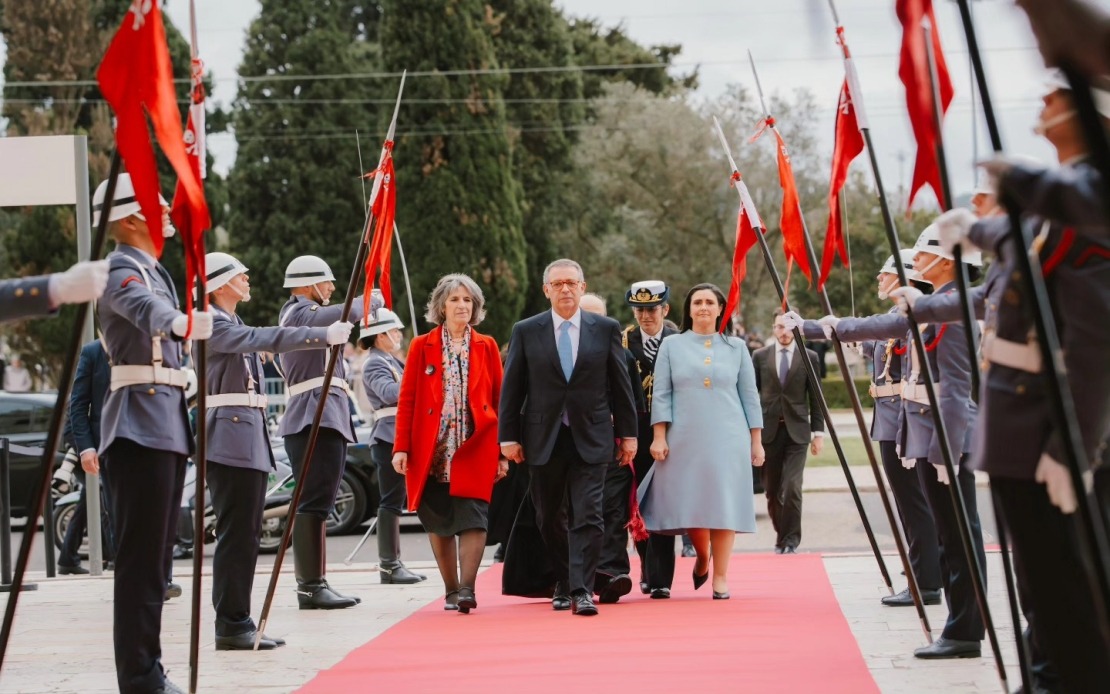
Portugal has formally enacted a nationwide ban on face coverings in public spaces following President Antonio Jose Seguro's approval of the legislation on Tuesday. The measure, which originated from a proposal by the right-wing Chega party, represents a significant shift in Portuguese social policy and places the country alongside a growing list of European nations implementing similar restrictions. Seguro's decision to sign the law came after amendments were introduced during parliamentary deliberations, which the President indicated had addressed his initial concerns about the measure's scope and implementation.
In a statement released from Belem Palace, the presidential residence in Lisbon, Seguro outlined his reasoning for supporting the controversial legislation. He framed the ban as addressing an issue of substantial social and cultural importance to Portuguese society, emphasizing that the measure rested on three primary pillars: advancing social integration, preventing discrimination, and enhancing public security. The President further referenced relevant decisions from the European Court of Human Rights concerning face coverings, positioning the Portuguese law within a broader European legal framework that other democracies have already embraced.
The philosophical foundation underpinning Seguro's support reflects a particular vision of democratic society centred on facial recognition and direct human interaction. According to the presidential statement, an uncovered face functions as a fundamental element that builds social trust and maintains the distinctive character of Portuguese community life. This argument suggests that the ability to see and be seen—to achieve mutual recognition through visible facial features—constitutes an essential precondition for genuine social cohesion and the establishment of authentic human relationships within public settings.
A critical dimension of the government's justification focuses on gender equality and women's rights. The statement explicitly addresses what Portuguese officials characterize as an inherent asymmetry: the requirement that women, and women alone, conceal their entire faces would contradict fundamental principles of human dignity and equal standing between genders. This reasoning positions the ban not as restrictive but as protective of women's liberation, arguing that such face-covering practices perpetuate unequal treatment incompatible with values that define contemporary European democracies.
Portuguese authorities have additionally framed the legislation within a liberal democratic context that permits individual expression and belief systems, provided such practices operate within collectively established boundaries. The statement references the concept of a "common experience"—a shared social framework—which officials contend has received validation through European Court of Human Rights jurisprudence. This interpretation suggests that while personal identity and religious conviction merit protection, they must coexist with communal norms that facilitate collective functioning and mutual understanding.
However, the law has encountered substantial opposition from civil liberties advocates. Amnesty International Portugal has emerged as a prominent critic, arguing that the legislation discriminates against Muslim women who voluntarily choose to wear face coverings as an expression of their faith and personal identity. The human rights organization contends that the ban threatens fundamental freedoms of conscience, religion, and self-determination, raising questions about whether the law's purported objectives of integration and security justify restrictions on individual choice.
The Portuguese decision aligns with a broader European trend toward regulating or prohibiting face coverings in public environments. France pioneered this approach over a decade ago, followed by Belgium, Austria, Denmark, and the Netherlands, which have implemented full or partial restrictions. This pattern reflects ongoing tensions within European societies regarding immigration, religious expression, multiculturalism, and secular governance principles. Each country has framed similar legislation through its own constitutional traditions and social priorities, yet the cumulative effect demonstrates a coordinated shift in how European democracies address religious and cultural practices associated with Islamic observance.
For Malaysia and Southeast Asia, Portugal's action carries implications worth monitoring. While Southeast Asian nations maintain distinct constitutional frameworks and demographic compositions, including significant Muslim-majority populations, the Portuguese precedent illustrates how established democracies navigate tensions between cultural integration policies and minority religious rights. Malaysia's multicultural framework, with protections for religious freedom enshrined in the Federal Constitution, represents a different approach than Europe's trend toward restrictive regulations. Nevertheless, understanding how other democracies justify and implement such policies provides perspective on global debates surrounding religious expression in public spaces.
The legal and philosophical foundations offered by the Portuguese government reveal fundamental questions about how democracies define public space, community standards, and the limits of individual liberty. By invoking social trust, gender equality, and public security as justifications, Portuguese officials have attempted to present the ban as a progressive measure rather than a restriction on religious practice. This framing strategy—common across European nations implementing similar laws—reflects ongoing efforts to reconcile liberal democratic commitments to individual freedom with what majorities in these societies perceive as essential collective values and social norms.
The implementation phase will prove consequential for understanding the law's actual impact. Questions remain regarding enforcement mechanisms, penalties for violations, exceptions for medical or security purposes, and whether courts will uphold the legislation against anticipated constitutional challenges. As Portugal joins other European democracies in this policy domain, the practical consequences for affected communities and the legal resilience of the measure will likely influence ongoing debates across the continent about the proper relationship between religious minority rights and majority-defined public norms in secular democratic societies.

