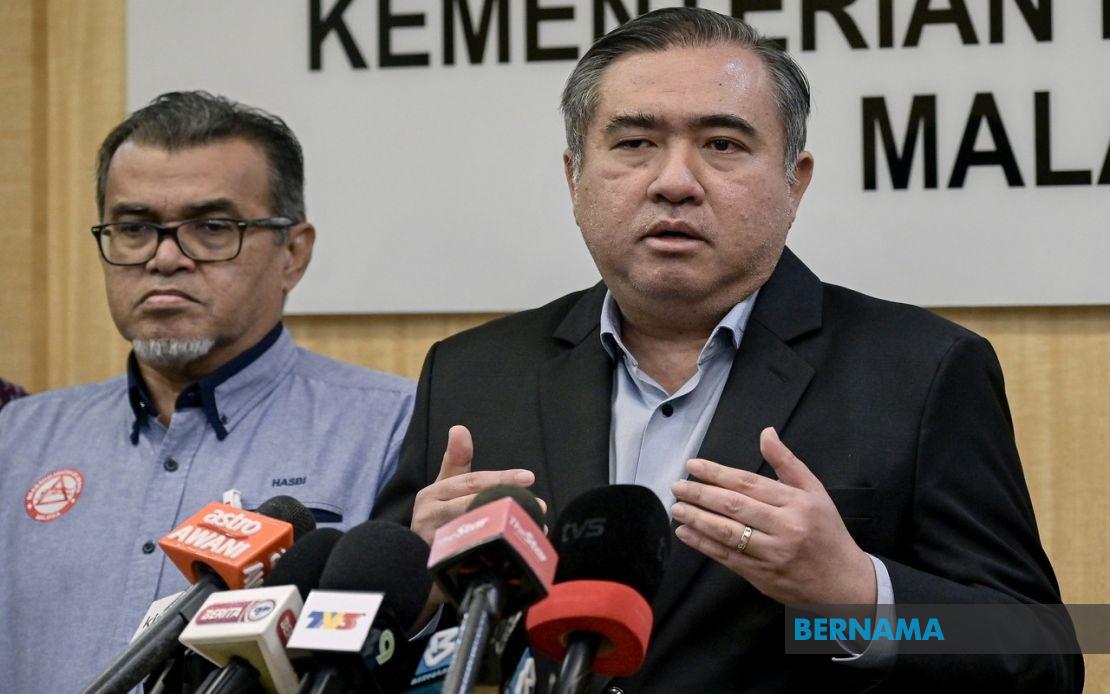
Transport Minister Anthony Loke has drawn a clear line between government regulatory authority and corporate autonomy in port operations, insisting that while shareholding rules remain strict, the day-to-day running of port companies falls entirely outside governmental purview. Speaking at a press conference in Putrajaya on July 17, Loke addressed questions surrounding the appointment of former DP World chairman Sultan Ahmed Sulayem to lead MMC Ports Holdings Bhd, making clear that such management decisions are internal corporate matters requiring no official blessing.
The minister's clarification comes at a time when international media scrutiny has intensified around leadership transitions at Malaysia's port operators. Sultan Ahmed's assumption of the executive chairman role followed the abrupt resignation of previous group chief executive officer Azman Shah Mohd Yusof, triggering speculation about shifts in operational control. Loke's public stance serves to reassure stakeholders that these kinds of management changes represent normal business operations rather than political interventions or signs of strategic redirection.
Malaysia's regulatory framework for port operations draws a deliberate distinction between ownership structures and operational control. The government's core requirement mandates that all companies holding port concessions or managing strategic national assets must maintain at least 51 percent Malaysian shareholding. This threshold, Loke explained, represents the non-negotiable floor for state interest protection, ensuring local capital retains ultimate ownership regardless of who sits in executive positions. The policy reflects longstanding practice across Southeast Asian port jurisdictions, where maintaining national control over critical maritime infrastructure remains a cornerstone of strategic planning.
What proves equally notable is Loke's assertion that the government neither seeks nor requires notification when foreign nationals assume senior management roles within these majority-owned Malaysian companies. This permissive stance extends to existing operational examples already embedded within Malaysia's port landscape. The Port of Tanjung Pelepas, operated under a concessionary arrangement, currently operates under chief executive leadership held by a foreign national, demonstrating that such appointments carry no inherent political sensitivity provided ownership remains correctly structured. This pragmatic approach acknowledges the value of international expertise and global networks in managing complex, competitive port operations.
The distinction Loke articulated reflects evolved thinking about how emerging economies manage strategic infrastructure in an increasingly globalised shipping environment. Rather than insisting on Malaysian nationals in every senior position, the government prioritises financial control and ownership preservation, recognising that port competitiveness increasingly depends on attracting sophisticated management talent from global maritime sectors. This calibrated approach allows Malaysian firms to compete effectively against regional rivals while maintaining the state's ultimate protective interest through ownership thresholds.
However, the minister made equally plain that transparency requirements around share transfers remain absolute. Any changes in shareholding patterns, particularly those affecting the Malaysian ownership percentage, must be formally communicated to relevant government bodies, including the Public-Private Partnership Unit. When asked directly whether the ministry had received notifications regarding shifted share ownership at MMC Ports Holdings, Loke stated unequivocally that no such formal communication had reached either the transport ministry or the concessionaire. This absence of official notification itself carries significance, either indicating that no shareholding restructuring has occurred or suggesting potential compliance issues if transfers have transpired without proper disclosure.
The MMC Ports Holdings situation exemplifies the complexities surrounding Malaysia's largest port operator group, which manages critical facilities across the peninsula. The sudden leadership transition created natural questions about whether broader structural changes might be underway. Loke's response essentially separated these concerns into two categories: management changes, which require no approval and warrant no government interference, and ownership shifts, which demand transparent reporting and could trigger formal review. This framework allows the government to maintain strategic oversight while respecting corporate operational autonomy.
For Malaysian business observers and regional stakeholders, Loke's clarification offers important guidance on how the current administration interprets its regulatory scope. The approach suggests pragmatism balanced against nationalist protection—foreign expertise is welcomed provided Malaysian capital retains command. This positioning may appeal to international investors and port operators considering Malaysia's jurisdiction, as it signals that technical excellence and global credentials need not threaten business viability, provided ownership structures respect statutory requirements. Simultaneously, it reassures domestic constituencies that critical maritime infrastructure remains fundamentally under Malaysian control.
The backdrop to these statements includes broader regional competition among Southeast Asian ports, where Malaysia competes directly with facilities in Singapore, Thailand, and increasingly Indonesia. Port operators worldwide increasingly recruit executive talent from international maritime sectors, where experience moving between major global hubs has become standard career progression. Malaysia's willingness to accept foreign management talent while safeguarding ownership potentially offers competitive advantage in attracting qualified leadership that might otherwise be deterred by nationalism-tinged regulations.
Looking forward, Loke's framework establishes clear expectations for corporate disclosure and government oversight. While management appointments can proceed without governmental involvement, any shareholding modifications must receive proper notification and scrutiny. This dual approach preserves government authority where it matters most—protecting Malaysian capital interest in strategic assets—while avoiding unnecessary meddling in operational matters where professional expertise should guide decisions. For MMC Ports Holdings and similar entities, the message is straightforward: proceed with necessary management changes, but ensure all ownership matters receive appropriate formal notification and transparency.

