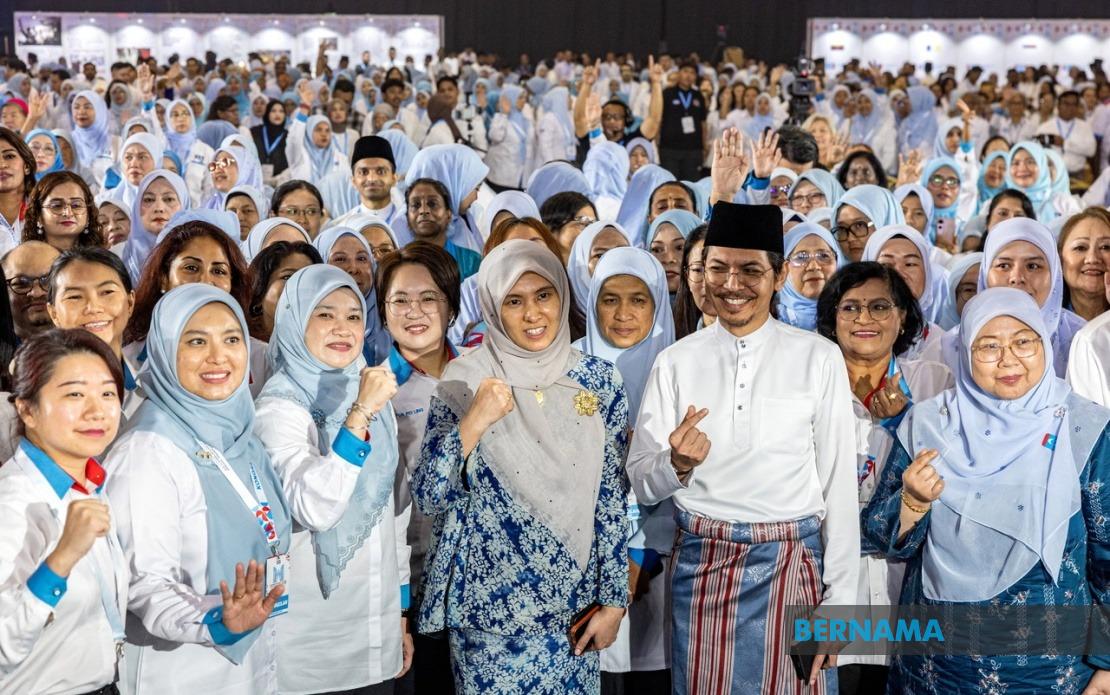
Political parties seeking to strengthen their position ahead of elections must prioritize building deep connections with constituents at the community level, according to Muhammad Kamil Abdul Munim, chief of Angkatan Muda Keadilan (AMK). Speaking during the conclusion of debates on the AMK Chief's Policy Address at the party's 2026 National Congress in Melaka, he outlined a comprehensive strategy for sustained political engagement that extends far beyond conventional campaign messaging. His remarks underscore a growing recognition within Malaysian political circles that electoral success depends not solely on centralized party machinery but on the sustained cultivation of relationships within local communities.
Maintaining strong ties with constituents serves a dual purpose that extends the reach of political organizations. When leaders remain visible and engaged within their communities, they establish the trust necessary to communicate their party's vision effectively while simultaneously insulating themselves against adverse narratives promoted by rivals. Muhammad Kamil emphasized that this multi-layered approach requires parties to strengthen their presence in neighborhoods and villages, where ordinary citizens form their political opinions. Such localized engagement becomes particularly critical in Southeast Asian democracies like Malaysia, where community leaders often wield considerable influence over their neighbors' political preferences. The interplay between national-level political strategy and grassroots mobilization has long determined electoral outcomes, yet many contemporary parties underestimate the capacity of community engagement to offset sophisticated opposition messaging campaigns.
The AMK chief articulated a framework in which multiple elements of party strength reinforce one another. Effective national narratives require validation through local implementation, while communication strategies only achieve their intended impact when delivered through trusted community figures rather than distant party hierarchies. This observation reflects a structural reality in Malaysian political organization: the machinery connecting party leadership to ordinary voters functions most effectively when it remains continuously activated at the neighborhood level rather than mobilized only during election periods. Muhammad Kamil contended that machinery, narrative, communication channels, and community networks constitute an integrated system where weakness in any single component undermines the entire structure. This systems-based understanding suggests that parties neglecting community relations will find their national messaging less persuasive, regardless of its intellectual merit or factual accuracy.
Looking specifically toward election preparation, the AMK chief argued for a bifurcated strategic approach that addresses both macro and micro political environments. National-level campaigns addressing broad policy themes and ideological differentiation must be complemented by locally focused initiatives responding to specific community concerns. In the Malaysian context, where socioeconomic conditions vary considerably between urban and rural areas, and where different demographic groups prioritize distinct policy concerns, this dual-level strategy becomes essential. A party promoting a particular economic vision at the national level will struggle to implement that vision effectively unless local leaders possess both understanding of and commitment to its underlying principles. Muhammad Kamil's implicit criticism suggests that some contemporary parties concentrate excessive resources on national narrative development while neglecting the patient work of building grassroots support structures that would translate those narratives into sustained political loyalty.
The question of institutional continuity and ideological coherence represents another significant theme underlying the AMK chief's remarks. Political parties function most effectively when members throughout the organization understand the historical context of their formation, the struggles that animated their founding, and the continuing relevance of their stated principles. Without sustained effort to inculcate these understandings, particularly among newly recruited members, organizations risk gradual ideological drift as individuals join primarily for material benefits or temporary political advantage rather than commitment to a broader cause. This concern appears particularly acute for youth-focused organizations like AMK, which must continuously integrate young members who lack personal memory of the party's formative experiences. Muhammad Kamil's warning about the absence of systematic efforts to cultivate ideological understanding among new recruits suggests that some members lack clarity regarding their roles and responsibilities within the larger political project.
The task of transmitting institutional values and historical consciousness falls substantially to local-level leaders who maintain regular contact with party members. Programs and activities conducted at the neighborhood level provide opportunities for more experienced members to contextualize political struggle within the lived experiences of communities while helping newer members develop deeper commitment to the organization. Such activities transform abstract principles into concrete understanding through concrete examples and mentoring relationships. In Malaysian political history, successful parties have typically maintained robust networks of local committees conducting regular programs that reinforce party loyalty while addressing community-specific concerns. The apparent decline in such activities, or their insufficient implementation, represents precisely the vulnerability that Muhammad Kamil identified as threatening long-term party cohesion and effectiveness.
The implications of this analysis extend beyond any single party or youth organization to encompass broader questions about democratic participation and political sustainability across Southeast Asia. When political organizations maintain continuous engagement with communities, they develop more nuanced understanding of citizen concerns and preferences, enabling them to adjust strategies while maintaining core principles. Conversely, parties relying primarily on periodic electoral campaigns often lose touch with constituent priorities, leading to decisions perceived as disconnected from community reality. The resulting erosion of trust becomes difficult to reverse, particularly in societies where citizens have accumulated experience with multiple parties and can readily identify which organizations maintain genuine commitment to their concerns versus those offering only rhetorical promises. Muhammad Kamil's emphasis on community relations thus addresses not merely tactical electoral questions but fundamental issues regarding the quality of democratic representation and institutional legitimacy within the Malaysian political system.
The challenge of maintaining grassroots organizational capacity presents particularly acute difficulties for newer political movements or those experiencing rapid membership expansion. Organizations attempting to grow quickly often struggle to maintain the organizational discipline and ideological coherence that characterize more established parties. The tension between expansion and coherence becomes especially problematic when parties recruit members primarily through perceived electoral viability rather than through sustained community engagement. Such members, lacking deep understanding of the organization's values and long-term vision, may exit when electoral fortunes decline. Muhammad Kamil's call for intensified community programs targeting new members represents a deliberate strategy to address this vulnerability by investing in member retention and ideological commitment as parallel objectives to electoral expansion.
Moving forward, the Malaysian political landscape appears increasingly competitive, with parties constantly shifting coalitions and adjusting positioning. In this volatile environment, organizations possessing strong community networks and members genuinely committed to stated principles will maintain greater stability than those dependent on coalition mathematics and patronage relationships. The AMK chief's remarks effectively articulate why such investments in grassroots organization matter more, not less, during periods of rapid political change. Communities expect sustained engagement and genuine responsiveness to their concerns, not merely attention during election cycles. Parties meeting these expectations will build the durable political advantage that derives from earned trust rather than temporary electoral advantages. The coming years will likely demonstrate whether contemporary Malaysian political organizations can implement the comprehensive grassroots strategies that theoretically sound in speeches but prove difficult to execute across dispersed communities and among volunteer-based membership.

