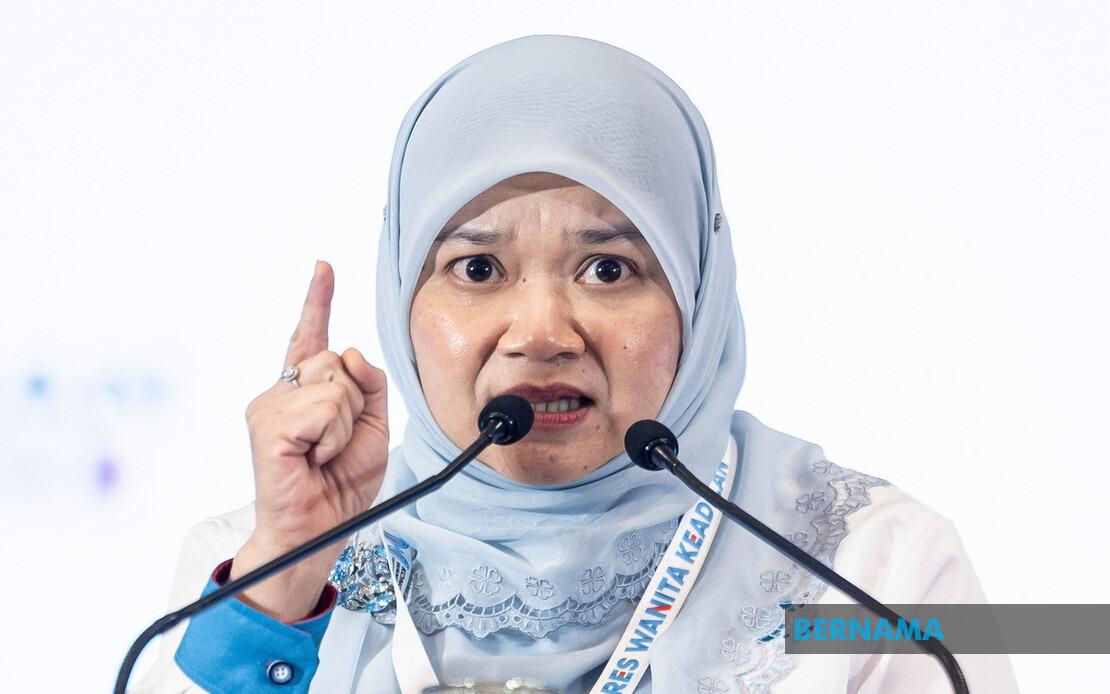
At the 2026 Wanita PKR National Congress held in Melaka this week, party leaders were reminded that electoral competition should be decided by the calibre of ideas and practical solutions on offer, not by weaponising faith or appealing to religious sentiment. Fadhlina Sidek, chief of PKR's women's wing, delivered this message as a call to elevate the tone of Malaysian political discourse at a time when religious polarisation has become an increasingly prominent feature of campaign cycles.
Fadhlina's intervention reflects growing concern within PKR about how religious issues have become instrumentalised across Malaysia's political landscape. Rather than allowing such matters to serve as dividing lines between parties, she argued that faith-based questions deserve respectful treatment and should remain largely outside the arena of electoral competition. This distinction matters considerably for a country as religiously diverse as Malaysia, where the electorate spans multiple faith communities with deeply held convictions that should not become flashpoints for political manoeuvring.
The framing of politics around competing visions and solutions represents a deliberate pivot away from identity-based campaigning. Fadhlina emphasised that the political space available to parties should be utilised for substantive debate over which coalition or candidate can genuinely address the people's concerns—economic hardship, service delivery, infrastructure development, and social welfare. This approach demands more rigorous policy work and clearer articulation of programmes, characteristics that distinguish serious governance platforms from populist appeals.
By extension, her remarks challenge all political actors in Malaysia to adopt higher standards of electoral conduct. Personalised attacks and religiously tinged messaging, while often effective in the short term, corrode public trust in institutions and deepen societal fractures. Fadhlina's call suggests that PKR intends to differentiate itself through positive campaigning centred on capability and vision rather than negativity directed at opponents. Whether this approach gains traction across the broader political ecosystem remains an open question.
Parallel to her emphasis on ideas-based competition, Fadhlina stressed that PKR leaders and grassroots members must strengthen their connections to the communities they serve. This dimension of her message underscores the reality that electoral success and political legitimacy ultimately rest on demonstrated responsiveness to people's immediate needs. Leaders, she insisted, must become attuned to the circumstances facing their neighbours and constituents, translating that awareness into concrete action.
The emphasis on grassroots reconnection reveals a practical understanding of how political parties maintain relevance and support across cycles. As Malaysia faces persistent economic pressures affecting household incomes, employment stability, and access to public services, voters increasingly reward parties that demonstrate tangible commitment to alleviating hardship. This requires leaders to be visible, accessible, and genuinely engaged with community concerns rather than appearing only during campaign periods.
Fadhlina also directed attention to party discipline and member commitment, urging PKR supporters to remain steadfast despite the inevitable challenges and setbacks that any political organisation encounters. She framed this call within the context of building party strength through consistent hard work and operational excellence across all organisational levels. In Malaysian politics, where party defections and internal fractures have occasionally undermined coalition stability, such reminders carry practical weight.
The timing of these remarks is noteworthy given Malaysia's political trajectory over recent years. The country has experienced significant volatility, including government transitions and shifting electoral alignments that have tested the resilience of established parties. For PKR, which functions as the largest party within the Pakatan Harapan coalition, maintaining internal cohesion while articulating a compelling forward-looking agenda has become essential to its electoral prospects and ability to influence national governance.
Fadhlina's message also carries broader implications for how Malaysian politics might evolve ahead of the next general election cycle. If her call for ideas-centred competition gains traction across multiple parties, it could shift the nature of electoral debate toward substantive policy differences rather than cultural and religious grievance narratives. Such a shift would require discipline from political leadership and a conscious choice to prioritise nation-building over factional advantage.
The Wanita PKR congress provided an appropriate venue for articulating these principles, as women's political organisations in Malaysia have historically emphasised social welfare, community development, and inclusive governance. By anchoring her message within these traditional priorities, Fadhlina linked PKR's commitment to ideas-based politics with concrete programmes addressing household needs, education, healthcare, and economic opportunity.
Moving forward, whether PKR and its coalition partners can maintain this focus on substantive competition while resisting the temptation to exploit religious issues will shape not only their electoral performance but also the quality of democratic discourse in Malaysia. Voters across the country will ultimately judge whether the competing political offers genuinely address their aspirations or merely recycle divisive rhetoric under different labels.

