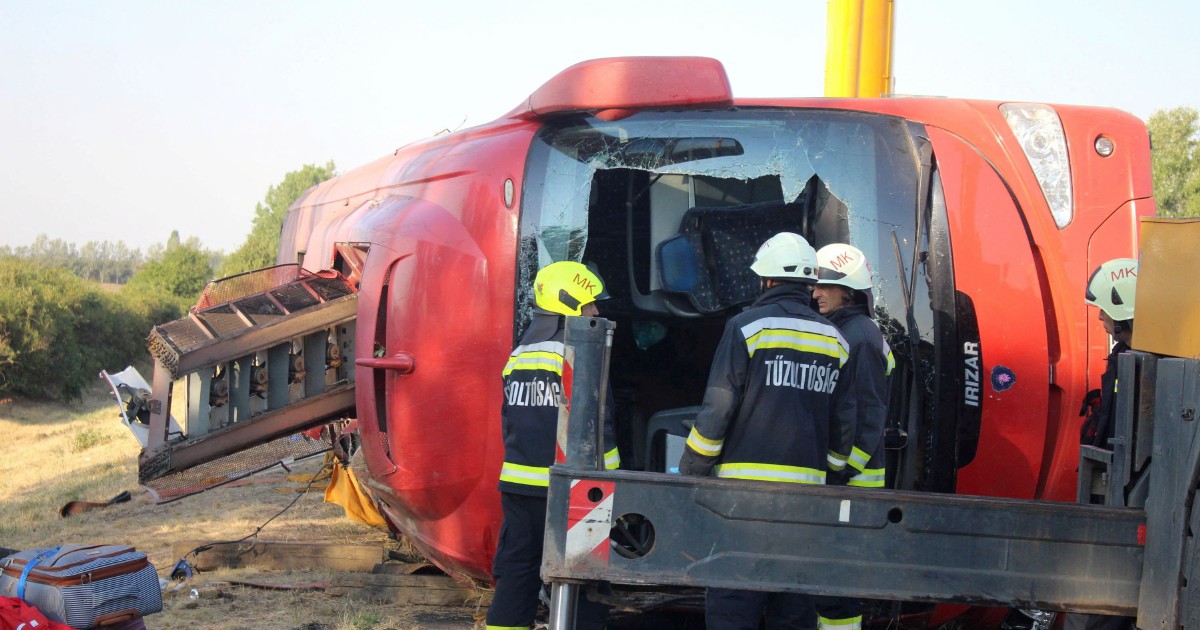
A passenger coach travelling through Hungary met with a catastrophic accident early on Sunday when it veered off a highway and overturned, leaving multiple fatalities and a significant number of injured passengers in its wake. Hungarian Prime Minister Peter Magyar and state officials reported that the collision claimed 12 lives, while at least 10 others sustained serious wounds requiring immediate medical attention. The incident highlights the ongoing safety risks associated with long-distance coach travel across Central European routes, where such vehicles regularly transport passengers between major cities and cross-border destinations.
Accidents involving long-distance coaches on European highways remain a persistent concern, particularly along transit corridors that connect Eastern European nations with Western Europe. The Polish coach in question was operating along a major Hungarian highway when circumstances led to the vehicle losing control and rolling over, creating a scene of devastation that required swift emergency response from local rescue services. The timing of the incident—occurring in the early hours of Sunday morning—suggests the coach may have been engaged in overnight travel, a common practice among budget-conscious operators and passengers seeking to minimise time away from their schedules.
The death toll of 12 represents a substantial loss of life in a single transportation accident within the region, underscoring the vulnerability of coach passengers when mechanical failures, driver fatigue, or adverse road conditions converge. The additional 10 persons with critical injuries faced emergency transport to nearby medical facilities, placing immediate strain on Hungarian healthcare resources in the immediate aftermath. The scale of injuries suggests that the overturning was violent enough to cause significant trauma to occupants despite any safety measures that modern coaches incorporate.
Hungarian authorities took charge of the investigation and casualty management following the incident. Prime Minister Magyar's public acknowledgment of the figures reflects the seriousness with which the government treated the incident, particularly given its involvement of foreign nationals and the cross-border dimensions of coach travel throughout the European Union. Hungarian emergency services, including ambulances and rescue teams, deployed to the crash site to attend to survivors and coordinate the recovery and identification of deceased passengers.
The incident raises important questions about coach safety standards across Central Europe. While modern coaches are subject to European Union safety regulations and mandatory safety equipment requirements, the reality of long-distance coach operations reveals persistent vulnerabilities. Driver fatigue remains a significant factor in such accidents, particularly on overnight services where single drivers may operate vehicles for extended periods, or where multiple drivers attempt to maximise journey time to meet operational schedules. Road conditions, vehicle maintenance, and weather circumstances all potentially contributed to the circumstances leading to the overturn.
For Malaysian travellers and those familiar with cross-border coach services in Southeast Asia, the incident offers a sobering reminder that European highways, despite their generally superior infrastructure and regulatory standards compared to regional counterparts, still witness serious accidents. The difference lies primarily in the quality of response and investigation, rather than in the absolute prevention of such incidents. Coach operators across Europe, including those carrying passengers between Poland, Hungary, and other nations, operate under European Union transport regulations that theoretically ensure regular vehicle inspections and driver hour restrictions.
The overturned Polish coach incident also reflects the continuing reliance of millions of Europeans on affordable coach services for medium and long-distance travel. While budget airlines have captured some passenger traffic, coaches remain essential transport infrastructure, particularly for lower-income travellers, migrant workers, and those travelling between smaller cities not served by railway networks. The economic pressures facing coach operators, however, sometimes create conflicts with safety imperatives, as companies seek to minimise operating costs while meeting competitive pressure from other transport modes.
Polish nationals and Polish-speaking communities across Europe will likely closely follow the investigation into the cause of the crash. The nationality of the coach operator and the circumstances of the journey will form essential elements of the inquiry. Preliminary reports would typically examine whether the coach met European technical standards, whether the driver possessed appropriate qualifications and had complied with driving hour regulations, and whether the road conditions, time of day, or other environmental factors played contributory roles.
The incident underscores broader transportation safety challenges across the European Union's expanding network of cross-border services. As populations become increasingly mobile and coach services expand to capture market share from traditional railways, ensuring consistent safety standards and effective oversight becomes more complex. For Malaysian observers with interest in transportation policy and safety regulation, the Hungarian incident demonstrates that even wealthy developed nations with sophisticated regulatory frameworks continue to experience serious coach accidents, suggesting that universal solutions remain elusive.

