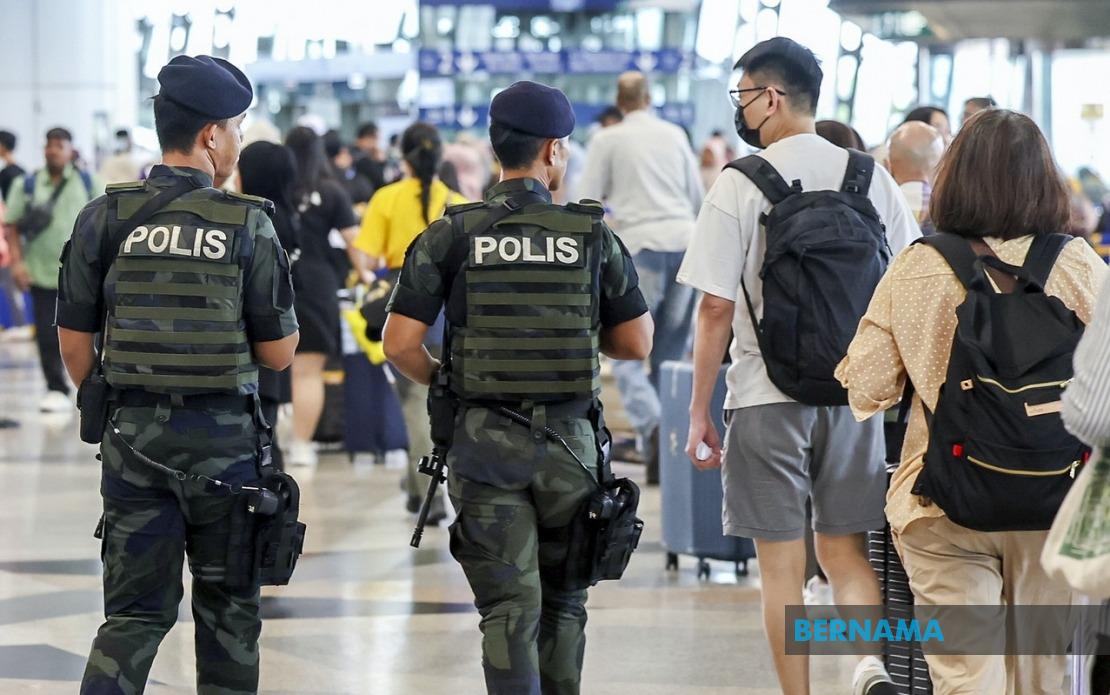
The Malaysian government has committed to a significant restructuring of its airport security apparatus, with personnel from the Royal Malaysia Police now being assigned to the Aviation Security unit as an emergency response to vulnerabilities exposed by recent criminal activity. Communications Minister Datuk Seri Fahmi Fadzil announced the decision following a Cabinet discussion on Wednesday, emphasising that the shift represents a fundamental upgrade in how Malaysia manages airfield access and aircraft operations at its commercial hubs.
The policy shift comes in response to the detention of a 39-year-old Malaysian pilot by Indonesian authorities at Soekarno-Hatta International Airport's Terminal 3. The individual faced allegations of attempting to transport a significant quantity of controlled substances, with authorities discovering approximately 25 kilogrammes of drugs during routine screening procedures. The seizure netted roughly 70,114 capsules of ecstasy and methamphetamine, with Indonesian police estimating the street value at RM45 million based on local market rates.
Currently, the Aviation Security unit operates under auxiliary police management, an arrangement the government now deems insufficient given the sophistication and scale of potential smuggling operations. The decision to integrate full Royal Malaysia Police personnel into this critical function reflects official concern that part-time security arrangements cannot adequately monitor the movement of crew members and airport personnel with access to aircraft. By upgrading staffing standards, authorities expect to implement more rigorous vetting and surveillance protocols at departure points.
The Home Ministry and Transport Ministry jointly presented these recommendations to Cabinet, signalling a coordinated approach across multiple government agencies responsible for border integrity. Their assessment suggests that existing security gaps may extend beyond what has been publicly disclosed, warranting comprehensive system-wide audits. The two ministries have been tasked with identifying not only immediate vulnerabilities but also developing longer-term structural improvements to prevent similar incidents.
Beyond personnel deployment, Malaysia Aviation Group will undergo a mandatory review of its background screening procedures and medical assessment practices affecting pilots and co-pilots. The review acknowledges that recruitment and ongoing evaluation frameworks may not adequately detect risks or changes in personal circumstances that could make crew members susceptible to involvement in illegal activities. Such institutional examinations are standard practice across Southeast Asian carriers, though Malaysia's directive suggests particular concern about the sufficiency of existing protocols.
Additionally, the Royal Malaysia Police and the Malaysian Border Control and Protection Agency have been directed to conduct parallel investigations into systemic weaknesses that could be exploited by smugglers or other criminal actors. This parallel-track approach recognises that security deficiencies often exist at multiple points in the operational chain, from aircraft access procedures to cargo handling protocols. By tasking two separate agencies with independent audits, the government hopes to identify blind spots that a single investigation might overlook.
Fahmi cautioned that the government has not yet made final decisions regarding whether to establish a dedicated task force to investigate the Indonesian case itself. He noted that Cabinet received only preliminary briefings from the respective ministers, and that officials require access to comprehensive documentation from Indonesian authorities before determining Malaysia's investigative posture. Since the matter remains under active examination by Indonesian law enforcement, Malaysian authorities must exercise diplomatic sensitivity while simultaneously protecting their own institutional interests.
The Communications Minister stressed that the government intends to establish whether any Malaysian citizens or organisations provided assistance or facilitation for the alleged smuggling attempt. Such a determination would carry significant implications for prosecutions under Malaysian law and for international cooperation with Indonesian authorities. Understanding the full network of potential accomplices is essential for preventing future incidents and ensuring that consequences extend beyond the arrested individual.
The incident underscores broader concerns about drug trafficking networks targeting Southeast Asia's aviation sector, where crew access privileges and established flight routes create opportunities for moving contraband. Malaysia's commercial aviation industry has previously faced scrutiny regarding security standards, and this enforcement action may prompt similar reviews across the region's carriers. The government's visible response aims to demonstrate commitment to international drug control cooperation and to reassure trading partners about Malaysian airport security standards.
For Malaysian readers and businesses reliant on air transport, the security upgrades carry both reassuring and practical implications. Enhanced vetting processes may introduce marginal delays in crew processing, while stricter background reviews could affect hiring timelines for aviation personnel. However, the measures are designed to restore public confidence in Malaysia's ability to prevent high-value contraband movement through its airports—a crucial consideration for international carriers deciding which regional hubs to prioritise for operations.

