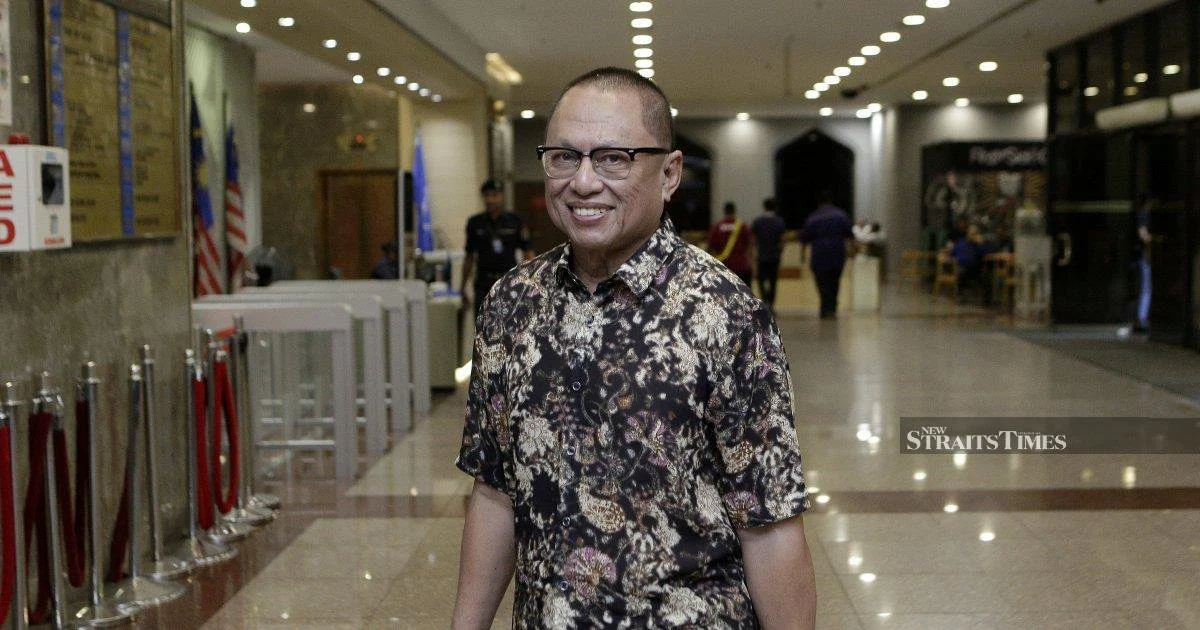
Police have opened a formal investigation into alleged statements made by former Umno veteran Datuk Dr Mohd Puad Zarkashi on social media, following a significant number of reports lodged nationwide. The inquiry comes after 153 police reports were filed on a single day, signalling substantial public concern over the comments attributed to the longtime party figure. The sheer volume of complaints suggests the remarks have triggered considerable reaction across diverse sections of society, prompting law enforcement to act systematically in response to the public complaints.
The catalyst for the investigation centres on comments believed to be related to the so-called "3R" framework, though specific details regarding the exact nature of these alleged statements remain under wraps as the probe gets underway. Datuk Dr Mohd Puad Zarkashi, who has maintained a public presence despite stepping back from frontline Umno politics in recent years, has become the subject of widespread scrutiny. The geographic spread of reports—coming from across Malaysia rather than being concentrated in a single state—indicates that the comments have resonated or caused concern among citizens far beyond the immediate Klang Valley or traditional Umno heartlands.
This incident underscores the increasingly potent role of social media in Malaysian political discourse. What might once have been confined to party meetings or small gatherings can now reach millions instantaneously, generating rapid public mobilisation and collective action. The filing of nearly 150 police reports demonstrates how a single post or series of posts can crystallise public sentiment and convert digital expression into tangible legal processes. For Malaysian authorities, this presents both challenges and opportunities—the need to investigate legitimate public complaints while ensuring that mechanisms aren't weaponised for trivial matters.
The timing of the investigation also reflects evolving standards around political communication in Malaysia. Past remarks by prominent figures that might have drawn party-internal criticism are now subject to formal police scrutiny, reflecting changing expectations about responsibility and accountability. This shift has implications for how political figures, particularly seasoned operatives like Datuk Dr Mohd Puad Zarkashi, must calibrate their public statements. The former Umno veteran's comments touch on territory—potentially related to racial, religious, or sensitive national concerns implied by the "3R" terminology—that carries particular weight in Malaysia's constitutionally sensitive landscape.
For Umno specifically, the incident presents an awkward situation. The party has long positioned itself as the defender of constitutional protections and Bumiputera interests, yet statements by one of its former figures have clearly troubled significant segments of the population. How the party responds, whether by distancing itself from the comments or attempting to contextualise them, will send important signals about internal discipline and values. The widening gap between institutional party messaging and what prominent members communicate through personal platforms continues to be a challenge for Malaysian political organisations across the spectrum.
The investigation also touches on broader questions about social media governance and digital age politics. Unlike traditional media, which operates under clear regulatory frameworks, social media platforms enable rapid dissemination with minimal gatekeeping. Malaysian police must now navigate the intersection between protecting freedom of expression and responding to genuine public concern. The 153 reports suggest that enough citizens viewed the alleged comments as problematic enough to file formal complaints—a process that requires effort and intention. This is not a case of casual social media outrage but rather a deliberate mobilisation of the formal complaints mechanism.
From a law enforcement perspective, the investigation will need to establish what precisely was said, on which platforms, and whether any statements potentially breach existing laws related to sedition, religious sensitivities, or incitement. Malaysian law provides various pathways for addressing problematic speech, though enforcement and interpretation remain contentious issues. The police must conduct the inquiry transparently while avoiding the perception that the investigation is politically motivated—particularly important given Malaysia's ongoing conversations about institutional independence and the rule of law.
The incident also reflects the growing complexity of managing political careers in an age where every statement is potentially permanent and subject to broad circulation. Datuk Dr Mohd Puad Zarkashi, despite his reduced profile in recent years, remains a figure of interest given his extensive background in Umno politics. His views continue to carry symbolic weight within party circles and among certain constituencies. What he articulates, even on personal social media accounts, can generate outsized attention precisely because of this historical positioning.
Looking forward, this case will likely influence how other political figures approach social media communication. If the investigation concludes that statements violated specific laws, it will set precedent for future enforcement. If it winds down without action, it may signal that such complaints, however numerous, don't necessarily translate into legal violations. Either way, Malaysian politics is becoming increasingly bound to digital-age dynamics where instant amplification and collective mobilisation can transform a single individual's comments into a matter of nationwide police investigation. The 153 reports are themselves a reflection of this new political reality.

