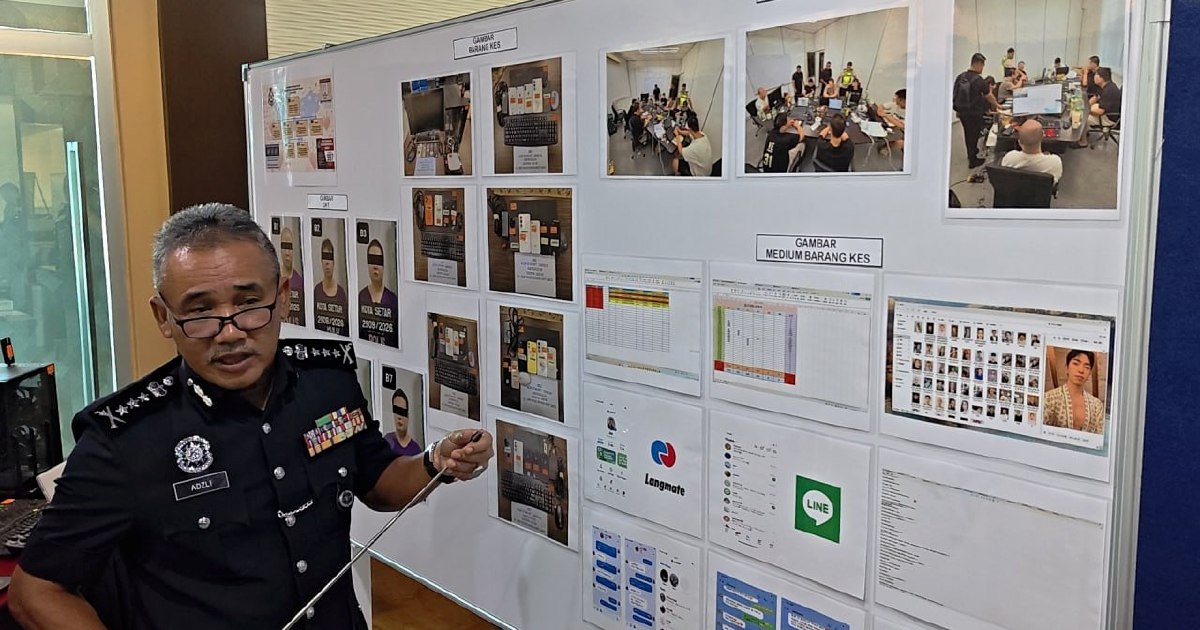
Law enforcement authorities in Kedah have successfully disrupted a coordinated digital fraud operation after conducting a targeted raid on a commercial establishment, resulting in the arrest of seven foreign nationals suspected of orchestrating an elaborate love scam scheme. The operation, which centred on luring unsuspecting Japanese victims through online romance deception, was brought to light following enforcement action at a shop lot situated within Kristal Light Industrial Park in Alor Star on the previous Sunday.
The syndicate's modus operandi represents an increasingly prevalent threat across Southeast Asia, where perpetrators establish fake romantic relationships with vulnerable individuals through social media platforms and dating applications. These criminals invest considerable time building emotional connections, carefully cultivating trust over weeks or months before pivoting to financial exploitation. The Japanese victims, in particular, appear to have been systematically targeted, suggesting the syndicate had refined its approach through previous iterations of similar schemes.
The bust underscores Malaysia's continuing vulnerability as a regional hub for transnational fraud operations. The nation's strategic location, developed telecommunications infrastructure, and relatively accessible business registration systems have inadvertently made it an attractive base for organised cybercriminals. Industrial parks and commercial spaces like the one in Kristal Light serve as operational headquarters where scammers can work with minimal local scrutiny, coordinating multiple schemes simultaneously across different nationalities.
Romance fraud has emerged as one of the fastest-growing categories of online crime globally, with victim losses reaching billions annually. The psychological manipulation required to execute these schemes successfully demands a particular skill set—perpetrators typically employ stolen photographs, fabricated life histories, and rehearsed emotional narratives to convince targets of genuine affection. The seven Chinese nationals apprehended appear to have been part of a structured criminal enterprise, likely with designated roles spanning victim identification, relationship development, money extraction, and fund management.
Japanese citizens have become increasingly targeted by such operations, partly reflecting their general purchasing power and cultural preferences for online privacy during the courtship phase. Scammers often pose as expatriate professionals—engineers, military personnel, or business executives based overseas—creating plausible scenarios that justify requests for financial assistance. Common pretexts include medical emergencies, business crises, or investment opportunities that purportedly require immediate capital transfers.
The enforcement action in Alor Star represents ongoing efforts by the Royal Malaysian Police to combat cross-border cybercrime, though specialists argue that the scale of illicit operations discovered remains merely the visible fraction of broader criminal networks. The industrial park raid likely uncovered evidence of digital infrastructure, financial records, and communication logs that will assist investigators in identifying additional victims and potentially disrupting related operations elsewhere.
Coordination between Malaysian police and international law enforcement has become increasingly sophisticated, particularly with Japanese authorities. The bilateral sharing of intelligence on cybercriminal networks has improved response times and enabled swifter intervention in active scam campaigns. However, victims often hesitate reporting to authorities due to shame, embarrassment over emotional manipulation, or fear of social stigma—factors that criminals deliberately exploit to maintain operational security.
The incident highlights a persistent challenge facing Southeast Asian economies: balancing rapid digital expansion with adequate regulatory oversight. While Malaysia benefits significantly from digital entrepreneurship and foreign investment in technology sectors, the same openness creates opportunities for criminal exploitation. The presence of seven foreign nationals operating within an industrial zone demonstrates how transnational crime syndicates leverage legitimate commercial infrastructure for illicit purposes.
Beyond the immediate arrests, the successful raid should prompt both business district operators and local authorities to enhance vetting procedures for commercial tenancies. Monitoring suspicious patterns—such as multiple occupants sharing limited residential space, erratic working hours, heavy cash transactions, or minimal legitimate business activity—can help prevent future installations of similar criminal operations.
Forest users of online dating platforms should exercise heightened vigilance against love scam indicators: requests for money transfers, reluctance to video call, inconsistencies in personal background narratives, and pressure to move conversations away from established platforms represent significant red flags. Educational campaigns targeting vulnerable populations, particularly older adults and those seeking international romance, have proven effective in reducing victimisation rates in other jurisdictions.
The bust contributes to Malaysian law enforcement's ongoing crackdown on organised cybercrime, yet experts underscore that sustainable solutions require complementary action from technology companies, financial institutions, and international regulators. Digital payment platforms must implement stronger verification mechanisms for cross-border transfers, while social media companies need enhanced detection systems for fraudulent profile networks.
As investigations into the syndicate continue, authorities will likely uncover the full scope of victimisation, the financial volumes extracted, and connections to broader criminal hierarchies. Such findings will inform future strategic approaches to disrupting romance fraud operations before they can establish deep roots within Malaysian territory.

