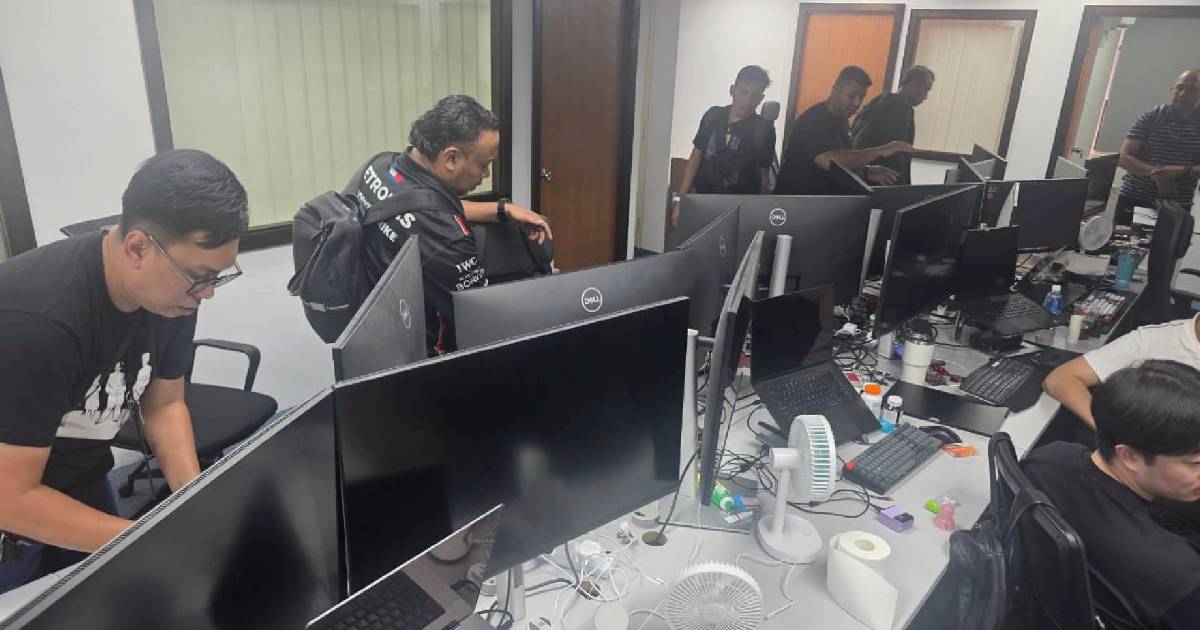
Kuala Lumpur police have successfully taken down an illicit World Cup betting syndicate following a carefully coordinated raid on a commercial office space in the Taman Desa area of Brickfields yesterday. The operation resulted in the arrest of 11 suspects, of whom six were identified as South Korean nationals, in what enforcement authorities described as a significant blow against transnational gambling networks operating within the country.
The call centre, which operated from within an office building in the bustling Brickfields commercial district, had been the focal point of extensive police investigation into unlicensed sports betting activities. The raid represents part of a broader crackdown on illegal gambling operations that have proliferated across Malaysian urban centres, particularly around major international football tournaments when wagering volumes spike considerably. Authorities indicate the operation had been sophisticated enough to maintain regular communication with clients across multiple jurisdictions, suggesting the syndicate possessed established networks extending beyond Malaysia's borders.
The involvement of South Korean nationals in this particular case points to the increasingly transnational character of underground betting operations in Southeast Asia. Criminal syndicates have capitalised on Malaysia's geographical position, established banking infrastructure, and relatively sophisticated telecommunications networks to serve clients across Asia-Pacific markets. The World Cup, as the world's most watched sporting event, creates particularly lucrative opportunities for illegal bookmakers willing to operate outside regulatory frameworks. International law enforcement agencies have repeatedly noted how major tournaments attract coordinated gambling enterprises involving operatives from multiple countries working in coordinated roles.
The Brickfields location is especially significant, as the district has emerged as a known concentration point for various transnational criminal activities. Its proximity to diverse migrant communities and its accessibility via major thoroughfares make it an attractive operational base for syndicates seeking to evade detection whilst maintaining logistical efficiency. The choice of an office building rather than more clandestine premises suggests the operation had cultivated sufficient local connections or protective arrangements to operate with relative openness, a common characteristic of well-established illegal gambling enterprises in major Malaysian cities.
Malaysian Customs and police enforcement teams have intensified their focus on sports betting syndicates in recent years, recognising that such operations frequently serve as conduits for money laundering and as fronts for other organised crime activities. Illegal gambling networks often maintain connections to loan-sharking operations, human trafficking arrangements, and drug distribution networks. The detention of six foreign nationals underscores the challenges Malaysian law enforcement faces in addressing crime with significant cross-border dimensions. International cooperation remains essential, though extradition and prosecution of foreign suspects presents considerable procedural complexity.
The timing of this operation during the World Cup season is noteworthy. Major international tournaments consistently trigger surges in betting activity, both legal through licensed operators and illegal through unregulated channels. The financial incentives driving illegal operations during these periods are substantial, as the volume of wagers can exceed regular activity by factors of five or more. This concentration effect makes tournament seasons prime opportunities for police to identify and dismantle larger, more visible operations that typically scale up their activities to capitalise on heightened demand.
For Malaysian sporting authorities and the Ministry of Home Affairs, this bust demonstrates ongoing police capability in detecting and disrupting illegal gambling enterprises. However, enforcement officials privately acknowledge that apprehending street-level operatives remains far easier than dismantling the upper management structures and financial networks that sustain such syndicates. The arrest of call centre operators—typically lower-wage employees from overseas—addresses visible symptoms rather than fundamental causes driving the proliferation of illegal betting operations across the region.
The incident also highlights broader concerns about South Korea's role as a source location for transnational organised crime activity. South Korean citizens have featured prominently in various criminal enterprises operating throughout Southeast Asia, from online gambling operations to sophisticated fraud networks. This reflects both the technical expertise and entrepreneurial capabilities of certain organised crime groups based in South Korea, as well as the relative ease with which operatives can relocate to jurisdictions offering operational advantages they cannot achieve domestically.
Looking forward, the police operation underscores the need for enhanced coordination between Malaysian enforcement agencies and international partners, particularly regarding shared intelligence on betting syndicate operations. The World Cup presents an annual window of heightened risk that demands corresponding increases in surveillance and interdiction capacity. For Malaysian residents and football enthusiasts, the proliferation of such illegal operations serves as a reminder of risks associated with unregulated betting, including potential involvement with criminal networks and exposure to financial scams common within underground gambling enterprises.

