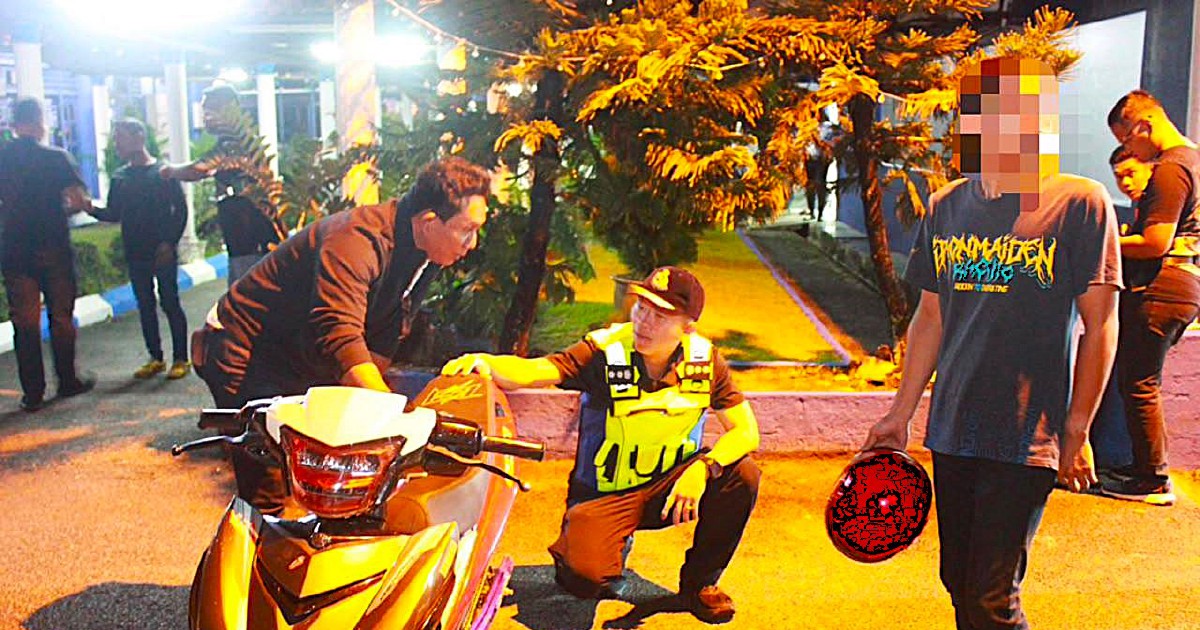
A coordinated enforcement operation in Klang has resulted in the seizure of seven motorcycles as authorities intensify their fight against the persistent problem of illegal street racing in the port town. The operation, conducted in the early hours of the morning, saw police targeting known hotspots where underground racing activities regularly occur, reflecting growing concerns about road safety and public nuisance complaints from residents in the area.
The enforcement drive underscores the seriousness with which law enforcement agencies are now approaching the issue of unlicensed street racing, which has become an increasingly visible phenomenon across the Klang Valley. Beyond the immediate seizure of vehicles, police have initiated a formal investigation against one of the motorcycle riders involved in the operation, with charges expected to relate to reckless and dangerous driving offences under Malaysian traffic laws. Such charges carry significant penalties, including substantial fines and potential imprisonment, depending on the severity of the conduct and whether injuries or property damage resulted from the racing activities.
The Klang municipal area, stretching across one of the country's most developed regions and home to the Port of Klang, has witnessed mounting tensions between law enforcement and street racing enthusiasts in recent years. The phenomenon, while appearing to concentrate in urban and semi-urban areas, raises broader questions about youth engagement, risk-taking behaviour, and the adequacy of current enforcement mechanisms. Street racing communities often view their activities as recreational or competitive pursuits, yet police and safety advocates characterize such conduct as endangering not only participants but also innocent road users and pedestrians who happen to be in the vicinity.
The seizure of motorcycles represents a significant enforcement tool available to traffic police, as impounded vehicles can only be recovered after payment of substantial fines, presentation of proper documentation, and clearance of any outstanding violations. This financial disincentive, combined with the inconvenience of losing use of a vehicle, forms part of a multi-layered deterrent strategy designed to discourage participation in illegal racing. However, enforcement officials acknowledge that tackling the root causes—including peer pressure, desire for recognition, and limited legal outlets for motorcycle enthusiasts—requires a more comprehensive approach than seizures alone.
Malaysia's street racing problem has occasionally resulted in tragic consequences, with fatalities and severe injuries documented in several high-profile incidents over the past decade. These incidents have spurred periodic crackdowns, public awareness campaigns, and calls for harsher penalties. The operation in Klang represents part of these broader law enforcement efforts, though critics argue that sustained, year-round commitment is necessary rather than sporadic sweeps that gain media attention but fade from public consciousness.
The Port of Klang area, as one of Southeast Asia's busiest maritime gateways, maintains significant traffic volumes throughout the day and night. Street racing activities in such locations pose elevated risks, as the presence of commercial vehicles, freight traffic, and shifting congestion patterns make the roads inherently more unpredictable and dangerous for illegal motorcycle activities. Early morning operations, such as the one conducted today, often target periods when racing groups believe police presence is minimal, though coordinated enforcement planning has increasingly worked to counter this assumption.
Local residents in Klang have periodically voiced frustration over noise pollution and safety concerns arising from street racing activities, particularly during late-night hours. The disruption extends beyond the immediate participants to affect quality of life in surrounding neighborhoods, contributing to growing public support for stricter enforcement. This grassroots dimension adds political weight to police operations, as managing public order and addressing community grievances remain core policing responsibilities.
The investigation launched against the particular rider identified during today's operation will proceed through Malaysia's traffic court system, where evidence of reckless and dangerous driving must be established. Witnesses, traffic camera footage if available, and officer testimony will form the basis of the case. Conviction under these provisions typically results in fines ranging from several hundred to several thousand ringgit, license suspension, and possible jail time depending on whether the driving resulted in accidents or injuries.
Moving forward, authorities are expected to maintain targeted operations in known street racing hotspots throughout the Klang region, with intelligence gathering helping to identify when and where racing activity concentrates. Police have also indicated interest in engaging with motorcycle clubs and youth organizations to channel enthusiasm toward legal, sanctioned racing events held at designated tracks and motorsports facilities throughout Malaysia. Such collaborative approaches, combined with enforcement actions, represent the evolving strategy for addressing street racing across the nation.

