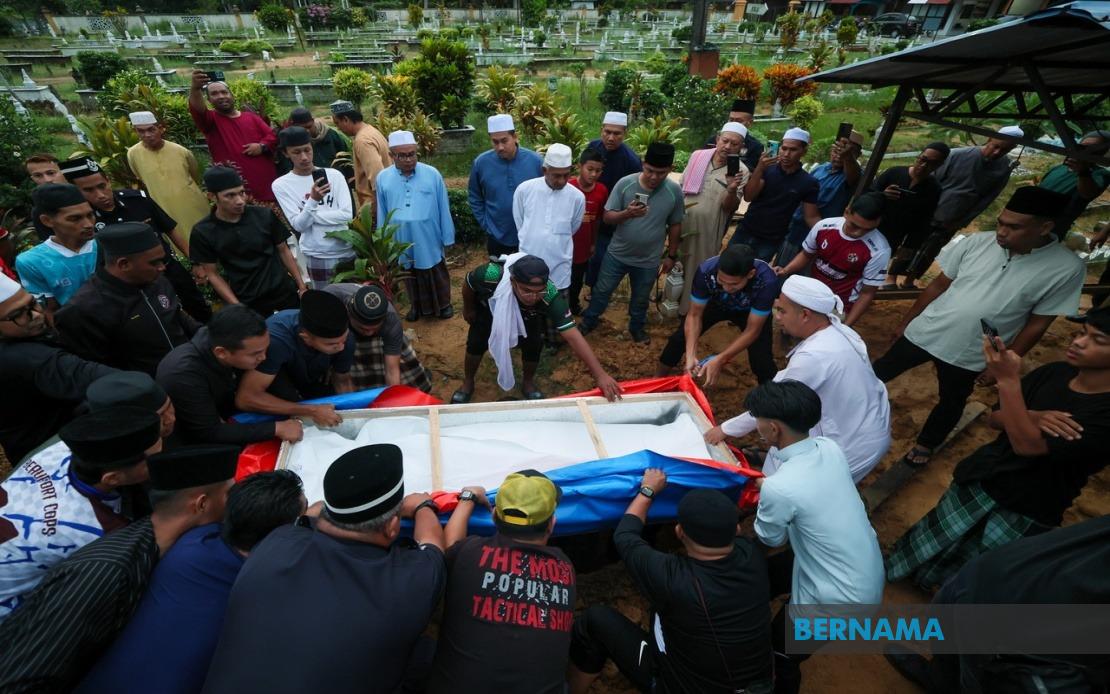
Corporal Mohamad Nur Hafiz Rahim, who died in an electrocution incident in Beaufort, Sabah, was buried this morning at Kampung Pangkal Kuang Muslim Cemetery in Ketereh, Kelantan. The 29-year-old officer's remains arrived at his family home in Kampung Hutan Pasir early in the day, where funeral prayers were conducted before his final journey to the cemetery. His sudden death has cast a shadow over the Royal Malaysia Police force and raised serious questions about workplace safety protocols at police facilities across the country.
The fatal incident occurred at 5.50 pm at Weston Police Station in Beaufort when Mohamad Nur Hafiz and two other personnel were believed to have been electrocuted while handling a 29-foot metal pole designed for harvesting coconuts. The pole, positioned outside the station near Sekolah Kebangsaan Weston, apparently came into contact with an electrical source, resulting in a tragedy that claimed three lives in a single moment. The other victims were Corporal Chiu Teck Siong, 40, from Sarawak, and Constable Muhammad Raimi Ismarubee, 26, from Terengganu. Their deaths represent a significant loss to the police force and raise urgent concerns about how routine tasks at police stations are conducted and supervised.
At the cemetery, Mohamad Nur Hafiz's eldest sister Nurlella Rahim, 34, expressed the family's gratitude to the police force for coordinating the transportation of her brother's remains from Sabah back to their home state. She told reporters that the vehicle carrying his body arrived at 4.45 am, allowing the family time to prepare for the funeral prayers and final rites. Her acknowledgment of the police's logistical support offers a glimpse of institutional care extended to grieving police families, even as questions mount about the circumstances that led to the tragedy in the first place.
Nurlella painted a picture of a close-knit family that maintained constant communication despite geographical separation. The five siblings would make video calls almost daily, staying connected through WhatsApp group chats and social media interactions. She herself lives in Ipoh, Perak, while her brother was stationed in Sabah, yet the distance never dimmed their bond. This modern form of family connectivity meant that each sibling remained present in one another's daily lives, sharing moments and maintaining emotional ties across state lines. Such connections have become increasingly common among Malaysian families dispersed across the country for work or study.
The last interactions before his death revealed a man carrying the weight of his duties. During a video call with their mother on Thursday afternoon, Mohamad Nur Hafiz appeared fatigued and was less talkative than usual, though he still managed to smile and assure her they would speak again later as he needed to prepare for work. Even during brief breaks in his schedule, he would initiate video calls with his family, underscoring his commitment to maintaining these precious connections. These final moments have taken on added poignancy now, capturing a son and brother who despite his professional responsibilities, prioritised his family relationships.
Nurlella's last conversation with her brother occurred on Sunday, when he took his wife Fatimah Shahira and their child to the beach—a moment of normalcy and family leisure that would turn out to be among his final. The video call documented what appeared to be a happy occasion, with no indication that tragedy was less than a week away. These ordinary family moments now serve as the family's last memories of him, underscoring how quickly circumstances can change and how precious such seemingly routine interactions become in retrospect.
The incident has prompted urgent attention at the highest levels of government. Prime Minister Datuk Seri Anwar Ibrahim issued a directive for a comprehensive, transparent, and immediate investigation into the electrocution incident. Anwar emphasised through a Facebook post that such an investigation is crucial not only for understanding the precise cause of the tragedy but also for implementing preventive measures that would protect personnel from similar hazards in the future. His intervention signals the gravity with which the government regards workplace safety failures within the police force.
The investigation will likely examine multiple factors, including the electrical infrastructure at Weston Police Station, whether proper safety protocols were followed when handling the coconut-harvesting pole, whether adequate warning systems or protective equipment were in place, and whether supervision of the task was adequate. The fact that three trained personnel died simultaneously suggests either a catastrophic infrastructure failure or a significant gap in safety awareness and procedures. For Malaysian workers across all sectors, this incident underscores the importance of robust workplace safety measures and the need for regular audits of electrical systems in government facilities.
The deaths of these three police officers represent not merely a loss to the force but a broader concern about occupational hazards facing public servants. While police work is generally understood to carry physical risks, deaths resulting from preventable workplace accidents—particularly at a police station rather than in the field—demand serious scrutiny. The investigation ordered by the Prime Minister will be closely watched by the police force, labour advocates, and the general public as a test of the government's commitment to worker safety and accountability.

