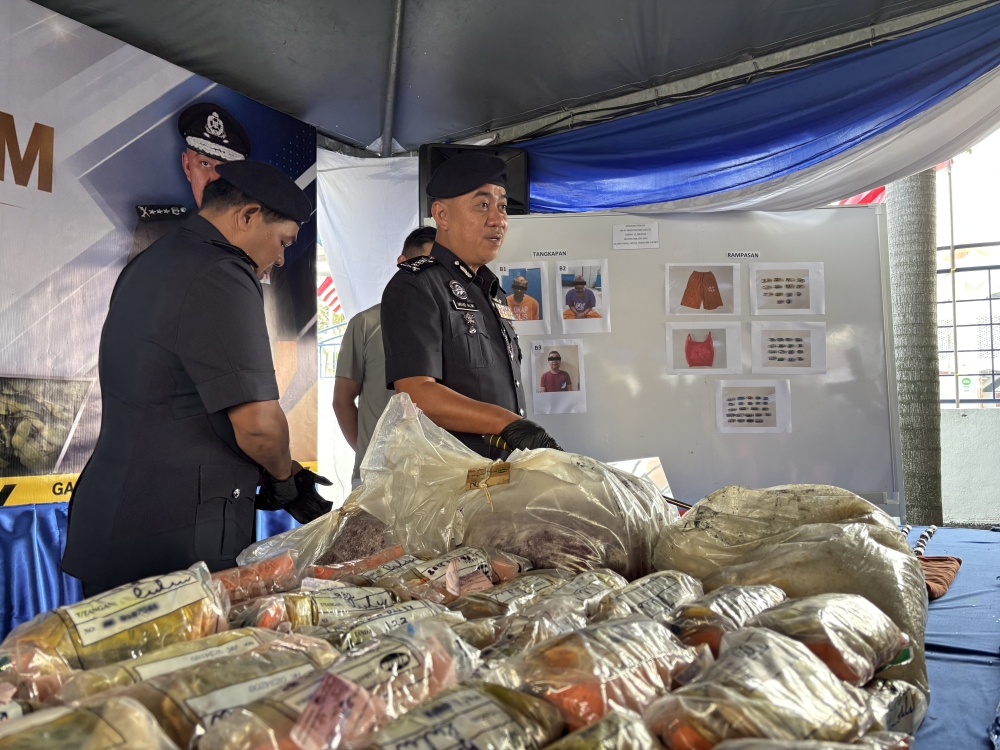
Authorities in Perak have launched an investigation into drug possession after uncovering a substantial quantity of controlled substances within the confines of a police detention facility in Lumut. The case has implicated a police constable, raising questions about security protocols and internal oversight at the station. Three individuals, including the uniformed officer, now face legal action stemming from the discovery made during what appears to have been a routine inspection or tip-off.
The seized narcotics comprised three distinct drug categories with a combined street value of RM18,534. Methamphetamine made up a significant portion of the haul, alongside heroin and cannabis in various forms. The presence of multiple substances suggests either distribution operations or supply for personal consumption by multiple individuals. Such variety is commonly associated with trafficking networks that cater to different market segments, though investigators have not yet publicly disclosed the intended purpose of the stockpile or its distribution patterns.
The involvement of a police officer in the incident represents a serious breach of institutional trust and operational integrity. Law enforcement agencies across Malaysia have increasingly confronted internal corruption cases, particularly those connected to the drug trade. The fact that contraband could be brought into or stored within a police cell—one of the most secure environments within a police station—indicates potential systemic vulnerabilities. This incident echoes previous cases where rogue officers have exploited their positions to facilitate narcotics trafficking or safeguard illegal substances.
Detention facilities are theoretically among the most monitored locations within any police station, equipped with recording systems, regular patrols, and documented access logs. The ability to conceal nearly RM18,500 worth of drugs within such an environment suggests either deliberate concealment with insider assistance, negligent security practices, or possible collusion among station personnel. Investigators will likely examine CCTV footage, visitor logs, and cell access records to determine how the narcotics entered the facility and how long they remained undetected.
The Lumut police station, located in the Manjung district of Perak, serves one of the state's primary port areas and is responsible for managing drug enforcement in a region with known trafficking vulnerabilities. Coastal locations in Perak have historically served as entry points for narcotics smuggling from Thailand and other regional sources. A breach of security at such a facility could have implications for broader law enforcement effectiveness in combating larger trafficking operations that might use corrupt officials as intermediaries.
The arrest of the police constable signals that internal accountability mechanisms, at least in this instance, functioned to identify and act upon misconduct. The Malaysian police force has established dedicated units to investigate corruption and criminal conduct by officers, though critics argue these mechanisms remain underfunded and sometimes reluctant to pursue high-profile cases. Public disclosure of this incident demonstrates some willingness to acknowledge and address problems internally, though the full scope of any wider investigation remains undisclosed.
Forensic analysis of the seized drugs will now proceed through standard police laboratory procedures. The quantity involved—RM18,534 in street value—places the case well above threshold amounts that would typically trigger enhanced charges under Malaysia's drug trafficking laws. Depending on the breakdown by weight and type, charges could range from simple possession to trafficking, with significantly different sentencing implications for those involved. The constable's status as a law enforcement officer will likely result in additional charges or sentencing considerations.
The incident raises broader questions about drug control strategies in Perak and across Malaysia. Despite decades of enforcement efforts and increasingly harsh penalties, narcotics continue flowing through the country's criminal networks. When those networks recruit or compromise law enforcement personnel, the effectiveness of interdiction efforts diminishes substantially. This case underscores why anti-corruption work within police forces receives comparable emphasis to street-level drug enforcement in many jurisdictions' security strategies.
Investigators from Perak police headquarters have taken charge of the inquiry into the circumstances surrounding the discovery. The focus will extend beyond merely identifying the three arrested individuals to understanding their roles, supply sources, and potential connections to larger trafficking organizations. The presence of a constable within this network could potentially lead authorities to other compromised officers or corrupt relationships within regional law enforcement, depending on how deep the investigation proceeds.
For Malaysian readers and Southeast Asian observers, this case represents a microcosm of challenges facing law enforcement throughout the region. Combating narcotics trafficking requires not only operational capability and technology but also institutional integrity and employee vetting. The discovery that contraband could be concealed within a police facility, and that an officer might facilitate such concealment, reflects vulnerabilities that criminalized networks have learned to exploit. Whether this incident triggers broader reforms in station security, officer conduct monitoring, or corruption investigation protocols remains to be seen. The case will likely proceed through Malaysia's courts over coming months, with outcomes potentially influencing how similar institutional breaches are addressed within other police jurisdictions.

