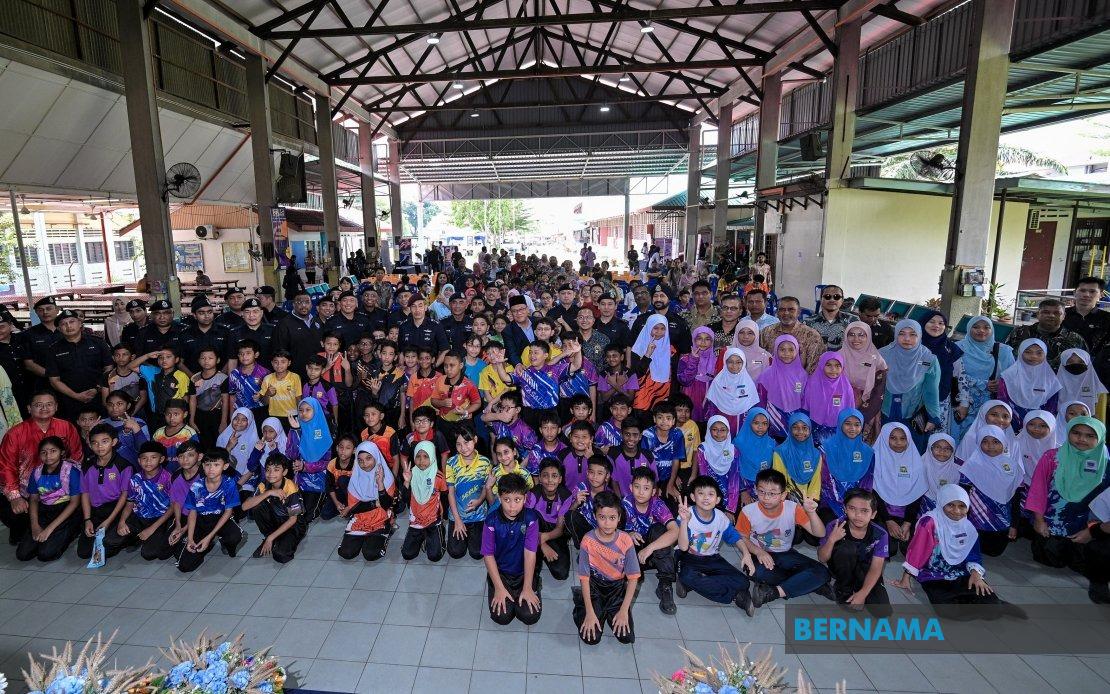
The Royal Malaysia Police (PDRM) is broadening the reach of its character-building and discipline initiative to encompass primary schools throughout Kuala Lumpur, marking a significant shift in approach to youth development and social prevention. The programme, previously concentrated at secondary level, now aims to establish strong moral foundations and civic values among younger pupils before they enter their teenage years—a period widely recognised as critical for shaping lifelong attitudes and behaviour.
Federal Territory of Kuala Lumpur Education Department director Megat Affandi Datuk Ismail announced the expansion at the launch event held at Sekolah Kebangsaan La Salle 2 Jinjang, emphasising that early intervention through structured character development can keep children away from antisocial activities and criminal influences. The decision reflects growing evidence that primary school years offer a unique window for preventive education, when students remain more receptive to institutional guidance and behavioural frameworks.
The extension comes after years of documented success at the secondary level, where collaboration between Kuala Lumpur police and education authorities has yielded tangible results. Megat Affandi highlighted that this partnership has produced a measurable decline in both disciplinary infractions and criminal involvement among secondary school students, validating the police-education model for wider implementation. The synergy between law enforcement and school systems has created a mutually reinforcing cycle where safety improvements support learning objectives.
Attendance patterns have similarly benefited from the coordinated approach. The presence of police liaison officers in schools and regular engagement with student communities has coincided with improved school attendance across Kuala Lumpur, suggesting that students respond positively when they perceive their safety and welfare as institutional priorities. This enhancement in attendance carries direct implications for academic continuity and learning outcomes, as consistent classroom presence is foundational to educational achievement.
Bullying—a persistent challenge in Malaysian schools and a known contributor to student mental health crises—has also diminished through active police involvement, according to Megat Affandi. Police visits to school hostels and proactive monitoring have created environments where intimidation and peer violence face immediate institutional response, encouraging students to report concerns rather than suffer in silence. This shift represents a cultural change in how schools address interpersonal violence among young people.
The initiative has coincided with exceptional academic performance across Kuala Lumpur's secondary system. The Federal Territory achieved its best Sijil Pelajaran Malaysia (SPM) results in a decade, while both Sijil Tinggi Persekolahan Malaysia (STPM) and Sijil Tinggi Agama Malaysia (STAM) examinations reached peak performance levels. These outcomes underscore an important principle that Megat Affandi articulated: educational excellence emerges not from schools operating in isolation, but from coordinated ecosystems involving police, families, and community institutions working toward shared objectives.
The expansion to primary schools acknowledges that behavioural patterns crystallise early. By introducing character education and discipline frameworks in Year One through Year Six, JPNWPKL and PDRM aim to prevent the emergence of disciplinary problems rather than remediate them after they develop in secondary contexts. This upstream investment in childhood development aligns with international best practice in youth crime prevention and social protection.
Parental engagement represents another critical dimension that Megat Affandi emphasised. He urged families to remain vigilant for behavioural changes during adolescence and to access school counselling services when concerns arise. This call recognises that schools and police cannot address developmental challenges without family partnership; parents serve as the primary interpreters of their children's emotional and social wellbeing, making their active participation indispensable to programme effectiveness.
Addressing contemporary concerns, the education director noted that JPNWPKL will intensify spot checks on vaping alongside police and other agencies, enlisting cooperation from Kuala Lumpur City Hall (DBKL) to strengthen enforcement. Vaping among students has emerged as a significant public health and disciplinary issue across Malaysia, requiring coordinated action that combines education, law enforcement, and municipal compliance mechanisms.
The operational framework supporting these efforts reflects strategic deployment of resources. JPNWPKL administers more than 200 schools across Kuala Lumpur, with school liaison officers positioned in areas identified as higher risk based on socioeconomic circumstances and population density. This data-informed approach ensures that intensive support reaches communities where students face the greatest environmental pressures and vulnerabilities, maximising the efficiency of limited resources.
For Malaysian educators and policymakers, the Kuala Lumpur model offers a replicable template for police-education collaboration. As crime involving youth and behavioural issues persist nationally, other states may examine whether similar partnerships could yield comparable improvements in safety, attendance, and academic outcomes. The programme's expansion to primary level also reflects recognition that character education competes against significant headwinds—social media, peer pressure, and economic stress—requiring institutional reinforcement alongside family influence.
The road safety awareness initiative launched alongside the character programme at Sekolah Kebangsaan La Salle 2 Jinjang indicates that police-school partnerships address multiple dimensions of youth safety beyond traditional discipline. By encompassing traffic awareness and hazard prevention, the collaboration positions law enforcement as educators rather than purely enforcement agents, potentially improving community relations with younger generations and normalising constructive police-citizen engagement.
Looking forward, the success of this initiative will depend on sustained commitment and resource allocation. As JPNWPKL and PDRM extend programmes downward into primary education, maintaining programme quality across more schools while training police officers and teachers in age-appropriate delivery will present logistical challenges. Nevertheless, the established performance benefits at secondary level provide strong justification for expanding an approach that appears to reduce harm, improve attendance, and support academic achievement simultaneously.

