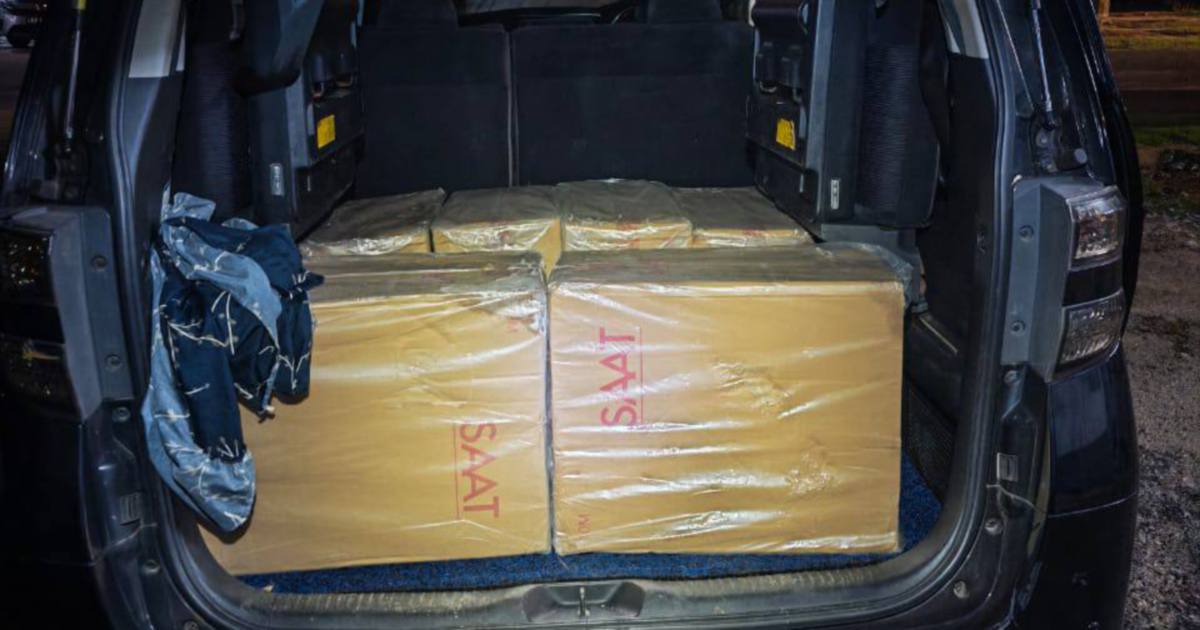
A large-scale cigarette smuggling haul has been uncovered in Kelantan following an enforcement operation by the General Operations Force (GOF) near the Pasir Tumboh Bridge in Kota Baru. During the interception of a Toyota Vellfire early this morning, officers discovered the vehicle was transporting approximately 60,000 cigarette sticks that had not been subjected to the mandatory excise duties. The contraband cargo carries an estimated street value of RM112,200, representing a significant loss to government revenue and a major breach of the country's tobacco import and tax regulations.
The driver of the vehicle, a 37-year-old man, was taken into custody at the scene following the discovery. Officers had spotted the Vellfire at the shoulder of the Pasir Tumboh Bridge and initiated a routine vehicle check that uncovered the illicit consignment. The arrest marks another example of law enforcement's ongoing efforts to combat the thriving underground trade in duty-unpaid cigarettes that continues to plague Malaysia's northern states.
The confiscation adds to a growing list of seizures aimed at disrupting smuggling networks operating throughout the East Coast region. Kelantan has become a focal point for contraband cigarette trafficking, partly due to its proximity to Thailand and its position along key distribution corridors that funnel illegal products into the Malaysian market. The porous nature of certain border areas and the substantial profit margins involved in smuggling have made the trade increasingly attractive to organised criminal syndicates seeking to circumvent customs enforcement.
The value attached to this particular seizure underscores both the scale of individual operations and the cumulative financial impact on the government's tax revenue. Each shipment of duty-unpaid cigarettes represents not only lost excise taxes but also unfair competition for legitimate tobacco retailers who operate within the legal framework and bear the full burden of taxation. The underground market has been estimated to account for a significant portion of total cigarette consumption in certain states, distorting pricing and creating competitive pressure on law-abiding businesses.
This operation demonstrates the continued focus of enforcement agencies on targeting mid-to-large scale smuggling operations. While individual street-level vendors are often apprehended, intercepting consignments of this magnitude at key transportation nodes proves more strategically valuable, as dismantling supply chains at the distribution stage can temporarily disrupt the flow of contraband into retail networks. The Pasir Tumboh Bridge, a strategic location connecting various districts in Kelantan, appears to be a monitored transit point where enforcement personnel have positioned resources to intercept suspicious vehicles.
The GOF, operating under the Ministry of Defence, has been increasingly involved in anti-smuggling operations alongside the Royal Malaysian Customs Department and police traffic units. This multi-agency approach reflects the government's recognition that combating organised smuggling requires co-ordinated efforts across multiple enforcement bodies. The timing of the early morning interception also suggests intelligence-led operations designed to catch smugglers during periods when they may believe enforcement presence is minimal.
Smuggling networks typically employ sophisticated logistics systems to move contraband, often disguising shipments through the use of civilian vehicles and breaking large consignments into smaller loads at transit points. The fact that a family-oriented vehicle such as the Vellfire was being used highlights how smugglers adapt their methods to avoid detection, utilising inconspicuous transport options rather than obvious commercial vehicles. This adaptability requires enforcement agencies to maintain vigilance across all vehicle types rather than focusing exclusively on commercial transportation.
The arrest of the driver raises questions about the broader organisational structure behind such operations. Mid-level operatives who physically transport contraband are typically low-ranking members of larger networks, with the actual organisers and financiers remaining several steps removed from the point of interception. Malaysian law enforcement has indicated a strategic shift toward targeting higher-level operators, though dismantling operational capacity at all levels remains important for reducing the overall volume of smuggling activity.
From a regional perspective, this seizure reflects ongoing challenges facing Southeast Asian nations in controlling tobacco smuggling, a problem exacerbated by varying tax rates across borders and persistent demand for cheaper alternatives. Thailand's lower cigarette prices create natural incentives for cross-border smuggling into Malaysia, while the relatively high profit margins ensure continuous attempts to circumvent customs controls. International co-operation with neighbouring countries remains essential, though implementation has proven inconsistent due to differing enforcement priorities and capacity levels.
The economic ramifications extend beyond immediate tax losses. Unregulated cigarette products often lack quality controls and health warnings, posing additional risks to consumers while undermining public health messaging. The government's efforts to increase tobacco taxation as part of broader health policy face headwinds from smuggling operations that provide consumers with cheaper alternatives, effectively reducing the efficacy of fiscal health interventions. This creates a complex policy challenge where enforcement must be complemented by consistent tax policy and messaging to be fully effective.
Looking forward, the frequency of such seizures suggests that enforcement resources are being strategically deployed to high-risk corridors, though the continuing flow of contraband indicates that supply remains robust. Organised smuggling operations typically maintain sufficient operational flexibility to absorb periodic losses, incorporating enforcement risk into their cost calculations. Disrupting these networks more fundamentally would require sustained pressure combined with intelligence-led targeting of organisational leadership rather than solely addressing operational logistics.

