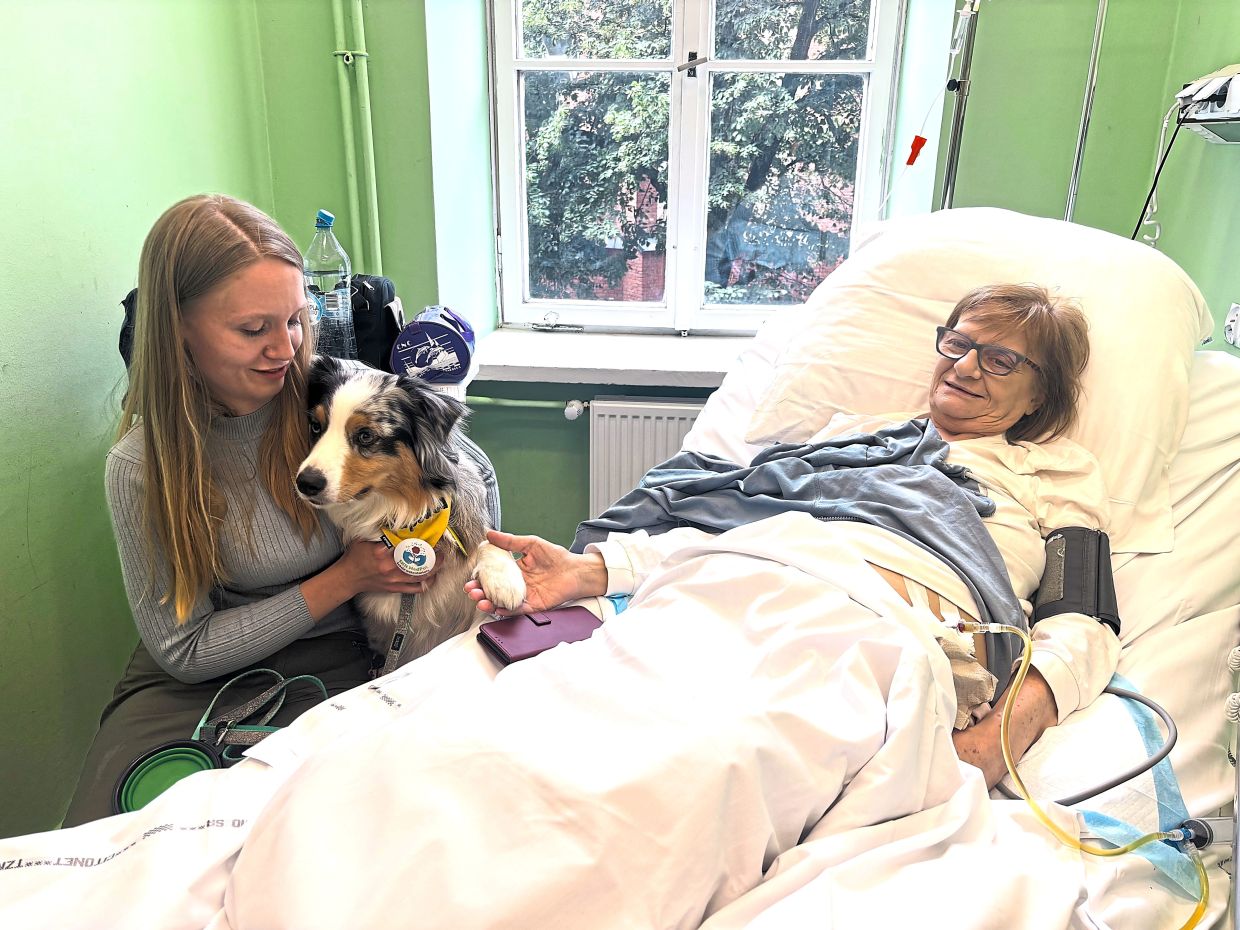
Poland is moving toward enshrining a previously informal practice into law: guaranteeing that patients in hospices and palliative care wards can maintain contact with their beloved pets during their final days. The proposed legislation, now under parliamentary review in the health committee, would establish a universal legal right to pet visitation, addressing what advocates see as a critical gap in end-of-life care standards across the country.
The impetus for this legislative push comes from Dr Tomasz Dzierzanowski, director of the Palliative Medicine Clinic at the Medical University of Warsaw, who introduced the proposal through a member of Prime Minister Donald Tusk's centrist party. Dzierzanowski's motivation stems from witnessing the transformative power of animal companionship in terminal patients, particularly one named Waldemar who was more concerned about his two cats than his own deteriorating condition. When Dzierzanowski arranged for the cats to be brought into the ward, the emotional reunion—which moved both the patient and hospital staff to tears—crystallized his conviction that this human need required formal legal recognition.
The case of Ewa Lutka-Krawczyk, a 70-year-old patient at Dzierzanowski's clinic battling gallbladder cancer, exemplifies the stakes involved. When initially diagnosed, her primary concern was not her own prognosis but the fate of Gaja, a shelter dog she had adopted three years prior and grown deeply attached to. Though she requested assurance from her doctors that she would survive long enough to ensure Gaja would not be abandoned, the diagnosis proved grave. Following her admission to the palliative ward, Gaja—left at home with Lutka-Krawczyk's husband—became noticeably depressed, barely eating as the separation took its emotional toll on the animal.
Dzierzanowski articulates a broader societal concern underlying his initiative: Poland faces what he characterizes as an "epidemic of loneliness" particularly acute among terminal patients. He observes that elderly patients frequently become isolated after outliving their peers, while younger individuals often find themselves without the deep friendships that previous generations naturally cultivated. In contemporary society, where digital connections increasingly substitute for meaningful human relationships, palliative care wards house growing numbers of isolated patients whose support networks have evaporated. This stark reality informed his determination to leverage the human-animal bond as a legitimate therapeutic intervention within the formal healthcare system.
Currently, pet visitation in Polish hospitals exists in an ad hoc manner rather than as a guaranteed right. While many clinics—including Dzierzanowski's—permit visits when logistically feasible, no comprehensive legal framework protects patients' entitlement to this form of comfort care. This inconsistency means that access depends on individual institutional policies and physician discretion rather than being universally assured. Katarzyna Piekarska, the lawmaker championing the legislation, emphasizes that formalization serves a practical purpose: animals are already present in hospital settings informally, making legal regulation essential to ensure proper oversight and consistency across facilities.
Beyond companionship, the therapeutic dimension of animal visitation extends to broader institutional benefits. Dzierzanowski permits trained therapy dogs to visit patients when conditions permit, and observations from such sessions reveal widespread positive effects. Kluska, an Australian shepherd, made rounds accompanied by her owner Malgorzata Brzozowska, a medical student, engaging patients like Lutka-Krawczyk—who held the dog's paw and smiled—and another patient, 58-year-old Wojciech Zelik, admitted with a tumor. Zelik elevated himself in his bed to watch Kluska perform tricks, remarking on the dog's "lovely fur" and reaching out to pet her, suggesting that even momentary engagement with an animal provided meaningful distraction and momentary pleasure.
The benefits extend beyond patients themselves. Hospital staff—nurses, cooks, and other personnel who manage the demanding emotional labour of terminal care—also experience stress relief through animal interaction. During visits, staff members took breaks to crouch and pet Kluska in hallways, with even the hospital cook offering slices of ham to the dog. This collateral benefit to caregiver wellbeing matters significantly in understaffed and emotionally draining healthcare environments where compassion fatigue and burnout remain persistent challenges. Creating space for these small moments of human-animal connection may therefore buttress staff retention and morale.
The distinction between therapy dog visits and personal pet visitation carries particular weight. While trained therapy animals provide documented benefits, Brzozowska and other advocates contend that encounters with one's own companion offer even greater therapeutic power. A patient visited by their personal pet experiences not merely the calming effect of animal contact but the profound reassurance of reconnection with a being whose presence previously provided security and unconditional acceptance. Simultaneously, the animal itself experiences reduced stress upon finding its missing owner, suggesting a mutual understanding that the bond persists despite disruption. Brzozowska interprets this animal response as evidence that pets comprehend their owner's disappearance and location, indicating an awareness that transcends simple instinct.
From a care philosophy perspective, Dzierzanowski's commitment—encapsulated in his statement that "we make sure that no patient dies alone"—reflects a holistic understanding of palliative care extending beyond physical symptom management. When human companionship is unavailable, the law should recognize that other forms of meaningful presence carry dignity and therapeutic value. This perspective challenges restrictive hospital policies rooted in infection control or logistical convenience, arguing instead that end-of-life care must accommodate emotional needs alongside medical ones. The proposal thus represents a philosophical shift: treating pets not as distracting nuisances but as legitimate sources of comfort and existential reassurance.
For Malaysian and Southeast Asian readers, Poland's legislative approach offers instructive parallels. Many regional healthcare systems similarly lack formalized policies on animal visitation in terminal care settings, leaving decisions to individual practitioners or institutional discretion. As societies across the region grapple with aging populations and evolving family structures that sometimes leave elderly patients isolated, deliberate policy frameworks recognizing the therapeutic role of pets could enhance palliative care quality. The Polish initiative demonstrates how legislative action can codify informal compassionate practices, ensuring equitable access regardless of a facility's resources or leadership's personal inclinations toward human-animal bonds.
The road ahead for Poland's proposal involves parliamentary scrutiny of implementation details: infection control protocols, animal screening requirements, liability considerations, and resource allocation for coordinating visits. Yet the emotional foundation appears uncontroversial—few would dispute that a patient's final wish to see their longtime companion merits institutional accommodation. As Lutka-Krawczyk awaited her visit from Gaja, the simple human desire to face mortality alongside one's greatest source of comfort became visible evidence that some aspects of care transcend bureaucratic categories, demanding recognition in law.

