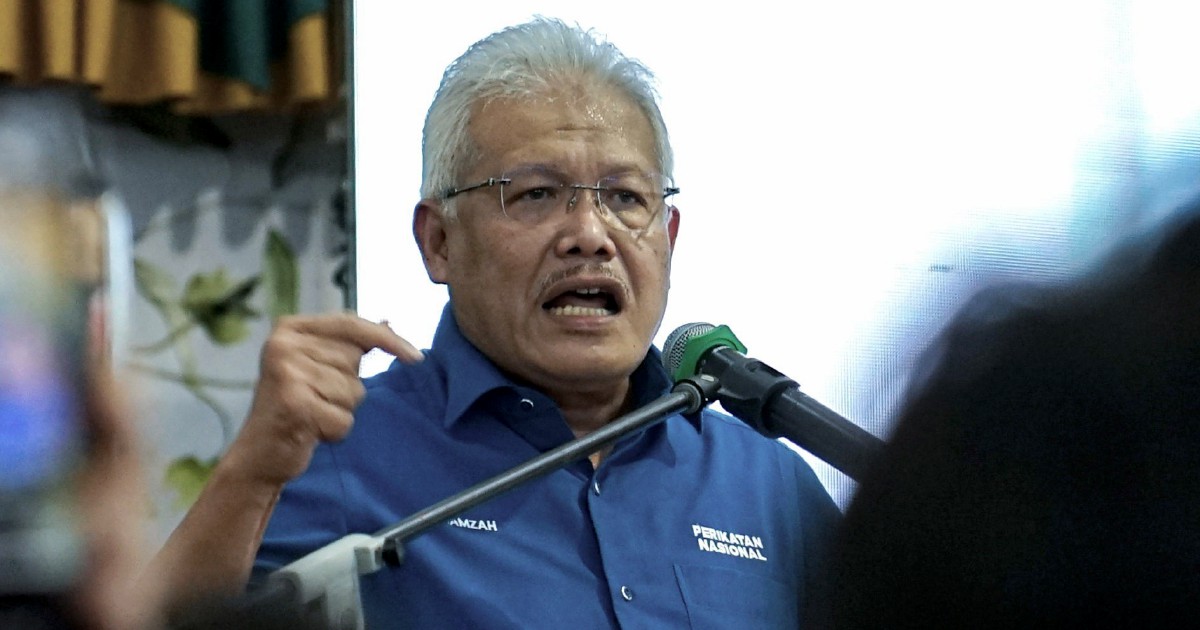
Perikatan Nasional (PN) has introduced a new acronym to formally describe its electoral arrangement with Barisan Nasional (BN) in the forthcoming Negeri Sembilan state election. The term 'PBN'—combining elements of both coalitions—represents a deliberate naming convention chosen to reflect the nature of their political understanding, according to PN leadership.
The adoption of this branded terminology underscores a notable shift in how the two major political blocs are positioning themselves to voters in Negeri Sembilan. Rather than operate as separate entities competing independently, the coinage of a unified acronym signals an attempt to present a cohesive front, potentially designed to communicate stability and collaborative governance to the electorate. The move reflects broader trends in Malaysian coalition politics, where branding and public perception carry significant weight in electoral contests.
Negeri Sembilan holds particular strategic importance within Malaysia's federal structure. As a key swing state with a substantial voting population, election outcomes here frequently carry implications beyond state-level governance, often influencing national political momentum and coalition configurations at the federal level. The decision by PN and BN to formalise their cooperation through a named designation suggests both camps view the state contest as consequential enough to warrant coordinated messaging and unified branding strategies.
The establishment of electoral pacts between rival coalitions has become increasingly common in Malaysian politics since the political realignments of 2020 and 2023. These arrangements typically involve seat-sharing agreements, whereby each coalition agrees to contest specific constituencies rather than fielding competing candidates in all areas. Such pacts aim to prevent vote-splitting that might allow opposition parties to capture seats with reduced vote shares, effectively maximising the combined electoral advantage of cooperating parties.
For PN, the Negeri Sembilan arrangement represents continued pragmatic coalition-building following its electoral performance at federal and state levels. The coalition, which currently holds the federal government through an agreement with BN and other parties, faces ongoing challenges in consolidating its support base. Electoral cooperation with BN in state contests provides opportunities to demonstrate effective collaboration while avoiding internecine competition that could weaken both coalitions against their political opponents.
For BN, the formalised cooperation signals a willingness to work constructively with PN despite their competitive histories. Barisan Nasional, which experienced significant losses in previous electoral cycles before recovering somewhat in recent contests, sees state-level partnerships as mechanisms to reclaim lost ground and maintain relevance in critical regions. The explicit naming of their cooperation suggests both coalitions are confident enough in their arrangement to advertise it publicly rather than keeping such understandings informal or discreet.
The Negeri Sembilan electorate will interpret this development through various lenses. Some voters may view the cooperation positively, seeing it as evidence of pragmatic governance and the ability of political rivals to work together for constituent interests. Others might regard it with suspicion, viewing coalition arrangements as manifestations of elite political interests rather than grassroots democratic preferences. The PBN branding attempt thus carries communicative risks alongside potential benefits.
Opposition parties will likely scrutinise the arrangement closely, positioning themselves as alternatives to what they characterise as the monopolistic dominance of established coalitions. Whether the PBN acronym and associated cooperation strategy proves effective will depend substantially on how well PN and BN's constituent parties coordinate campaign activities, resolve internal differences over candidate selection and seat allocation, and present a convincing narrative of joint governance to voters across Negeri Sembilan's constituencies.
The state election timing also intersects with broader political cycles affecting Malaysian governance. Performance in Negeri Sembilan could influence confidence levels among PN and BN members regarding the viability of their cooperation model, with implications for how they approach future state contests and potential federal arrangements. Victory would validate the electoral coalition approach, while setbacks might prompt recalibration of strategies.
Geographically and demographically, Negeri Sembilan presents a diverse electoral landscape. Rural and semi-urban constituencies have distinct political characteristics and voter preferences, requiring tailored messaging approaches that PBN messaging must accommodate across different regions. The success of the cooperation will ultimately hinge on whether coordinated PN-BN efforts in resource allocation, candidate quality, and campaign intensity can effectively mobilise voters across this heterogeneous electorate while managing expectations among party members who may have had alternative preferences for candidate selection.
The introduction of the PBN acronym represents not merely semantic rebranding but a substantive statement about the depth and permanence of the PN-BN electoral understanding in Negeri Sembilan. Whether this cooperation represents merely a tactical electoral arrangement or presages deeper institutional cooperation between the coalitions remains an open question that the election campaign and subsequent governance will help clarify for Malaysian political observers.

