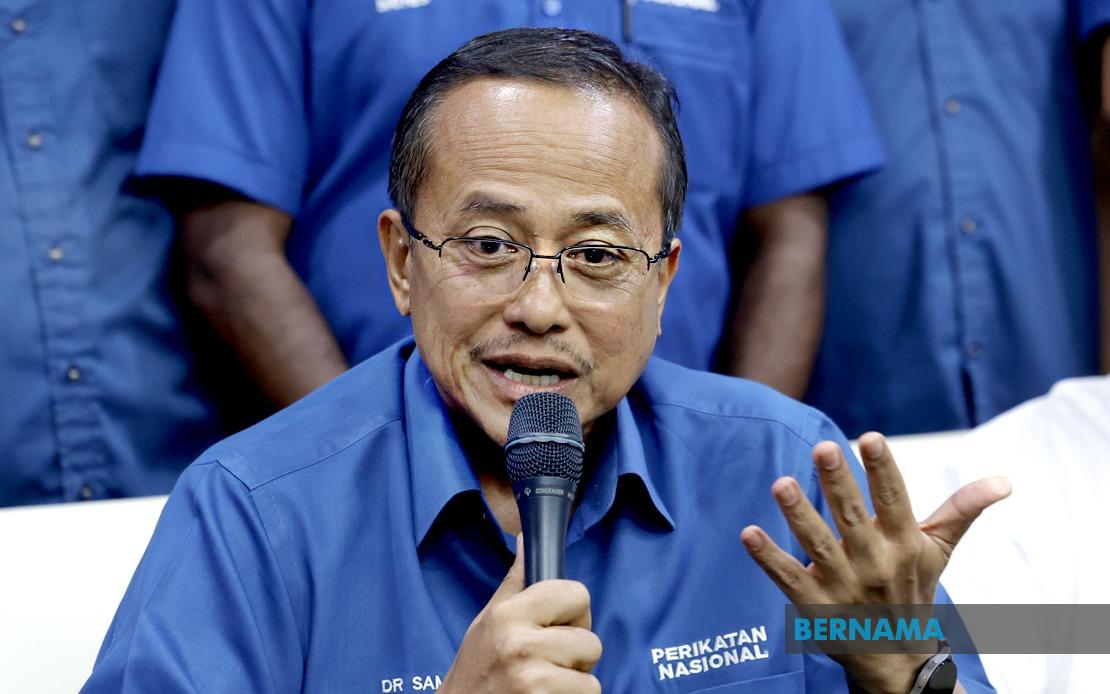
Perikatan Nasional has signalled its readiness to enter into political negotiations with Barisan Nasional ahead of the upcoming Melaka state election, according to PN chairman Datuk Seri Dr Ahmad Samsuri Mokhtar. While the two major coalitions have not yet held formal talks, Ahmad Samsuri indicated that a window of opportunity remains open for discussions before the state assembly is dissolved, a date that has not yet been announced.
Speaking after opening the 23rd Perak PAS Convention in Taiping, Ahmad Samsuri stressed that PN remains available for dialogue should BN wish to pursue cooperation. The timing of any potential alliance negotiations is crucial, he suggested, as discussions would be more productive and meaningful if conducted before the formal dissolution process commences. This procedural consideration underscores the complexities of coalition-building in Malaysian state politics, where timing and sequencing of announcements can significantly impact public perception and party member morale.
In his convention address, Ahmad Samsuri outlined a strategic rationale for potential cooperation between the two coalitions. According to his analysis, a PN-BN partnership could substantially improve their electoral prospects in Melaka, with modelling suggesting approximately a 75 per cent probability of securing enough seats to form the state government. This projection reflects an assessment that the combined strength of both coalitions would provide a decisive advantage over remaining opposition forces in the state legislature.
However, Ahmad Samsuri cautioned that realising this strategic vision would not follow a straightforward path. He employed the metaphor of a highway with rest stops to illustrate his point, noting that the journey towards government formation through coalition partnership would instead be complicated and demanding. The statement hints at anticipated internal negotiations, potential disagreements over seat allocations, and the need for compromise on policy matters between organisations that have not traditionally worked closely together.
The PN chairman emphasised that successfully executing such a coalition arrangement would require substantial patience, tolerance, and prudent decision-making from party leaders and members alike. These qualities would be tested through the unavoidable challenges that emerge when bringing together distinct political entities with different organisational cultures, membership bases, and ideological emphases. The emphasis on patience and tolerance suggests acknowledgment that some party members might harbour reservations about the proposed partnership.
For Malaysian observers of state-level politics, this development carries particular significance. Melaka has historically been a competitive battleground where coalition mathematics and seat distribution negotiations have determined electoral outcomes. The state's relatively small legislative assembly means that individual seat gains or losses can swing control of the state government, making strategic alliances a decisive factor in political competition.
The broader context involves PN's position as a relative newcomer to Malaysian federal politics compared to BN's decades-long dominance. PN's formation represented a significant realignment of Malaysian politics, drawing together parties that had previously operated independently. Cooperation with BN would represent another substantial repositioning and could influence how both coalitions approach other state elections and federal parliamentary politics more broadly.
Ahmad Samsuri's framing of potential cooperation as a means to transition from opposition status to government position reveals the strategic calculus motivating negotiations. PN currently occupies an opposition role in Melaka, and any coalition arrangement would fundamentally alter this status. This transition represents not merely a change in parliamentary seating arrangements but carries broader implications for resource allocation, policy implementation authority, and political influence in the state.
The reference to this being "a story for another time" regarding the mechanics of government formation suggests that concrete details of any potential arrangement remain to be determined. Such details would likely include seat allocation negotiations, agreement on which coalition would hold the menteri besar position, and coordination on legislative agendas. These discussions, if they proceed, would occur behind closed doors before any public announcement.
For Southeast Asian readers following Malaysian politics, this development reflects the fluid coalition dynamics that characterise Malaysia's political system. Unlike stable two-party democracies, Malaysia's multiethnic and multicommunal political landscape frequently produces situation-dependent alliances where former opponents cooperate to achieve immediate political objectives. This pragmatic approach to coalition formation distinguishes Malaysian politics from many Western democratic models.
The timing of Ahmad Samsuri's comments, delivered at a PAS convention with Perak PAS Commissioner Datuk Idris Ahmad present, also signals PAS's role in shaping PN's strategic direction. PAS represents a significant component of PN's coalition strength, and its leadership engagement in discussions about potential partnerships with BN underscores the importance of maintaining party unity during such negotiations. The public affirmation of openness to talks serves both to position PN as a reasonable negotiating partner and to prepare party members for potential developments.
As Malaysia approaches the Melaka election, the viability of any PN-BN alliance will depend on both coalitions' assessment of electoral mathematics, existing agreements with component parties, and public reception to such partnerships. The coming weeks will reveal whether these preliminary statements of openness translate into substantive negotiations and ultimately into formal cooperation that reshapes Melaka's political landscape.

