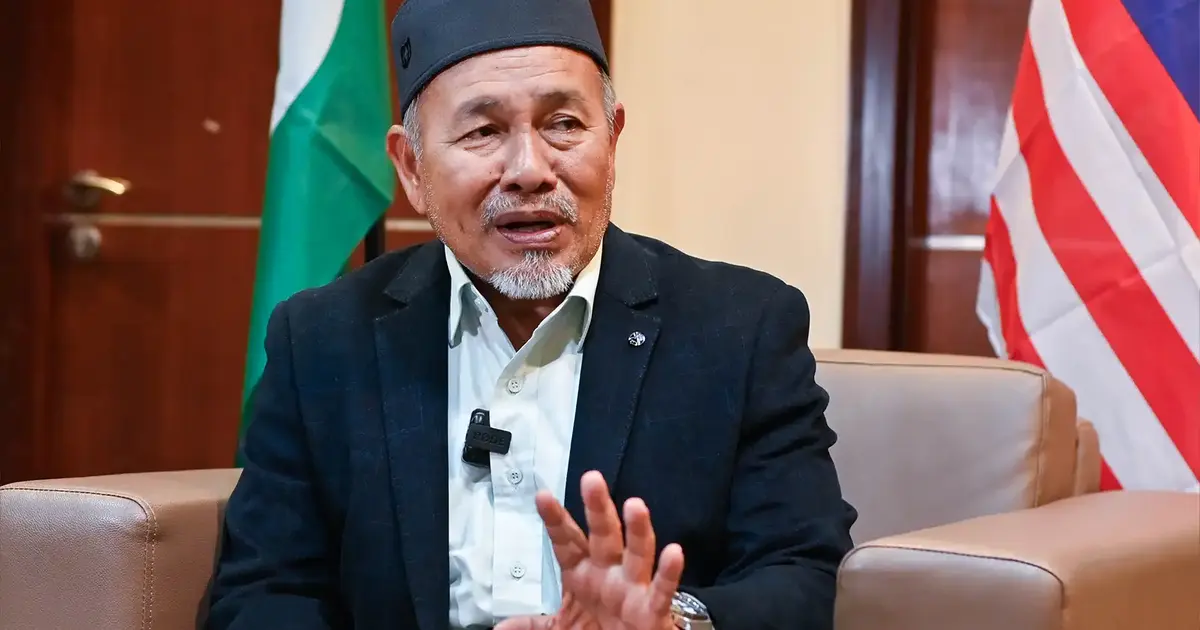
Perikatan Nasional's political leadership has adopted a relaxed stance regarding anticipated seat allocation negotiations with Barisan Nasional before the forthcoming Melaka state election, with PAS deputy president Tuan Ibrahim Tuan Man insisting that any difficulties emerging from coalition discussions can be settled through constructive dialogue.
Although formal seat-sharing talks between the two major political coalitions have not yet commenced, Tuan Ibrahim's measured confidence reflects an underlying assumption that both camps possess sufficient political maturity and mutual incentive to reach a workable agreement. His remarks suggest that PN views the prospective negotiations not as a significant obstacle, but rather as a procedural matter requiring only routine coordination between allied parties.
The statement becomes significant when contextualized within Malaysia's recent electoral history, where seat-sharing disputes have frequently triggered public tensions between coalition partners. Previous elections have witnessed considerable friction when parties disagreed over constituency allocations, occasionally forcing leadership intervention and generating unfavourable media coverage that undermined coalition credibility with voters. By projecting early confidence, PN appears intent on avoiding such scenarios in Melaka.
The Melaka state assembly consists of 36 seats, making the composition of electoral alliances strategically important for any coalition seeking government control. Both PN and BN have demonstrated capacity to win in the state previously, creating legitimate grounds for negotiation over desirable constituencies. The outcome of seat negotiations will significantly shape voter perceptions of coalition unity and feasibility as an alternative government formation.
Tuan Ibrahim's optimism may also reflect calculations within PN's internal dynamics. PAS, as the dominant component within PN following recent political realignments, possesses considerable leverage in directing coalition strategy. This positional strength likely encourages greater confidence that PN's interests will receive adequate consideration during negotiations with BN, reducing potential sources of internal PN dissatisfaction that might otherwise complicate external negotiations.
Historically, Melaka has demonstrated voting patterns amenable to coalition politics. The state has experienced transitions between different ruling coalitions, and constituencies exhibit varying levels of competitiveness. Some seats represent secure territory for established parties, while others remain genuinely contested ground. This mixed profile creates both opportunity and challenge for seat negotiations, as both coalitions will prioritise securing their respective strongholds whilst competing for marginal constituencies.
The broader context of Malaysian coalition politics suggests that major federations typically resolve seat-allocation disputes eventually, though sometimes after extended negotiations and occasional public posturing. Both PN and BN operate within an understood framework that electoral success depends fundamentally on coalition cohesion throughout campaign periods. Publicly displaying confidence, as Tuan Ibrahim has done, serves the practical purpose of reassuring party members and supporters that leadership possesses adequate control over the coalition partnership.
For Malaysian voters observing these political developments, the apparent smoothness of coalition negotiations will likely influence perceptions of whether PN truly represents a viable alternative government. Voters sceptical of PN's capacity to govern have frequently cited concerns about internal coalition stability. Consequently, demonstrating competent management of partnership arrangements with BN provides valuable evidence addressing such reservations, regardless of whether negotiations ultimately proceed without complication.
The implied timeline for commencing seat talks remains unspecified in Tuan Ibrahim's remarks, though Melaka electoral preparations typically follow predictable patterns from state government dissolution to polling day. Delaying detailed negotiations until closer to the election campaign has become increasingly common, allowing coalitions to respond to prevailing political sentiments and voter dynamics captured by contemporaneous polling data. This approach contrasts with earlier practices of finalising seat agreements considerably in advance.
Beyond Melaka specifically, the state election has acquired importance within Malaysia's broader political trajectory. As potential testing ground for PN-BN collaboration, outcomes in Melaka will generate lessons applicable to future electoral scenarios at state and potentially federal levels. Political observers anticipate that successful seat-sharing in Melaka could establish precedent encouraging deeper PN-BN cooperation in subsequent elections, whereas contentious negotiations might reinforce perceptions of coalition fragility.
Economic and governance issues dominating state politics—including development priorities, fiscal management, and service delivery in constituencies—may ultimately prove more influential in determining electoral results than coalition mechanics. However, voter decisions regarding which coalition to support frequently depend partly on confidence in that coalition's internal stability and competent management. Thus Tuan Ibrahim's measured confidence regarding seat negotiations serves important psychological and political functions beyond the immediate mechanics of constituency allocation.
As Melaka prepares for electoral competition, the willingness of PN and BN leadership to project harmonious coalition relations publicly will influence campaign atmospherics. The contrast between smooth PN-BN coordination and any alternative coalition's potential disunity becomes a persuasive messaging tool. For Malaysian politics more broadly, demonstrating that ideologically diverse parties can manage practical partnership represents a significant validation of coalition governance models that have characterised Malaysian electoral competition.

